How to Sell Your Home Without an Agent (FSBO Guide 2026)
How to sell your home without an agent: pricing it right, staging, MLS flat-fee listing, negotiation, paperwork, and the real math on what you save in 2026.
Written by admin
Published October 25, 2026
Reading time 6 minutes
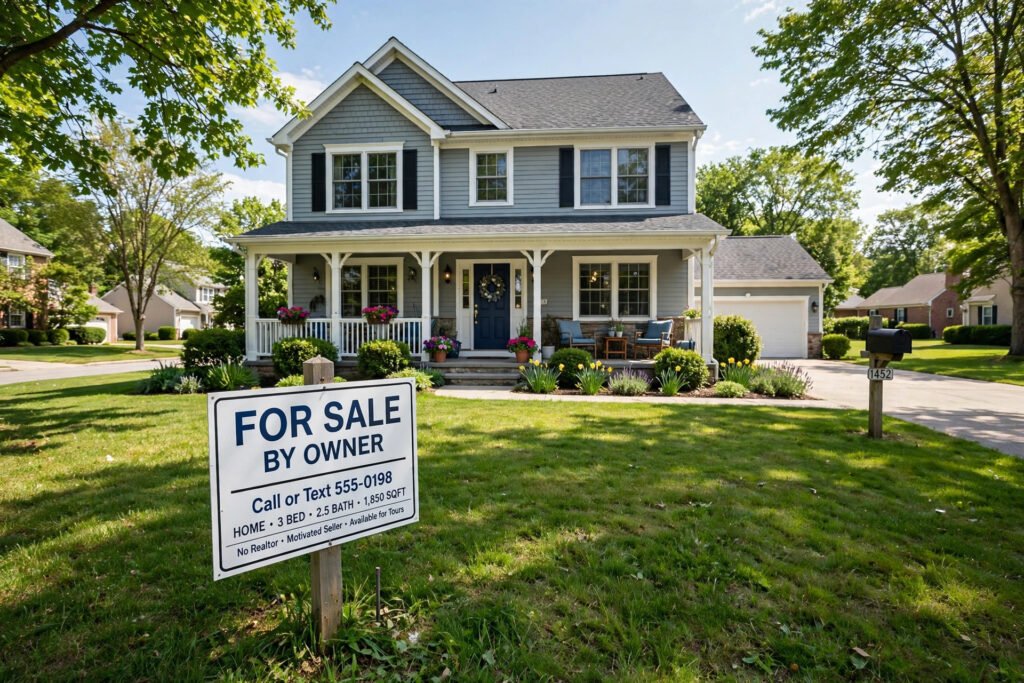
Selling your home without an agent — FSBO, “for sale by owner” — can save you tens of thousands of dollars in commission. On a $600,000 sale, the typical 5–6% total commission is $30,000–$36,000, and keeping the listing side of that is real money. But agents earn their keep in pricing, marketing, negotiation, and paperwork, and going solo means you do all of it. This guide walks through exactly how to sell your home without an agent: when it makes sense, the step-by-step process, and the pitfalls that cost FSBO sellers more than the commission they saved.
When FSBO makes sense (and when it does not)
FSBO works best when: you are in a hot seller’s market where homes move fast; your home is straightforward to price (plenty of comparable recent sales nearby); you are comfortable negotiating and handling paperwork; and you have time for showings, inquiries, and follow-up. Think twice when: the market is slow or your home is unusual (pricing is genuinely hard); you are selling from out of town; the property has legal complications (title issues, estate sales, divorce); or you dread confrontation — because buyers will negotiate hard with an unrepresented seller, assuming you are saving the commission and pricing accordingly. In New York specifically, co-op sales without an agent are especially tough — board packages and building politics reward experienced hands. Know the landscape first: our analysis of whether AI will replace real estate agents explains what agents actually do that technology has not replicated.
Step 1: Price it right (the step most FSBO sellers botch)
Overpricing is the number-one FSBO killer. Without an agent’s comparable-sales analysis, sellers anchor on what they “need” or what Zillow’s estimate says — and Zestimates can be off by 10%+ in either direction. Price correctly: pull actual comparable sales (not listings) from the last 3–6 months within a half-mile, adjusting for condition, size, and features; pay $300–$500 for a professional appraisal if you are unsure (cheap insurance on a six-figure decision); and consider a pre-listing inspection ($300–$500) to find the issues buyers will use against you. Price slightly below the nearest round number psychological barrier ($599,000, not $610,000) to maximize search visibility and showing traffic. A home priced right sells in weeks; a home priced 5% high sits for months and eventually sells below market — the most expensive mistake in FSBO.
Step 2: Prepare and stage the home
You are competing with agent-listed homes that show beautifully. Declutter ruthlessly — buyers cannot see past your stuff. Deep-clean everything, fix the small stuff (dripping faucets, scuffed paint, loose handles), and maximize light. You do not need a professional stager for most homes: decluttering your home in one weekend plus a $200–$500 spend on fresh paint, new cabinet hardware, and good lightbulbs transforms most listings. Do not forget the exterior — improving curb appeal cheaply pays back disproportionately because first impressions form in seconds. Photograph on a bright day after staging, or hire a real estate photographer ($150–$300) — listing photos are your marketing, and phone snapshots cost you showings.
Step 3: Market like a professional
List on the MLS via a flat-fee service ($300–$500) — this is the single highest-ROI move in FSBO, because MLS feeds Zillow, Realtor.com, and every major portal. Without MLS exposure, you are invisible to most buyers and their agents. Supplement with: a yard sign with a QR code to your listing page; social media posts in local community groups; an open house (weekend afternoons, well-advertised); and a simple one-page website or digital flyer with photos, details, and your contact info. Respond to inquiries within the hour — speed wins showings. And decide upfront whether you will pay a buyer’s agent commission (typically 2–3%): refusing to cuts your buyer pool dramatically, since most buyers come with agents. Offering it still saves you the ~3% listing side.
Step 4: Showings, offers, and negotiation
Be available and be absent — buyers are uncomfortable with sellers hovering. Let them explore, then answer questions factually. When offers arrive: get pre-approval letters with every offer (an offer without financing proof is a wish); compare net proceeds, not just price (closing timelines, contingencies, and earnest money matter); and negotiate strategically — counter once, firmly, rather than haggling in circles. Common contingencies to expect: inspection (buyers will ask for credits or repairs — decide your walk-away number in advance), appraisal (if it comes in low, you renegotiate or the buyer covers the gap), and financing. Keep emotions out of it: the buyer criticizing your kitchen is negotiating, not insulting you.
Step 5: The paperwork (do not DIY this part)
Hire a real estate attorney — $800–$1,500 in most markets, and non-negotiable for FSBO sellers. Your attorney drafts or reviews the contract, handles disclosures (which vary by state and carry legal liability if botched), manages the title search and closing, and keeps you compliant. Required disclosures typically include known defects, lead paint (pre-1978 homes), and environmental hazards — the CFPB’s home-selling resources outline federal requirements. Also budget for: title insurance, transfer taxes, prorated property taxes, and any HOA transfer fees. Your attorney coordinates the closing timeline with the buyer’s lender — miss a deadline and the deal can die. State disclosure rules vary; HUD’s housing programs site links to state-specific requirements.
The real math: what you save versus what you risk
On a $500,000 sale: listing-side commission saved ≈ $15,000. FSBO costs: flat-fee MLS ($400), attorney ($1,200), photographer ($250), staging/cleaning ($500), appraisal ($400) ≈ $2,750. Net savings ≈ $12,000 — if you sell at full market price on a normal timeline. The risks that erase it: overpricing and selling 3–5% below market after months of carrying costs ($25,000+ lost); weak negotiation conceding thousands in credits; legal mistakes in disclosures inviting lawsuits. Studies on FSBO outcomes are mixed — the National Association of Realtors reports FSBO homes sell for less on average, though selection bias (weaker sellers go FSBO) muddies the data. The honest summary: competent, organized sellers in hot markets save real money; everyone else often does not.
Conclusion
Selling your home without an agent is entirely doable — price it with real comparable sales, stage and photograph it professionally, list on the MLS through a flat-fee service, offer buyer’s-agent commission, negotiate with data instead of emotion, and hire a real estate attorney for the paperwork. Do all of that well, and you keep $10,000–$20,000 that would have gone to commission. Skip steps or misprice, and you will wish you had hired the agent. FSBO rewards preparation and punishes improvisation — now you know which one you are.
Frequently Asked Questions
How much do you save selling a house without a realtor?
Typically the listing-side commission, around 2.5–3% — $12,500–$15,000 on a $500,000 home — minus FSBO costs (MLS flat fee, attorney, photography) of roughly $2,000–$3,000.
Can I list my house on Zillow without an agent?
Yes — Zillow allows FSBO listings directly. But for full exposure, use a flat-fee MLS service ($300–$500), which syndicates to Zillow, Realtor.com, and all major portals.
Do I need a lawyer to sell my house without an agent?
Yes — hire a real estate attorney ($800–$1,500). They handle the contract, disclosures, title, and closing. This is the one professional you should not skip in FSBO.
Should I offer commission to the buyer’s agent?
Usually yes. Most buyers work with agents, and refusing buyer-agent commission dramatically shrinks your buyer pool. You still save the listing-side commission.
What is the biggest mistake FSBO sellers make?
Overpricing. Without professional comparable-sales analysis, sellers price on emotion or automated estimates, sit on the market for months, and ultimately sell below what correct pricing would have achieved.