
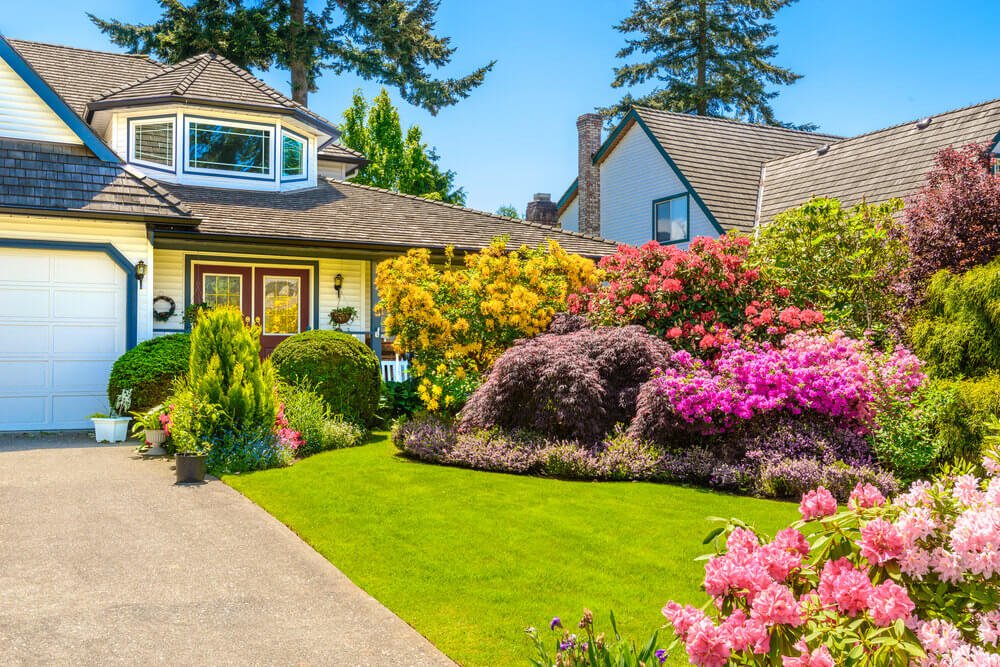
First impressions aren’t just for people — your home makes one every time someone drives by. And whether you’re selling or just tired of the shabbiest house on the block, curb appeal matters. The good news: you don’t need a landscaping crew or a new driveway. So how can I improve my home’s curb appeal cheaply? These 15 ideas cost $200 or less each (most under $50), and several are free. Start at the street and work toward the front door.
The Free Stuff (Do This Weekend)
1. Deep-clean everything. Pressure-wash (or hose-scrub) the siding, driveway, walkways, and porch. Rent a pressure washer for $40–$75/day or borrow one. Years of grime disappearing in an afternoon is the highest-ROI curb appeal project in existence.
2. Mow, edge, and weed. A crisp lawn edge along the driveway and sidewalk makes the whole property look manicured — even if the lawn itself is imperfect. Pull weeds from beds and cracks. Free, transformative.
3. Declutter the porch and yard. Remove the dead plants, the broken chair you’ve been meaning to fix, the kids’ toys migrated to the front yard, the trash cans visible from the street. A tidy exterior reads as “well-maintained” instantly.
4. Trim and prune. Cut back overgrown bushes from windows and walkways, limb up low tree branches, shape hedges. Overgrown landscaping makes a house look abandoned; controlled landscaping makes it look loved. Don’t butcher them — just restore order.
Under $50: Small Changes, Big Difference
5. Paint the front door. The classic. A bold front door color (deep red, navy, black, teal) against neutral siding is the focal point your exterior needs. One quart of exterior paint ($20–$30) and an afternoon. It’s the first thing visitors touch — make it sing.
6. Update house numbers. Those tiny brass numbers from 1987? Replace with large, modern numerals ($15–$30) mounted where they’re visible from the street. It’s a detail people notice subconsciously.
7. New welcome mat + potted plants. A fresh doormat ($15) and two symmetrical planters flanking the door ($30–$50 with plants) create an intentional, welcoming entry. Symmetry reads as design; asymmetry reads as accident.
8. Refresh the mulch. A $3–$4 bag of mulch per bed, spread 2–3 inches deep, makes planting beds look brand new. Dark mulch contrasts beautifully with green plants and light siding. This is the landscaper’s secret weapon.
9. Clean the windows. Sparkling windows — inside and out — make the whole house look brighter and better kept. $10 in supplies, an hour of work.
Under $200: Weekend Projects
10. Paint the shutters or trim. If a full exterior repaint isn’t in the cards (see how to choose exterior paint colors for the big version), painting just the shutters, trim, or porch railing freshens the whole facade for under $100.
11. Upgrade exterior lighting. A new porch light fixture ($40–$80) plus solar path lights ($20–$40 for a set) transforms the house after dark — when curb appeal arguably matters most. Warm-white bulbs, always.
12. Define the beds. Metal or stone landscape edging ($30–$60) gives planting beds crisp lines that read as professional landscaping. It also keeps grass out of beds and mulch in.
13. Add window boxes. $30–$60 each with plants. Window boxes add charm and color to flat facades — cottage-style appeal that works on almost any house style.
14. Fix the little broken things. The sagging gutter, the cracked walkway paver, the loose shutter, the mailbox leaning like it’s had a rough night. Each is a $10–$30 fix; together they scream “deferred maintenance.” Walk your property with fresh eyes and make a list.
15. Plant for the season. Inexpensive annuals in beds and planters ($20–$40 total) add instant color. In fall, mums and pumpkins; in spring, pansies. Seasonal touches signal a home that’s cared for now, not just maintained.
For more inspiration, Better Homes & Gardens has excellent curb appeal galleries organized by house style and budget.
How Can I Improve My Home’s Curb Appeal Cheaply: The Priority Order
Overwhelmed? Do these five in order: (1) clean everything, (2) mow/edge/weed, (3) paint the front door, (4) refresh mulch, (5) declutter. That sequence alone — mostly free — takes a house from “tired” to “charming” in a single weekend. Everything else is polish.
Curb Appeal for Selling: What Buyers Notice First
If you’re selling, curb appeal isn’t decoration — it’s the first 30 seconds of every showing, and buyers decide emotionally before they walk in. Prioritize by what photographs and what buyers actually register:
- The listing photo is the real first impression. 90%+ of buyers see your home online before in person. Mow, edge, mulch, and declutter before the photographer arrives — not before the first showing. Staging the exterior for photos pays more than staging for foot traffic.
- Buyers scan for deferred maintenance. Peeling paint, sagging gutters, cracked walkways, and overgrown beds don’t just look bad — they signal “this house will cost me money.” Each visible issue makes buyers discount their offer by multiples of the actual repair cost. The $200 you spend fixing the little things protects thousands in perceived value.
- The front door close-up. Listing photos always include it. Fresh paint, clean hardware, a new mat, and symmetrical planters — $75 total — and the entry photographs like a much more expensive home.
- Night showings happen. Good exterior lighting (path lights, porch light, landscape uplighting) makes evening showings magical instead of gloomy. Solar path lights: $30, installed in an hour, no wiring.
- Don’t over-invest. Curb appeal ROI tops out fast. Fresh mulch, paint touch-ups, and tidiness: yes. A $15,000 landscape redesign before selling: no — you won’t recover it. Save the big projects for the home you’ll actually enjoy them in.
The 48-hour pre-listing blitz: pressure wash everything, edge all beds and walks, mulch, paint the front door, replace the mat and house numbers, trim anything touching the house, and remove every personal item from the yard (toys, tools, the canoe). Two days, a few hundred dollars, and your home photographs in the top 10% of its price range. In a competitive market, that’s the difference between a bidding war and a price cut.
The Practical Takeaway
Improving curb appeal cheaply is about cleanliness, contrast, and intention: pressure-wash, edge the lawn, paint the front door a confident color, refresh mulch, update the small details (numbers, lighting, mat). None of these require skill — just a weekend and a couple hundred dollars at most. Stand across the street and look at your house with a buyer’s eyes before and after; the difference will convince you faster than any article. And if the landscaping needs a bigger rethink, low-maintenance landscaping ideas keep it looking good without becoming a second job.


