
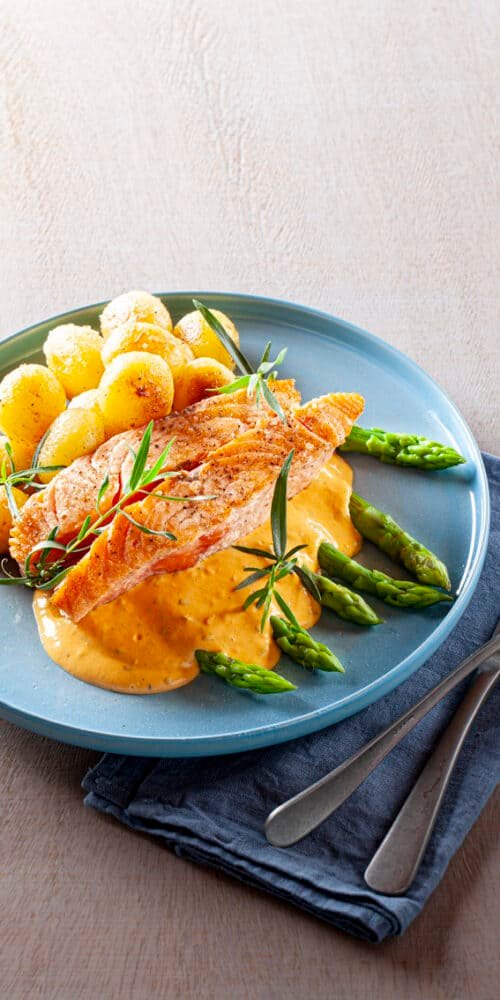
Dry, chalky salmon is a tragedy — especially given what good salmon costs. The difference between sublime and sad is usually just a few degrees and a few minutes. So what is the best way to cook salmon so it stays moist? The universal answer across methods: don’t overcook it. Pull salmon at 125–130°F internal for medium (it coasts to ~135°F while resting), and every cooking method below is built around that target. Here’s how to nail it four ways.
The Golden Rules (All Methods)
- Buy good fish. Moist cooking can’t save old salmon. Look for firm flesh, no fishy smell (fresh salmon smells like the ocean, not “fishy”), and vibrant color. Frozen-at-sea salmon is often fresher than “fresh” that’s been sitting — don’t snub quality frozen.
- Bring to room temp. 15–20 minutes on the counter before cooking. Cold centers + hot exterior = overcooked outside before the inside’s done.
- Pat very dry. Moisture on the surface steams instead of sears. Paper towels, both sides.
- Season simply. Salt, pepper, maybe garlic powder. Great salmon needs little. Save fancy marinades for lesser fish.
- Use a thermometer. A $15 instant-read thermometer eliminates all guessing. This is the single tool that separates consistent results from luck.
- Rest 3–5 minutes before serving — juices redistribute instead of running out on the cut.
What Is the Best Way to Cook Salmon So It Stays Moist? Four Methods
Method 1: Pan-seared (crispy skin, fastest)
The restaurant favorite. Heat a heavy skillet (cast iron or stainless) over medium-high with a thin film of high-smoke-point oil until shimmering. Lay fillets skin-side down, press gently for 10 seconds (prevents curling), and don’t touch for 5–6 minutes until the skin releases easily and is deeply crisp. Flip, cook 1–2 minutes more on the flesh side. Total: 7–8 minutes for a 1-inch fillet. The skin acts as insulation, protecting the flesh from overcooking — this is why skin-on sears so well.
Method 2: Oven-roasted (easiest, most forgiving)
Heat oven to 400°F (or 275°F for the slow-roast method below). Place skin-side down on an oiled sheet pan, roast 10–12 minutes at 400°F until just opaque. Slow-roast variation: 275°F for 25–30 minutes — the gentlest method, producing silky, evenly cooked flesh that’s nearly impossible to dry out. Bon Appétit’s test kitchen favors slow-roasting for foolproof results, and I agree — it’s my recommendation for nervous cooks.
Method 3: Grilled (smoky, summer-perfect)
Oil the grates well (or use a grill basket/fish spatula). Medium-high heat, skin-side down, 5–6 minutes undisturbed, flip carefully, 1–2 minutes more. Cedar plank grilling (soak the plank 1+ hours) adds wonderful smoky flavor and eliminates sticking entirely. If you’re already grilling steaks, salmon makes an excellent second act on the same fire.
Method 4: Poached (most delicate)
Simmer (not boil) in court-bouillon — water with white wine, lemon, herbs, peppercorns — for 8–10 minutes. The gentlest cooking possible; the fish stays incredibly moist. Less exciting flavor-wise, but unbeatable texture, and perfect for salmon salads or when serving a crowd with varied preferences.
About That White Stuff (Albumin)
The white goo that oozes from cooking salmon is albumin — a harmless protein pushed out as muscle fibers contract. More heat = more albumin. Minimizing it: don’t overcook (the main cause), try a 10-minute brine beforehand (1 tablespoon salt per cup of water — firms the surface proteins), and cook gently. It’s ugly but harmless — wipe it away and serve confidently.
Doneness Guide
- 120°F: rare — translucent center, very silky (sushi-grade fish only).
- 125°F: medium-rare — the sweet spot for most salmon lovers. Moist, slightly translucent.
- 130–135°F: medium — mostly opaque, still moist. The safe recommendation for most diners.
- 140°F+: well — the USDA’s 145°F guideline. Safe, but noticeably drier. Most chefs consider this overcooked for quality salmon.
Pull 5°F below your target — carryover cooking finishes the job while resting.
Salmon Doneness: The Temperature Chart That Ends Guesswork
Forget timing charts — thickness varies too much. Internal temperature is the only reliable guide:
- 110°F — Rare. Cool center, silky texture. For sushi-grade fish only.
- 120–125°F — Medium-rare. The sweet spot for most people: moist, slightly translucent center, flakes gently. Pull at 120°F — carryover heat takes it to ~125°F.
- 130–135°F — Medium. Mostly opaque, still moist. The safe choice for guests and the USDA-friendly zone.
- 140°F+ — Well done. Dry territory. The white albumin oozing out is the visual signal you’ve gone too far — it’s protein being squeezed out as muscle fibers contract.
The resting rule: salmon continues cooking 5°F after leaving the heat. Always pull early and rest 3–5 minutes. A $15 instant-read thermometer eliminates more cooking anxiety than any technique — probe the thickest part, and never serve on timing alone again.
Flavor pairings that work: salmon loves fresh herbs — dill, parsley, and chives are the classic trio; a squeeze of lemon and good olive oil is all the sauce you need. And for the plate, perfectly cooked rice is salmon’s best friend — the mild, fluffy base lets the fish shine. Simple, fast, and genuinely restaurant-quality once the temperature habit clicks.
Salmon skin: crispy, not soggy. If you like the skin, cook it skin-side down in a hot oiled pan for 5–6 minutes without moving it — the skin renders and crisps like a cracker. Flip for just 1–2 minutes to finish. Press gently with a spatula in the first minute to prevent curling. Most people who think they dislike salmon skin have only had it steamed limp; crisped properly, it’s the best part.
The Practical Takeaway
The best way to cook salmon so it stays moist: start with fresh fish, pat dry, use a thermometer, and pull at 125–130°F internal (it coasts up while resting). Pan-searing gives crispy skin, slow-roasting at 275°F is the most forgiving method, grilling adds smoke, poaching gives silk. Whichever method you choose, the thermometer is what makes it repeatable. Stop cooking by time and color — cook by temperature, and dry salmon becomes a thing that happens to other people.


