
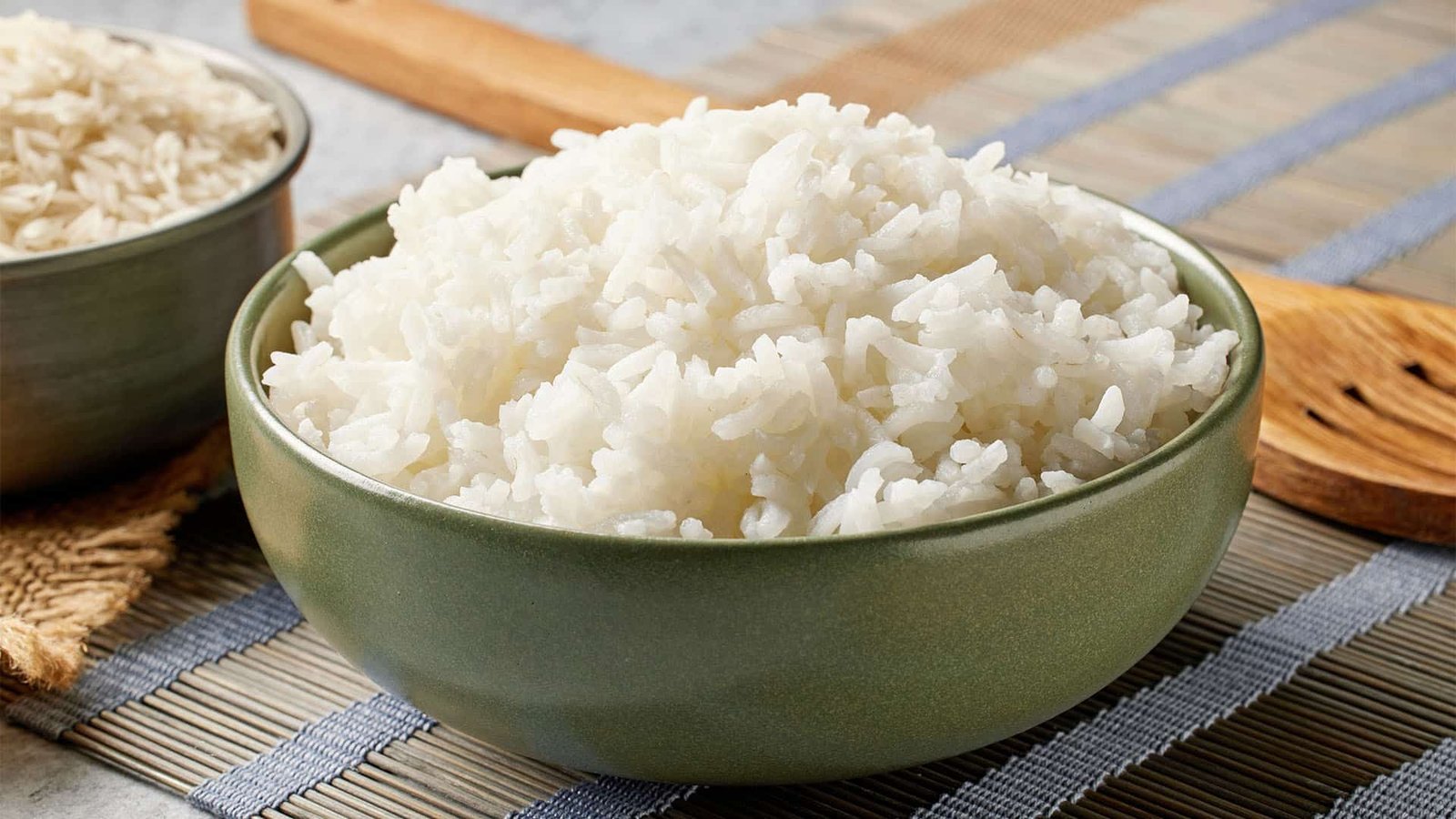
Mushy. Crunchy. Stuck to the pot in a cement-like layer. Rice seems simple — it’s just rice and water — but the failure modes are many. So how do I cook perfect rice every time? The answer is embarrassingly simple once you know it: the right ratio, a tight lid, low heat, and — the step everyone skips — resting. Here’s the foolproof method for every common rice type.
The Universal Method (Stovetop)
- Rinse the rice. Rinse under cold water until it runs mostly clear (30–60 seconds). This removes surface starch — the main cause of gummy rice. (Enriched US rice: rinsing washes off added nutrients; skip rinsing if that matters to you, but expect slightly stickier results.)
- Use the right ratio. See the chart below — it varies by type.
- Bring to a boil, then immediately drop to the lowest simmer. The #1 mistake is cooking too hot. You want the barest bubble — vigorous boiling = uneven cooking and boil-overs.
- Lid on, don’t touch. No peeking, no stirring. Stirring releases starch and breaks grains. Set a timer and walk away.
- Rest 10 minutes off heat, lid still on. This is the magic step. Resting lets moisture redistribute — the bottom isn’t wet, the top isn’t dry. Skip it and rice is noticeably worse.
- Fluff with a fork (not a spoon — forks separate without mashing), season if desired, serve.
How Do I Cook Perfect Rice Every Time? Ratios and Times by Type
- Long-grain white (jasmine, basmati): 1 cup rice : 1.25 cups water. 12–15 min simmer + 10 min rest. Fluffy, separate grains.
- Medium-grain white: 1 : 1.25. 15 min + rest. Slightly stickier — good for everyday.
- Short-grain white (sushi): 1 : 1.2. 15 min + rest. Sticky by design.
- Brown rice (any): 1 : 1.5. 40–45 min + rest. Chewier, nuttier. (Or use the pasta method: boil in abundant salted water 30 min, drain — foolproof.)
- Wild rice blend: 1 : 3. 45–55 min. Hearty and chewy.
High altitude? Add a bit more water and time. Old rice (sitting in the pantry a year)? Needs slightly more water than fresh. The Kitchn’s rice guides are excellent if you want visual cues for each type.
Troubleshooting: What Went Wrong?
- Mushy/gummy: too much water, or stirred during cooking, or didn’t rinse. Reduce water by 2 tablespoons next time.
- Crunchy/underdone: too little water, heat too high (boiled dry), or lid didn’t seal (steam escaped). Check lid fit — a towel under the lid helps old pots.
- Burnt bottom: heat too high. Lowest setting, heavy-bottomed pot. A heat diffuser ($10) fixes hot-spot burners.
- Boiled over: pot too small or heat too high at the start. Use a bigger pot; drop to simmer the moment it boils.
- Bland: salt the water (1/2 tsp per cup of rice), or cook in broth. Rice absorbs seasoning — unseasoned rice tastes like nothing.
Level-Ups Worth Trying
- Toast the rice: sauté dry rice in butter/oil 2–3 minutes before adding water (pilaf method) — nutty flavor, more separate grains.
- Coconut rice: replace half the water with coconut milk + pinch of sugar. Life-changing with curries and stir-fries.
- Furikake or crispy garlic on plain rice — the Japanese secret to making simple rice craveable.
- Rice cooker: if you eat rice 3+ times a week, a $30 basic cooker (or a good one, $100+) pays for itself in consistency and convenience. Set and forget, perfect every time.
- Day-old rice for fried rice: refrigerate cooked rice uncovered overnight — dried-out grains fry up crispy instead of mushy. This is why fried rice night should follow rice night.
Rice Varieties: Which Rice for Which Dish
All rice is not interchangeable. The main types and their jobs:
- Long-grain white (jasmine, basmati). Fluffy, separate grains. Jasmine for Southeast Asian dishes (fragrant, slightly sticky); basmati for Indian and Middle Eastern (drier, more separate). Don’t swap them blindly — the aroma and texture differ.
- Medium-grain (arborio, carnaroli). Creamy when stirred — risotto rice. Arborio is common; carnaroli is the connoisseur’s choice (holds shape better). Never rinse risotto rice — the surface starch is the point.
- Short-grain (sushi rice). Sticky by design — sushi, rice bowls, anything eaten with chopsticks. Seasoned with rice vinegar, sugar, and salt for sushi.
- Brown rice. Chewier, nuttier, more fiber — but needs more water (2.25:1) and more time (40–45 min). The texture divide is real: some dishes want it, some don’t.
- Wild rice. Actually a grass seed — chewy, earthy, expensive. Best mixed with other rices or in hearty soups and salads, not as a plain side.
- Parboiled/converted. The weeknight hero — separate grains, hard to overcook, more nutrients than white. Unfashionable but extremely practical.
Storage and freshness: white rice keeps nearly forever in a sealed container; brown rice goes rancid in 3–6 months (the bran contains oils) — refrigerate or freeze it. Buy brown rice in quantities you’ll actually use. And whatever the variety, the fundamentals from this article — rinse, ratio, rest — apply with the adjustments above. Master one variety completely before branching out; jasmine is the most forgiving starting point.
The finger method (no measuring cup needed). Rinse the rice, level it in the pot, and add water until it reaches the first knuckle of your index finger above the rice surface. It sounds like folklore, but it works across pot sizes because it measures water relative to rice depth — the ratio stays constant whether you’re cooking for one or ten. Generations of cooks learned this before measuring cups existed, and it’s still the fastest reliable method in any kitchen.
The Practical Takeaway
Perfect rice every time = rinse, correct ratio (1:1.25 for most white rice), lowest simmer with a tight lid, no peeking, 10-minute rest, fluff with a fork. The rest step and the ratio are 90% of it; everything else is refinement. Memorize your household’s favorite type’s numbers, salt the water, and you’ll never serve crunchy-mushy rice again. It really is just rice and water — plus the discipline to leave the lid alone.


