
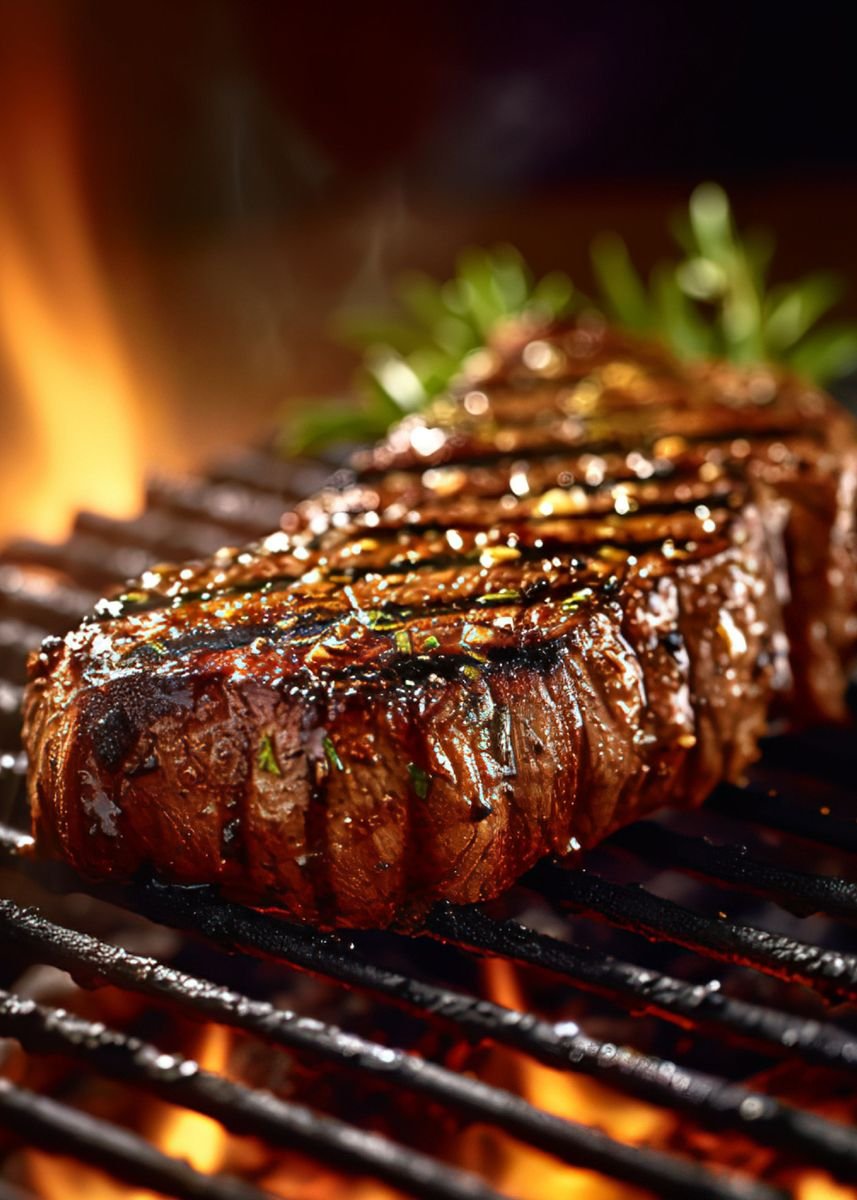
Gas grills get disrespected by charcoal purists, but here’s the truth: a gas grill you control precisely beats a charcoal grill you don’t. Perfect steak is about temperature control, timing, and resting — all things gas does well. So how do I grill the perfect steak on a gas grill? Start with the right cut, season aggressively, sear hot, finish gently, and rest properly. Here’s the complete method.
Start With the Right Steak
- Best cuts for grilling: ribeye (rich, forgiving), NY strip (beefy, firm), filet mignon (tender, lean — don’t overcook), porterhouse/T-bone (two steaks in one).
- Thickness matters most: 1.25–1.5 inches minimum. Thin steaks overcook before they sear — thick steaks give you a crusty exterior and rosy interior. This is the #1 variable home grillers get wrong.
- Grade: USDA Choice is the sweet spot (Prime is better but pricey; Select is leaner and less forgiving). Good marbling = flavor + juiciness insurance.
- Bring to room temp: 30–45 minutes on the counter. Cold centers cook unevenly.
- Pat very dry. Surface moisture is the enemy of sear — paper towels, both sides, thoroughly.
Season Like You Mean It
Kosher salt + coarse black pepper, generously — more than feels right. Salt at least 40 minutes before grilling (or right before; the in-between window draws out moisture without reabsorbing). The 40-minute-or-immediate rule: salt early enough for it to absorb, or so late it hasn’t drawn moisture yet. For thick steaks, consider dry-brining overnight (salted, uncovered in the fridge) — deeper seasoning, drier surface, better crust. Weber’s grilling guides have good seasoning baselines if you want to experiment beyond salt and pepper.
How Do I Grill the Perfect Steak on a Gas Grill? The Two-Zone Method
Set up two zones: one side on high (500°F+), one side on low/off. This is the foundation of all good gas grilling — sear over direct heat, finish over indirect.
- Preheat thoroughly: 10–15 minutes with the lid closed, all burners on high. Clean the grates with a brush, then oil them (tongs + oiled paper towel).
- Sear (direct heat): lay the steak down, don’t touch for 2–3 minutes. Flip once, sear 2–3 minutes more. You’re building crust, not cooking through.
- Finish (indirect heat): move to the cool zone, close the lid, and cook to temperature. This gentle finish prevents the burnt-outside/raw-inside disaster.
- Use a thermometer. Instant-read, inserted sideways into the center. Pull 5°F below target (carryover cooking): 120°F for rare, 130°F medium-rare, 140°F medium. Medium-rare (130–135°F final) is the sweet spot for most cuts.
- Rest 5–10 minutes on a warm plate, tented loosely with foil. Juices redistribute; cutting early floods the plate instead of staying in the meat. This step is non-negotiable.
Reverse sear (the advanced move)
For thick steaks (1.5″+): cook low-and-slow on the indirect zone first (225–275°F) until 10–15°F below target, then sear 1 minute per side over screaming heat. Edge-to-edge perfect doneness with a killer crust. More time, best results — the method steakhouses use.
Timing Cheat Sheet (1.5″ steak, medium-rare)
- Sear: 2–3 min per side over direct high heat
- Finish indirect: 4–8 min depending on grill and starting temp
- Total: roughly 10–14 minutes + 5–10 min rest
- But cook to temperature, not time. Every grill, steak, and day is different. The thermometer is the recipe.
Finishing Touches
- Butter baste: during the last minute, add a knob of butter + crushed garlic + thyme to the top; tilt and spoon the foaming butter over. Steakhouse luxury at home.
- Flaky salt after slicing — texture and pops of salinity.
- Slice against the grain for strip and flank-family cuts — shorter muscle fibers = more tender bites.
- Compound butter: make ahead (butter + herbs + garlic, rolled and chilled) — a melting slice on a hot steak is transformative.
Common Mistakes
- Grilling cold, wet steak (no sear, gray band).
- Pressing with the spatula (squeezes out juice for no benefit).
- Flipping constantly (one flip builds better crust).
- Skipping the rest (juice on the plate instead of in the meat).
- Cooking past medium “to be safe” — with quality beef from reliable sources, medium-rare is the target; well-done is a different (drier) food.
Steak Rubs and Seasoning: Beyond Salt and Pepper
Salt and pepper are the foundation — but rubs add the personality:
- The classic steakhouse: coarse salt, cracked black pepper, garlic powder, a little onion powder. Applied 40+ minutes before grilling (or right before — never in the 10–30 minute window, which draws out moisture without reabsorbing it).
- Coffee-chile rub: finely ground coffee + brown sugar + chili powder + smoked paprika + salt. Sounds strange; tastes like the best steakhouse crust you’ve had. The coffee adds depth, not coffee flavor.
- Herb-butter finish: compound butter (softened butter + garlic + rosemary + thyme) melting over the resting steak. The right herbs and spices in the butter do more than any marinade.
- Montreal-style: the deli classic — coriander, dill seed, mustard seed, red pepper flakes. Bold and traditional for a reason.
- What NOT to do: sugary BBQ rubs on high-heat grilling (the sugar burns bitter), marinades longer than 2 hours on good cuts (mushy exterior), and — the cardinal sin — seasoning only the top. Season all sides, edge to edge.
The rest is non-negotiable: 5–10 minutes tented in foil, during which juices redistribute instead of flooding the cutting board. Slice against the grain. And if steak night becomes a regular thing, it earns a place in the weeknight rotation — a great steak takes 20 minutes start to finish, faster than most “quick” meals once the grill is hot.
The Practical Takeaway
Grilling the perfect steak on a gas grill means: thick cut (1.25″+), room temp and patted dry, aggressive salting, two-zone heat (sear hot direct, finish gentle indirect), thermometer to 130°F for medium-rare, and a real rest. Gas gives you the control to nail this every time — use it. Master the two-zone method and it transfers to everything else: salmon, chicken, vegetables. The grill stops being intimidating and starts being the best appliance you own.


