How to Start a Vegetable Garden on a NYC Balcony
How to start a vegetable garden on a NYC balcony: best containers, soil mixes, sun requirements, and the vegetables that actually thrive on small city balconies.
Written by admin
Published November 3, 2026
Reading time 6 minutes
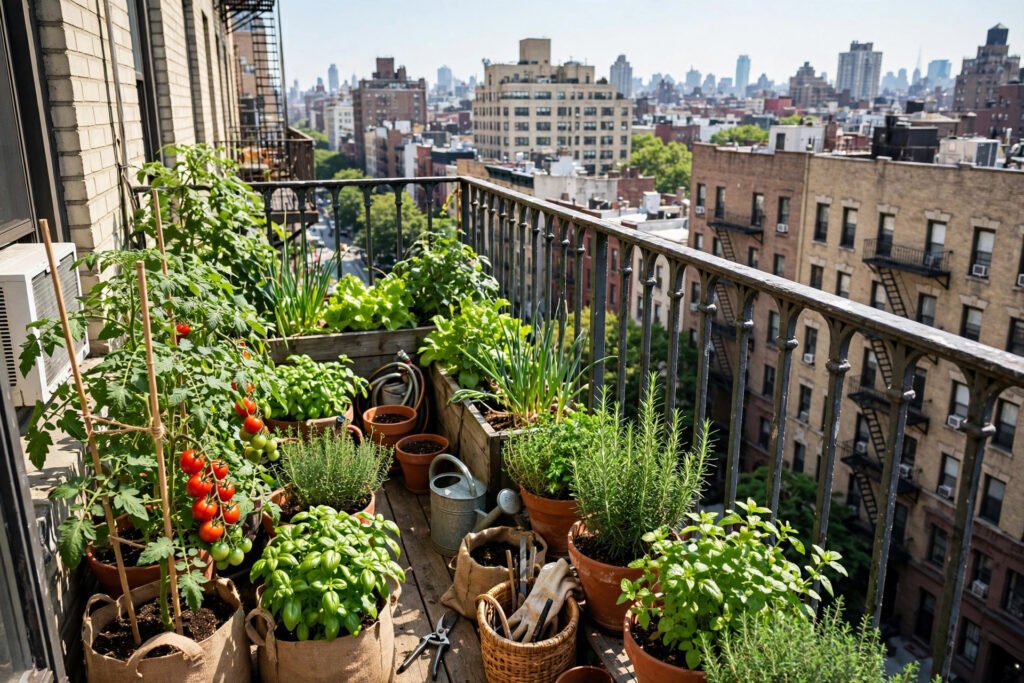
Your NYC balcony is small — maybe 4×8 feet of concrete with a railing and a view of a brick wall. It does not look like a farm. But that unassuming slab can produce an astonishing amount of food: with the right containers, soil, and plant choices, a typical New York balcony grows 50–100 pounds of vegetables in a season. Fresh tomatoes in August, herbs year-round, peppers, greens, and beans — all steps from your kitchen.
Here is how to turn that concrete rectangle into a genuinely productive vegetable garden.
Assess Your Balcony: Sun, Weight, and Rules
Before buying anything, answer three questions:
How much sun? Track sunlight for a day. Most vegetables need 6+ hours of direct sun (“full sun”); leafy greens and herbs tolerate 3–5 hours (“part shade”). South and west-facing balconies are gold; north-facing balconies limit you to greens and herbs. Be honest about your exposure — planting tomatoes in 3 hours of sun guarantees disappointment.
How much weight? Wet soil is heavy — roughly 100 pounds per cubic foot. A balcony full of large containers can exceed load limits, especially in older buildings. Use lightweight fabric pots and soilless mixes where possible, distribute weight evenly (never cluster everything against the railing), and check your lease or co-op rules. Many NYC buildings restrict balcony gardening or railing-mounted planters.
What are the building rules? Some buildings prohibit anything on railings (falling-object liability), restrict water drainage onto balconies below, or ban gardens outright. Check before investing. NYC’s official resources and GrowNYC’s garden program can also connect you with community garden alternatives if your balcony will not work.
Containers: Bigger Is Better
The number-one beginner mistake is tiny pots. Small containers dry out in hours on a hot balcony, stunt roots, and demand constant watering. Go big:
Minimum sizes: 5-gallon containers for tomatoes, peppers, and cucumbers (one plant each); 3-gallon for herbs and greens; long window boxes or troughs for salad greens and radishes.
Fabric grow bags are the balcony gardener’s best friend — cheap ($3–8 each), lightweight, with excellent drainage and air-pruning that prevents root circling. They fold flat for winter storage, critical in small apartments.
Self-watering containers with built-in reservoirs are worth the premium for thirsty plants like tomatoes and cucumbers — they buy you 2–3 days between waterings in July heat instead of daily.
Whatever you use, drainage holes are non-negotiable, and saucers or drip trays protect the balcony below from drainage (your downstairs neighbor will thank you).
Soil: Do Not Use Garden Dirt
Regular garden soil compacts in containers, drains poorly, and harbors weeds and diseases. Use bagged potting mix — a soilless blend of peat or coco coir, perlite, and compost. It is lightweight (important for balconies), drains well, and starts disease-free.
Mix in slow-release organic fertilizer at planting time, then feed every 2–3 weeks through the season — container plants cannot reach beyond their pot for nutrients, so they depend entirely on you. Cornell’s gardening resources offer excellent container-soil guidance specific to Northeast conditions.
What to Grow: The NYC Balcony All-Stars
Tomatoes. The reason most people start. Choose compact/determinate or cherry varieties bred for containers (“Patio,” “Tiny Tim,” cherry types) — full-size indeterminates can work in 10+ gallon pots with serious staking but demand constant attention. One cherry tomato plant in a 5-gallon bag can produce hundreds of fruits. Time it right: in NYC, tomatoes go out after Mother’s Day, once nights reliably stay above 50°F.
Peppers. Hot and sweet peppers thrive in containers and love NYC’s hot summers. Compact plants, long harvests, minimal fuss.
Herbs. Basil, parsley, cilantro, mint (always in its own pot — it is invasive), thyme, and rosemary. Herbs are the highest-value balcony crop: a $3 basil plant replaces $4/week of grocery store packets. If you are new to growing, start with the best plants for a beginner indoor garden — many transition to balconies in summer.
Greens. Lettuce, arugula, spinach, and Asian greens grow fast in shallow troughs, tolerate part shade, and allow cut-and-come-again harvesting for months. Plant successions every 2–3 weeks for continuous supply.
Beans and cucumbers. Vertical growers that maximize tiny footprints — train them up the railing or a trellis. Pole beans are nearly foolproof and fix their own nitrogen.
Skip: corn (needs space and pollination groups), large squash (too sprawling), carrots (need deep containers for mediocre returns), and anything needing 8+ hours of sun if you do not have it.
Watering: The Daily Discipline
Containers dry fast — in July heat, large pots may need water twice daily. Water deeply until it drains from the bottom, preferably in the morning. Mulch the soil surface with straw or wood chips to slow evaporation. Self-watering containers and drip irrigation on a timer are the “set and forget” upgrades that separate thriving balcony gardens from crispy ones.
Your harvest deserves a kitchen plan too — meal prepping healthy lunches for the week is the perfect use for a glut of balcony tomatoes and herbs.
Season Extension and Pests
NYC’s growing season runs roughly April–November. Start cool crops (greens, radishes, peas) in April, warm crops (tomatoes, peppers, basil) after Mother’s Day when nights stay above 50°F. In fall, row covers or a small cold frame extends greens into December.
Balcony pests are milder than ground-level gardens, but watch for aphids (blast with water), spider mites (mist regularly — they hate humidity), and the occasional determined pigeon. Netting protects ripening tomatoes from birds. Avoid broad pesticides on food crops; insecticidal soap and neem handle most issues.
Balcony Microclimates: Reading Your Space
Not all balcony square feet are equal. Spend a day observing: which corners get morning versus afternoon sun, where wind tunnels through (high balconies can be surprisingly windy — wind desiccates plants faster than sun), where the wall radiates stored heat at night (a warm microclimate for heat-lovers), and where rain actually reaches versus where the overhang keeps things dry. Then match plants to microclimates instead of treating the balcony as uniform: heat-loving peppers against the warm wall, wind-sensitive basil in the sheltered corner, drought-tolerant herbs in the windy spots. Container gardeners who read microclimates routinely outproduce those who do not, with identical effort — it is free yield from observation. Sketch a simple sun map on paper; refer to it when placing each spring’s containers. Your balcony is not one garden — it is three or four micro-gardens, each with its own personality.
Conclusion
A NYC balcony vegetable garden succeeds on four pillars: honest sun assessment, oversized containers, quality potting mix, and the right plant choices for your conditions. Start modestly — three or four containers your first year — and expand as you learn your balcony’s microclimate. By August, you will be eating tomatoes you grew twelve feet from your couch, and no grocery store tomato will ever taste right again.
Frequently Asked Questions
Is it legal to garden on my NYC apartment balcony?
Usually, but check your lease and building rules — some restrict railing planters, weight, or water drainage. Co-ops and condos may have specific alteration rules. Community gardens are the backup option.
How many hours of sun do vegetables need on a balcony?
Fruiting vegetables (tomatoes, peppers, cucumbers) need 6+ hours of direct sun. Leafy greens and most herbs produce well with 3–5 hours. Track your balcony’s sun for a full day before choosing plants.
What is the easiest vegetable to grow on a balcony?
Cherry tomatoes and herbs (basil, mint, parsley). Both are forgiving, productive, and well-suited to containers. Pole beans are nearly indestructible if you have vertical space.
How often should I water balcony containers?
Daily in summer, sometimes twice daily in heat waves for large fruiting plants. Water deeply until drainage appears. Self-watering containers extend this to every 2–3 days.
Can I garden on a north-facing balcony?
Yes, with limits. Stick to shade-tolerant crops: lettuce, arugula, spinach, kale, radishes, and herbs like parsley, cilantro, and mint. Skip tomatoes and peppers without 6+ hours of sun.