
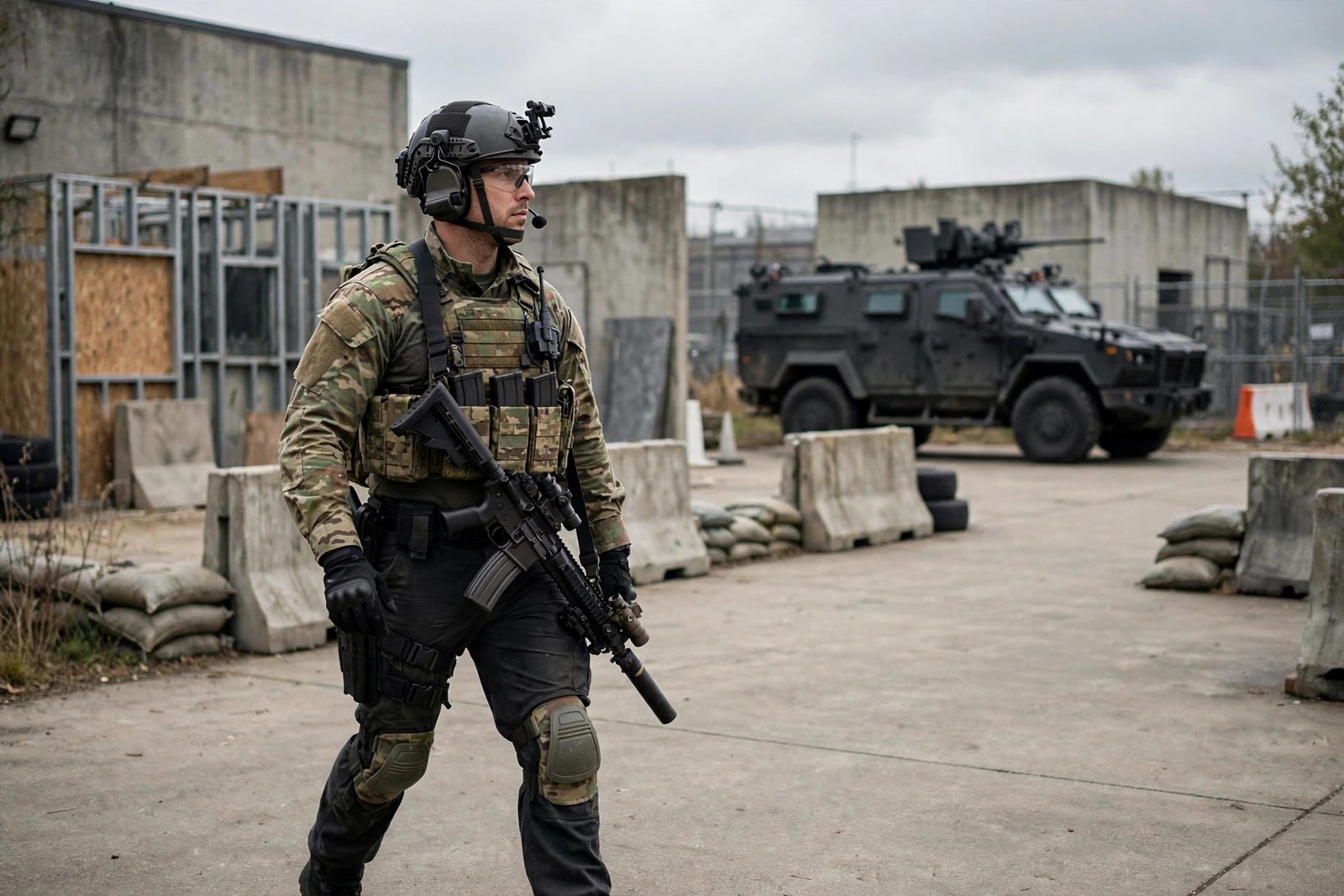
How Much does a Swat Team Member Make? Salary Guide (2026)
In 2026, a SWAT team member in the United States typically earns between $60,000 and $120,000 per year in base salary, with total compensation often reaching $90,000–$150,000+ once overtime, specialty pay, and differentials are included. Pay depends almost entirely on the officer’s base rank and the agency’s location — SWAT is usually a specialty assignment added to a patrol officer’s or detective’s salary, not a separate job title.
Because there’s no standalone “SWAT officer” position in most departments, the real question is: what do the officers who serve on SWAT make, and what does the assignment add? This guide breaks down base pay, specialty differentials, overtime, and how location — from New York City to small-town departments — changes the numbers.
How SWAT Pay Actually Works
SWAT (Special Weapons and Tactics) is a collateral or full-time specialty assignment, not an entry-level job. Members are already sworn officers, deputies, or troopers. Their pay structure looks like this:
- Base salary: the officer’s normal salary by rank and years of service (patrol officer, corporal, sergeant, etc.).
- Specialty/assignment pay: many agencies add a monthly or annual differential for SWAT — commonly $100–$400/month, or $1,200–$5,000/year.
- Overtime: the big variable. Callouts, training days, warrant service, and event security generate significant overtime. In busy units, overtime alone can add $15,000–$40,000+ per year.
- Hazard or shift differentials: some contracts include additional premiums.
Typical Salary Ranges by Agency Type (2026)
| Agency type | Typical base salary range | With SWAT differential + overtime |
|---|---|---|
| Large metro departments (NYPD, LAPD, Chicago PD) | $75,000–$115,000 | $100,000–$160,000+ |
| Mid-size city departments | $60,000–$90,000 | $80,000–$120,000 |
| County sheriff’s offices | $55,000–$85,000 | $70,000–$110,000 |
| State police / highway patrol | $65,000–$100,000 | $85,000–$130,000 |
| Small / rural departments | $45,000–$65,000 | $55,000–$80,000 |
| Federal tactical teams (FBI HRT, USMS SOG) | $85,000–$140,000+ | $110,000–$170,000+ |
These are 2026 estimates based on published pay scales and union contracts; exact figures vary by agency, rank, and seniority.
The NYC Picture
New York City is one of the highest-paying SWAT environments in the country. NYPD Emergency Service Unit (ESU) officers — the department’s tactical arm — earn the NYPD uniformed salary scale (top pay over $100,000 for experienced officers) plus overtime that is famously generous. Between planned details, dignitary protection, and emergency callouts, ESU members routinely log heavy overtime, pushing total compensation well into the $130,000–$160,000+ range for senior members. The Port Authority’s Emergency Service Unit and federal teams operating in the city (FBI, DHS) pay on comparable or higher federal scales.
What Drives the Number Up (or Down)
- Rank and seniority: a SWAT sergeant with 12 years on makes far more than a 4-year officer on the same team. Pay follows rank, not the vest.
- Full-time vs. collateral: full-time teams (large agencies) train constantly and generate more overtime; collateral teams (smaller agencies) do SWAT on top of patrol duties.
- Cost of living: departments in high-cost metros pay more — but the gap narrows after adjusting for living costs.
- Union contracts: specialty pay and overtime rules are negotiated. Two similar-size cities can differ by $20,000+ in total SWAT compensation.
- Call volume: a team serving 100+ high-risk warrants a year earns far more overtime than one with a handful of annual deployments.
How to Become a SWAT Team Member (and Reach the Higher Pay)
Since SWAT pay rides on top of officer pay, the path to the top of the range is: get hired as an officer, excel on patrol for 3–5+ years, pass a demanding selection (physical fitness test, firearms proficiency, oral board, psychological screening), complete SWAT school, and then promote through the ranks. Higher rank + busy unit + overtime = the six-figure totals above.
Mistakes to Avoid When Evaluating SWAT Pay
- Confusing base salary with total compensation. Job postings show base pay; the real number includes overtime and differentials.
- Ignoring the cost of living. $120,000 in New York City doesn’t stretch like $85,000 in a low-cost state.
- Forgetting the physical toll. The pay premium comes with extreme fitness demands, on-call hours, and genuine risk — it’s not a desk-job bonus.
- Assuming SWAT is a shortcut to high pay. Promotion to sergeant or detective often pays as well with far less risk. Most officers join SWAT for the mission, not the money.
FAQs
Do SWAT team members get paid more than regular police officers?
Yes, modestly. Most agencies add a specialty differential ($1,200–$5,000/year), and SWAT members typically earn substantially more overtime from callouts and training. Total compensation is usually 10–30% above a same-rank patrol officer’s.
What is the starting salary for a SWAT officer?
There’s no separate SWAT starting salary — you start at the department’s police officer pay (often $50,000–$70,000 depending on location), and the SWAT differential applies only after you make the team, usually 3–5 years into your career.
Which SWAT teams pay the most?
Federal tactical units (FBI HRT, US Marshals SOG) and large high-cost-city departments like the NYPD’s Emergency Service Unit sit at the top, with total compensation often exceeding $130,000–$170,000 for experienced members.
Is SWAT a full-time job?
It depends on the agency. Large departments have full-time tactical teams whose members do nothing but train and deploy. Most mid-size and smaller agencies use collateral teams — officers work regular patrol or detective assignments and respond to SWAT callouts as needed.
Do SWAT officers get hazard pay?
Some do. Hazard pay isn’t universal, but many union contracts include specialty or assignment differentials for tactical teams, plus overtime rules that effectively boost pay for high-risk deployments.