How to Overwinter Plants in a New York Apartment
How to overwinter plants in a New York apartment: light, humidity, watering schedules, and pest checks that keep tropicals and tender plants alive until spring.
Written by admin
Published November 3, 2026
Reading time 6 minutes
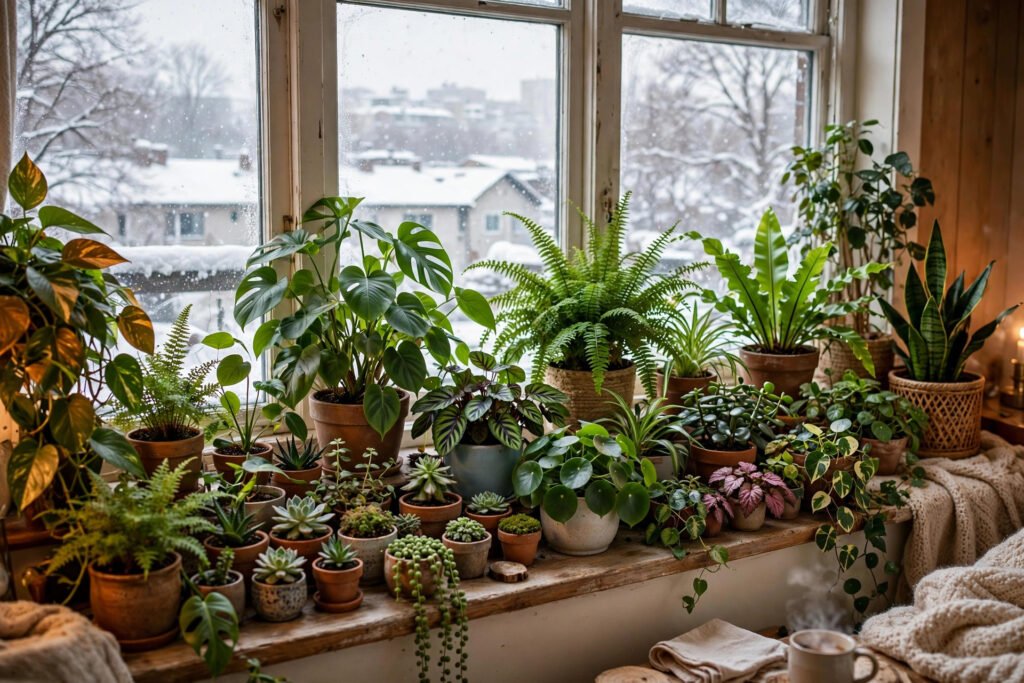
October in New York: your tropical hibiscus is still blooming on the fire escape, the lemon tree is heavy with fruit, and the first frost is three weeks away. Every fall, NYC plant lovers face the same migration — hauling tender plants indoors before the cold kills them, then keeping them alive through five months of dry radiator heat and weak winter sun. Overwintering plants in a New York apartment is entirely doable, but it demands a strategy, not just good intentions.
Here is the complete system: what to bring in, how to transition, and how to keep everything alive until May.
What to Bring In (and What to Let Go)
Not everything is worth overwintering. Be strategic — apartment space is precious:
Definitely bring in: tropical houseplants that summered outside (they were indoor plants anyway), citrus trees, hibiscus, bougainvillea, tender perennials (geraniums, coleus, fuchsia), and any plant you spent real money on or have emotional attachment to.
Consider overwintering dormant: cannas, dahlias, elephant ears, and gladiolus can be dug up, dried, and stored dormant in a cool dark place (a closet or under-bed box at 40–50°F) — zero light or water needed until spring. This saves enormous space.
Let go: spent annuals (marigolds, petunias, zinnias) — compost them. Cheap, leggy, or pest-ridden plants are not worth the indoor real estate. Be ruthless; every square foot of winter windowsill is valuable.
Timing: bring tropicals in when nights drop below 50°F (typically early-to-mid October in NYC); tender plants like basil and hibiscus come in at 55°F. One hard frost kills most tender plants overnight — watch forecasts from early October. The New York Botanical Garden publishes excellent fall transition timelines for the region.
The Transition: Debugging and Acclimation
Outdoor plants host outdoor pests. Bringing them straight inside invites spider mites, aphids, and fungus gnats to colonize your entire indoor collection:
Inspect ruthlessly. Check leaf undersides, stem joints, and soil surfaces. Quarantine suspicious plants away from your indoor collection for 2–3 weeks.
Wash them down. A strong spray of water dislodges most pests. For stubborn infestations, insecticidal soap or neem oil (applied outdoors, following labels) before bringing in.
Repot if needed. If roots are circling or soil is exhausted, repot into fresh mix — but do not size up dramatically; winter growth is minimal and oversized pots stay soggy.
Prune back. Cut tropicals and tender perennials back by one-third to one-half. Less foliage means less water demand, fewer pest hiding spots, and bushier spring regrowth. It feels brutal; the plants recover enthusiastically.
Light: Winter’s Scarcest Resource
NYC winter daylight is short (9–10 hours in December) and weak, and window glass filters intensity further. Most overwintering plants want your brightest window — south-facing ideally, west as backup. Rotate pots weekly for even growth.
Supplement with grow lights. For citrus, hibiscus, and anything you want actively growing (not just surviving), a full-spectrum LED grow light 6–12 inches above the plant for 12–14 hours daily makes the difference between thriving and merely enduring. Basic LED panels cost $25–40 and use minimal electricity. Set them on a timer — consistency matters more than intensity.
Clean your windows. Seriously — dirty winter windows block a shocking amount of light. It is free and takes ten minutes.
If you are expanding your indoor collection generally, our guide to the best plants for a beginner indoor garden covers varieties that actually enjoy apartment life year-round.
Humidity: Fighting the Radiator Desert
This is where most overwintering fails. NYC winter apartments with steam heat drop to 15–25% humidity — tropical plants evolved for 60–80%. Crispy leaf edges, bud drop, and spider mite explosions are all low-humidity symptoms.
Group plants together. Clustered plants create a shared humid microclimate through transpiration — free and effective.
Pebble trays. Shallow trays of water with pebbles under pots (pots sit on pebbles, not in water) raise local humidity as water evaporates. Simple, cheap, moderately effective.
Room humidifier. The real solution for serious collections or valuable specimens. A cool-mist humidifier near (not blowing directly on) plants, aiming for 40–50% room humidity, transforms winter survival rates. This pairs with general home efficiency — see making your home more energy-efficient, since humid air actually feels warmer, letting you nudge the thermostat down.
Misting: honestly overrated — the humidity spike lasts minutes. Useful for a quick refresh, not a strategy. Cornell’s indoor plant resources confirm that sustained humidity matters, not intermittent misting.
Water and Feed: Less Is More
Winter’s slower growth and lower light mean drastically reduced water needs. The number-one killer of overwintered plants is not cold or darkness — it is loving overwatering by anxious owners.
Water by checking, not by schedule. Stick your finger 1–2 inches into the soil; water only when dry at that depth. Succulents and dormant plants may go weeks. Always water thoroughly until drainage, then empty saucers — never let pots sit in water.
Stop fertilizing. Mostly. Plants in low-light winter dormancy cannot use fertilizer; it accumulates as salts and burns roots. Resume feeding in March when growth restarts. The exception: plants under strong grow lights that are actively growing can take quarter-strength feeding.
Watch for pests monthly. Dry indoor air breeds spider mites; overwatered soil breeds fungus gnats. A monthly inspection with a magnifying look at leaf undersides catches problems early, when they are trivial to fix.
Spring Wake-Up
Reverse the process gradually: as days lengthen in March, resume feeding, increase watering, and prune winter legginess. Harden plants off over 7–10 days before moving them out permanently after last frost (mid-April-ish in NYC). Dormant-stored bulbs and tubers get potted up 4–6 weeks before last frost to get a head start.
Expect some transplant shock and leaf drop during each transition — normal, not failure. Plants are resilient; most bounce back within weeks.
Conclusion
Overwintering plants in a New York apartment succeeds on five pillars: bring in the right plants at the right time, debug before entry, maximize winter light (supplement it), fight radiator dryness with real humidity, and water with restraint. It is more logistics than luck — and the reward is a living collection that greets spring already established while everyone else is starting from seed. Your plants survived the journey from the tropics to a fifth-floor walkup; with this system, they will survive February too.
Frequently Asked Questions
When should I bring plants inside in NYC?
When nighttime temperatures drop below 50°F for tropicals (early-to-mid October typically); tender plants like hibiscus and basil come in around 55°F. Watch forecasts from early October — one hard frost kills tender plants.
How do I keep plants alive with dry radiator heat?
Group plants together, use pebble trays, and run a cool-mist humidifier nearby aiming for 40–50% humidity. Keep plants away from direct radiator blast.
Should I fertilize plants in winter?
Generally no — low light means minimal growth and fertilizer accumulates harmfully. Resume feeding in March when growth restarts, except for plants under strong grow lights that are actively growing.
Why are my overwintered plants dropping leaves?
Usually transplant shock from the light/humidity change — normal and temporary. If it continues for weeks, check for overwatering, spider mites, or critically low light.
Can I store dahlia and canna bulbs in my apartment?
Yes — dig, dry, and store in a cool (40–50°F), dark place like a closet in peat moss or paper bags. Check monthly for rot or shriveling. No light or water needed until spring potting.