
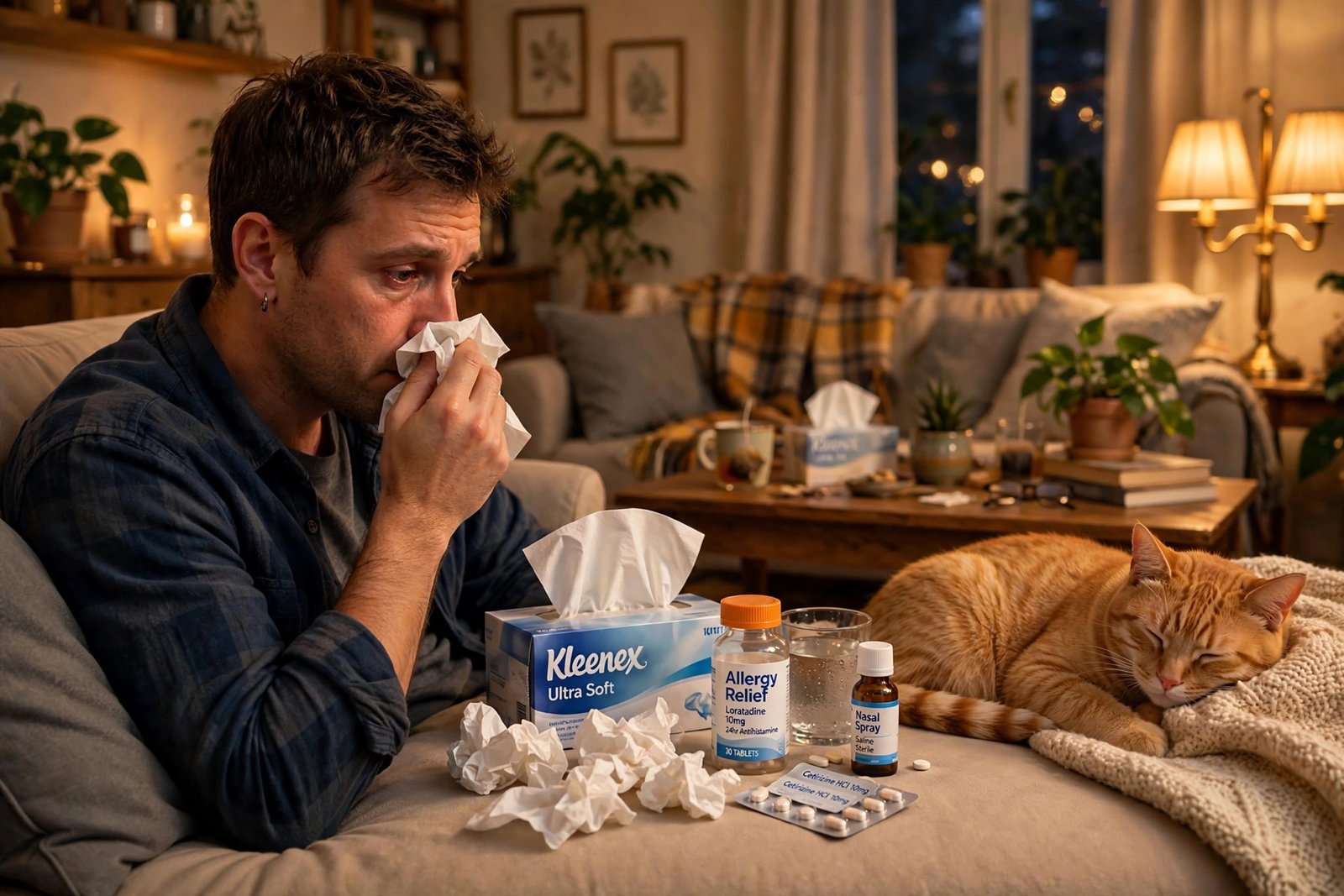
Discovering you are allergic to your pet is heartbreaking — the sneezing, itchy eyes, and congestion arrive, and the first advice everyone gives is “rehome the cat.” But giving up your pet is rarely necessary. With the right combination of medical management, environmental controls, and grooming routines, most people with mild to moderate pet allergies live comfortably with their animals. This guide covers the science of pet allergies and every strategy that actually works, from HEPA filters to immunotherapy.
What you are actually allergic to (it is not the fur)
The allergen is not hair — it is proteins in the animal’s dander (dead skin flakes), saliva, and urine. Cats produce Fel d 1 (from sebaceous and salivary glands — which is why “hypoallergenic” cats still trigger allergies, just often less); dogs produce Can f 1. These proteins are microscopic, sticky, and persistent — cat allergen can linger in a home for months after the animal leaves, clinging to walls, carpets, and upholstery. Understanding this changes the strategy: you are managing protein particles in your environment, not avoiding fur. Washing the animal reduces allergen load temporarily; controlling the environment reduces it permanently. The CDC’s Healthy Pets resources cover the health basics of living with animals.
Step 1: Confirm it is actually a pet allergy
Before overhauling your life, get tested. An allergist’s skin-prick or blood test confirms whether pets are the culprit — because dust mites, mold, and pollen cause identical symptoms and are often the real problem (or co-conspirators). Many “pet allergy” sufferers discover their symptoms persist in pet-free environments, pointing to hidden mold or dust mites as the primary trigger. If testing confirms pet allergy, ask about severity — mild sensitivities respond beautifully to environmental controls; severe asthma-linked allergies need medical management first. Do not guess; test.
Step 2: Medical management (the foundation)
Daily antihistamines: second-generation options (cetirizine, loratadine, fexofenadine) control sneezing and itching for most mild sufferers — cheap, over-the-counter, non-drowsy. Nasal corticosteroid sprays: fluticasone and similar sprays are the single most effective daily medication for allergic rhinitis — more effective than antihistamines for congestion, but they take 1–2 weeks of consistent use to reach full effect. Eye drops: antihistamine eye drops for itchy, watery eyes. Saline rinses: daily nasal irrigation physically removes allergens — unglamorous, remarkably effective. Immunotherapy (allergy shots or sublingual tablets): the only treatment that actually reduces the allergy itself rather than masking symptoms. A 3–5 year course of shots can produce lasting remission — the closest thing to a cure. If you are committed to a lifetime with pets, ask your allergist about immunotherapy early; it is the highest-leverage medical option. The AAAAI’s pet allergy pages detail current immunotherapy options. Discuss asthma specifically with your doctor — pet allergies plus asthma need careful management, not just antihistamines.
Step 3: Environmental controls (where the big wins are)
HEPA air purifiers: a true-HEPA purifier in the bedroom (sized for the room) measurably reduces airborne allergens. It will not eliminate them — dander settles fast — but combined with other measures, it is the highest-impact purchase. The bedroom rule: keep pets out of the bedroom, period. You spend 8 hours a night there; making it an allergen-reduced sanctuary transforms mornings. Wash bedding weekly in hot water. Flooring: hard floors harbor far less allergen than carpet — if replacing carpet is not an option, vacuum weekly with a HEPA-filter vacuum (regular vacuums redistribute allergens). Upholstery: washable throws on furniture the pet uses; leather or washable covers beat fabric. HVAC: high-MERV furnace filters, changed on schedule, plus regular duct cleaning in older systems. Humidity: keep indoor humidity 30–50% — dust mites (common co-triggers) thrive above 50%. These home-health fundamentals overlap with general wellness — making your bedroom better for sleep and strengthening your immune system both complement allergy management.
Step 4: Grooming and pet-side strategies
Bathe the pet regularly: weekly bathing reduces airborne allergen measurably for a few days after each bath — use pet-safe shampoo and do not over-bathe (drying the skin increases dander). Wipe-downs between baths: pet-safe allergen-reducing wipes for a quick daily dander reduction, especially on cats. Brush outdoors: never brush the pet inside — you are aerosolizing the allergen. Designate a non-allergic brusher: if someone in the household is not allergic, grooming duty is theirs. Hand hygiene: wash hands after handling the pet, and keep hands away from your face — simple, effective, and free. Litter box placement: covered boxes in ventilated areas, scooped daily — litter dust plus dander is a double hit. Consider the breed factor honestly: no breed is truly hypoallergenic, but lower-shedding breeds (poodles, Portuguese water dogs, sphynx cats) produce less airborne dander in practice — relevant for future pets, not a reason to rehome your current one.
When to consider rehoming (the honest conversation)
For the vast majority, the strategies above work. Rehoming deserves honest consideration only when: allergies trigger asthma attacks that medication does not control (breathing beats companionship — this is a medical decision, make it with your doctor); a child has severe pet allergies affecting development or sleep (pediatric allergist guidance is essential); or immunotherapy and full environmental controls have failed after genuine effort. If rehoming becomes necessary, do it responsibly: return to the breeder or rescue first (many contracts require this), use breed-specific rescues, never abandon, and be honest with adopters about the reason. But know the statistics: most owners who implement the full protocol — medical management plus environmental controls plus grooming — keep their pets successfully. “Everyone says rehome” is not medical advice.
Kids and pet allergies
Children with pet allergies need pediatric guidance, but the news is encouraging: early-life pet exposure is associated with lower allergy and asthma risk later, and most childhood pet allergies are manageable with the same environmental and medical strategies. Work with a pediatric allergist rather than making decisions from internet anecdotes.
Conclusion
Pet allergies do not have to end pet ownership. Confirm the allergy with testing, build a medical foundation (daily nasal steroids plus antihistamines, immunotherapy for the committed), transform your environment (HEPA filtration, pet-free bedroom, hard floors, rigorous cleaning), and manage the pet side (bathing, outdoor brushing, hand hygiene). Each layer helps; together, they let most mild-to-moderate sufferers live comfortably with the animals they love. The goal was never a sterile home — it is a home where you can breathe and keep your best friend.
Frequently Asked Questions
Can you build immunity to pet allergies?
Some people develop partial tolerance over time, but the reliable path is immunotherapy (allergy shots or sublingual tablets) — a 3–5 year course that can produce lasting reduction in sensitivity. It is the closest thing to a cure.
Are hypoallergenic dog breeds really hypoallergenic?
No breed is truly hypoallergenic — all dogs produce Can f 1 protein. Lower-shedding breeds spread less dander around the home, which helps in practice, but individual reactions vary enormously.
Do air purifiers help with pet allergies?
Yes — true-HEPA purifiers sized for the room measurably reduce airborne pet allergens, especially in bedrooms. They work best combined with other controls (pet-free bedroom, hard floors, regular cleaning).
How often should I bathe my pet for allergies?
Weekly bathing temporarily reduces allergen levels. Use pet-safe shampoo and avoid over-bathing, which dries skin and can increase dander. Wipe-downs between baths help maintain the effect.
When should I see an allergist about pet allergies?
When over-the-counter measures do not control symptoms, when allergies affect your sleep or work, or — urgently — if you develop wheezing, chest tightness, or asthma symptoms around your pet.