How to Kill Dandelions: Step-by-Step Guide (2026)
Learn how to kill dandelions permanently with hand-pulling, selective herbicides, and natural methods. Step-by-step guide plus long-term lawn prevention tips.
Written by admin
Published November 6, 2026
Reading time 4 minutes
How to Kill Dandelions: Step-by-Step Guide (2026)
The best way to kill dandelions is to pull them by hand after rain or watering (removing the entire taproot), or apply a selective broadleaf herbicide containing 2,4-D, dicamba, or triclopyr in spring or fall. For the fastest, most reliable results on a badly infested lawn, spot-spraying individual weeds with a selective herbicide beats every home remedy.
Dandelions are stubborn because of one thing: a thick taproot that can grow 10 inches deep. Break it off, and the weed grows right back. Whether you prefer manual removal, chemical treatment, or a natural approach, here’s how to get rid of dandelions for good.
Method 1: Hand-Pulling Dandelions (Best for Small Infestations)
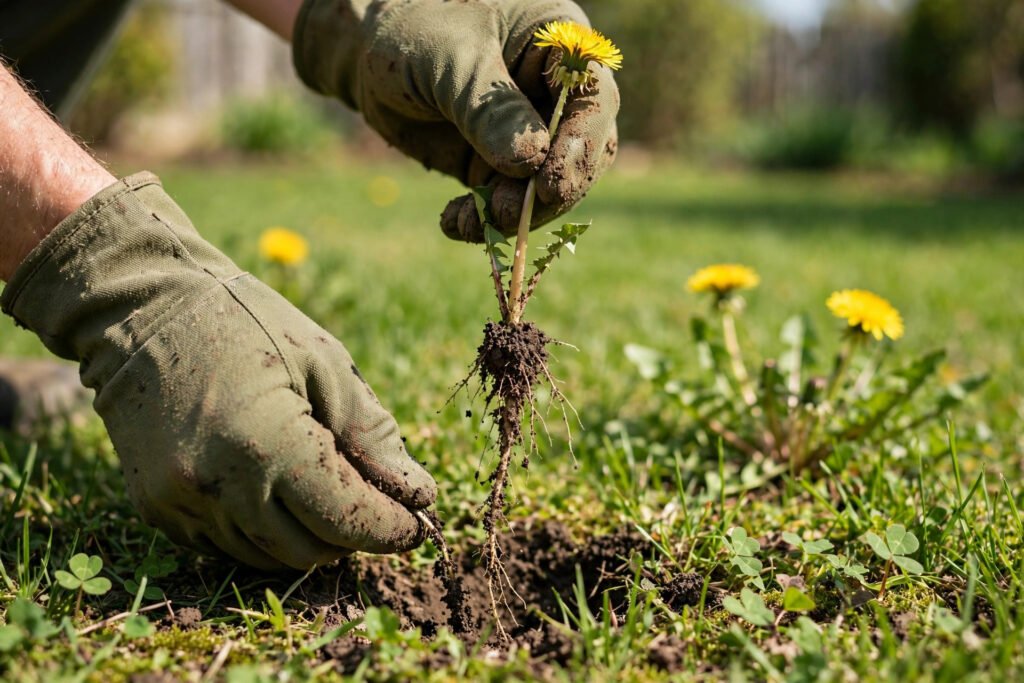
- Wait for wet soil. Pull dandelions the day after rain or after deeply watering your lawn. Moist soil loosens the taproot’s grip dramatically.
- Use a dandelion puller or weeding fork. These inexpensive tools slide alongside the taproot so you can lever the whole plant out. A flathead screwdriver works in a pinch.
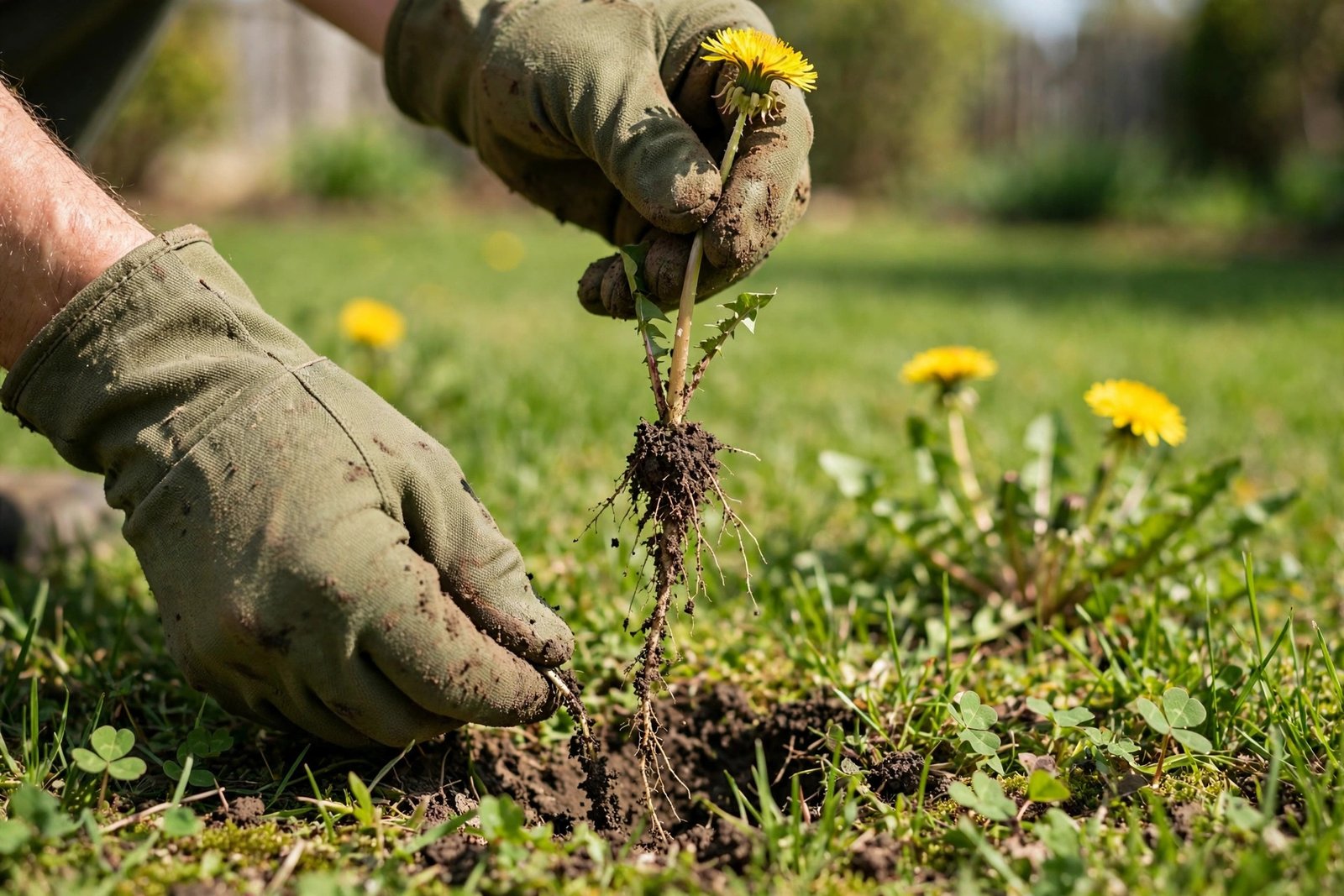
- Grip low and pull straight up. Hold the leaves near the crown, tilt the tool to loosen the root, and pull the entire taproot out in one piece.
- Fill the hole. Drop grass seed and a little topsoil into each hole so dandelions (or other weeds) don’t colonize the bare spot.
This method works great for a dozen or fewer weeds. For a lawn covered in dandelions, read on.
Method 2: Selective Herbicide (Best for Large Infestations)
A selective broadleaf herbicide kills dandelions without harming your grass. Look for products containing 2,4-D, MCPP, dicamba, or triclopyr — common brands include Weed B Gon, Trimec, and SpeedZone.
- Time it right. Spray in early spring (before dandelions bloom) or fall (September–October is ideal — the plant pulls herbicide deep into its root as it stores energy for winter).
- Spot-treat individual weeds. Aim the spray at the dandelion’s leaves, wetting them thoroughly. Avoid drift onto flower beds or vegetable gardens.
- Wait and don’t mow. Don’t mow for 2–3 days before or after spraying so the leaves absorb maximum herbicide.
- Repeat if needed. Some dandelions need a second application 2–3 weeks later. In most cases, two treatments clear 90%+ of weeds.
Method 3: Natural and Organic Options
- Corn gluten meal — a natural pre-emergent that prevents dandelion seeds from germinating. Apply in early spring before weeds sprout. It won’t kill existing dandelions.
- Boiling water — pour directly on individual weeds. Effective but kills everything it touches, so use it only on isolated weeds in walkways or driveways.
- Vinegar (horticultural strength, 20%) — burns dandelion foliage on contact. Household vinegar (5%) mostly just browns the leaves. Be careful: it kills grass too.
The Secret Weapon: A Thick, Healthy Lawn
Dandelions thrive in thin, weak lawns with bare patches. The single best long-term strategy is prevention:
- Mow high — keep grass at 3–3.5 inches. Taller grass shades the soil and blocks dandelion seeds from germinating.
- Overseed bare spots every fall so weeds have nowhere to establish.
- Fertilize appropriately — a healthy lawn outcompetes weeds naturally.
- Leave clippings — they return nitrogen to the soil and act as light mulch.
How Long Does It Take to Get Rid of Dandelions?
Set realistic expectations. Hand-pulling clears a small patch in an afternoon. Herbicide treatment kills visible weeds within 1–2 weeks, but seeds already in the soil can keep sprouting for a season or two. Dandelion seeds stay viable in soil for up to 5 years, so plan on a two-season campaign: treat aggressively this year, then spot-treat stragglers next year while you build up a thick lawn. Most homeowners who combine herbicide with overseeding see a dandelion-free lawn within 12–18 months.
Mistakes to Avoid
- Mowing over dandelion seed heads — this launches hundreds of seeds across your lawn. Pull or bag them instead.
- Pulling the leaves and leaving the root — a broken taproot regrows within weeks.
- Spraying on windy days — herbicide drift can damage garden plants and trees.
- Using non-selective herbicide on the lawn — glyphosate (Roundup) kills grass too. Reserve it for cracks in driveways and sidewalks.
FAQs
What kills dandelions permanently?
Removing or killing the entire taproot. Hand-pulling after rain works for small areas; a selective broadleaf herbicide (2,4-D based) applied in spring or fall is the most reliable permanent solution for whole lawns.
When is the best time to kill dandelions?
Fall (September–October) is the single best window because dandelions pull nutrients — and herbicide — down into their roots as they prepare for winter. Early spring before blooming is the second-best option.
Will vinegar kill dandelions permanently?
Horticultural vinegar (20% acetic acid) burns the foliage but often doesn’t reach the taproot, so regrowth is common. It also kills surrounding grass, so it’s best for weeds in cracks and hardscaping, not lawns.
Should I pick dandelion flowers before they seed?
Yes. A single flower head can produce 200+ seeds. Picking flowers doesn’t kill the plant, but it stops the weed from multiplying while you work on the roots.
Are dandelions bad for the lawn?
They compete with grass for water, light, and nutrients, and they spread aggressively. However, dandelion flowers are an early-season food source for pollinators, so some homeowners leave a few at the lawn’s edge.