
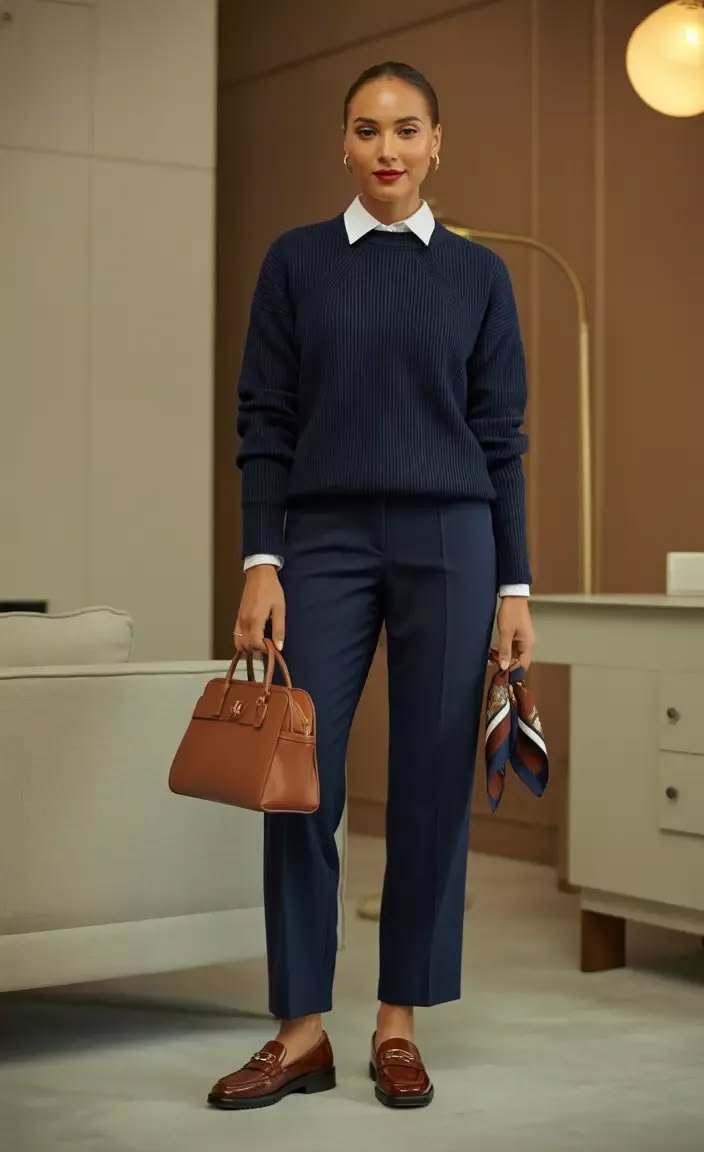
The 8 AM dilemma: the outfit that looks great feels terrible by noon, and the comfortable one looks like you gave up. But stylish and comfortable aren’t opposites — they’re just rarely shopped for together. How can I look stylish while staying comfortable at work? By choosing the right fabrics, fits, and shoes, and understanding that polish comes from intention, not suffering.
The Fabric Secret
Comfort lives in fabric choice more than silhouette. The comfortable-professional fabrics:
- Ponte knit: looks like structured suiting, feels like leggings. Ponte blazers and pants are the working woman’s cheat code.
- Stretch wool blends: professional drape with 2-3% elastane for movement. Worth the investment for trousers.
- Quality jersey: heavyweight (not flimsy) jersey dresses and tops look polished and feel like pajamas.
- Tencel/lyocell: breathable, wrinkle-resistant, silky — ideal for blouses.
- Stretch cotton shirting: the button-down without the straitjacket.
Avoid: 100% polyester blouses (sweaty, staticky), rigid non-stretch suiting for 10-hour days, and anything requiring constant adjusting. If you tug at it in the fitting room, you’ll tug at it all day.
12 Tips for the Comfort-Style Balance
- 1. Elastic waists, hidden well. Pull-on trousers with flat, wide waistbands look identical to zippered ones under a top. Nobody knows; everybody’s comfortable.
- 2. Block heels or polished flats. The 4-inch stiletto era of daily workwear is over. A 2-inch block heel or a pointed flat gives polish with walkability. For all-day standing roles, see the best shoes for standing all day.
- 3. The third piece trick. A blazer, cardigan, or structured jacket over simple comfortable basics instantly reads “styled.” The basics do the comfort work; the layer does the polish work.
- 4. Monochrome or tonal dressing. One color family head-to-toe looks intentional with zero effort. Navy on navy, gray on gray — comfortable pieces suddenly look like an outfit.
- 5. Knit dresses. A well-cut knit dress is a complete outfit in 30 seconds — comfortable, professional, done. Add the third-piece layer for meetings.
- 6. Stretch in suiting. Modern “performance” suiting (stretch wool, knit blazers) looks traditional and moves like athletic wear.
- 7. Flats that aren’t frumpy. Pointed flats, loafers, sleek mules — flat doesn’t mean shapeless. Keep them polished and they read professional.
- 8. Tuck strategically. A front tuck or full tuck defines the waist and makes relaxed pieces look deliberate. The difference between “oversized” and “sloppy” is often just a tuck.
- 9. Breathable layers. Offices swing between arctic AC and stuffy heat. Light layers you can add/remove beat one heavy “professional” piece.
- 10. Dark colors hide everything. Wrinkles, spills, long-day wear — navy, black, and charcoal forgive. Save the silk pastels for short days.
- 11. Comfortable doesn’t mean oversized. The goal is well-fitting comfort, not drowning in fabric. Proper fit is what separates “relaxed polish” from “gave up.”
- 12. Keep emergency polish at work. A blazer on the office door, stain remover in the drawer, comfortable backup flats under the desk. Preparation is the ultimate comfort.
Dress Code Navigation
Match your comfort strategy to the code: business formal demands structure — invest in stretch suiting and block heels. Business casual is the comfort sweet spot — ponte, knits, polished flats all thrive. Smart casual / casual — dark jeans and knit blazers live here. If the lines blur, our business casual vs. smart casual guide clarifies. And if you’re building a work wardrobe affordably, affordable workwear that looks professional is your shopping companion.
How Can I Look Stylish While Staying Comfortable at Work? Your Questions Answered
Are leggings ever appropriate for work?
In most traditional offices, no — leggings read as athletic wear regardless of how they’re styled, and the “as pants” debate is largely settled against them in professional contexts. The exceptions: genuinely casual workplaces (some tech, creative studios), and leggings as tights under a tunic-length top or dress (where they function as hosiery, not pants). The comfortable alternative that is work-appropriate: ponte pants — they look like trousers, feel like leggings, and end the debate entirely. When comfort and professionalism conflict, ponte is the peace treaty.
How do I look professional in a very casual office?
The casual-office trap is dressing down to the lowest common denominator. Instead, aim for the top of the casual range: dark jeans (not distressed) instead of light, a blazer instead of a hoodie, loafers instead of sneakers, a tucked shirt instead of untucked. You’ll look like the most polished person in the room without looking overdressed — and that positioning matters for perception and advancement. The goal in casual offices isn’t blending in; it’s being the best-dressed version of casual. Good Housekeeping’s workwear coverage regularly addresses this exact balance.
What shoes are both professional and comfortable for commuting?
The commuter’s dilemma: the walk demands sneakers, the office demands polish. Solutions: commute in sneakers and change at the office (keep work shoes at your desk — the most common professional solution), choose hybrid styles (cushioned loafers, supportive ballet flats, dress-casual sneakers for casual offices), or invest in genuinely comfortable professional shoes (brands like Vionic, Ecco, and Cole Haan make office-appropriate shoes with real support). Never sacrifice the commute or the office — the two-shoe system exists because it’s the actual answer.
Can I wear sneakers to a business casual office?
Increasingly, yes — with strict qualifications. The sneakers must be minimal, clean, and premium-looking (leather low-tops in white, black, or neutral — not athletic trainers). The rest of the outfit must be clearly business casual (trousers or dark jeans, button-down or blouse, possibly a blazer) — the sneakers are the one casual element, not part of an overall casual outfit. And know your specific office: some “business casual” workplaces embrace this, others don’t. Observe what senior people wear — that’s your real dress code. When uncertain, loafers are the zero-risk choice.
How do I dress professionally while pregnant?
The principles don’t change — fit, polish, intention — but the execution adapts. Wrap dresses and empire-waist styles accommodate growth gracefully; stretch fabrics (ponte, jersey) are your allies; a blazer worn open over everything maintains structure as your body changes. Buy a few key pieces in each trimester rather than a full wardrobe at once (your body will surprise you). And resist the urge to hide in oversized tents — defined shape, even a changing one, always looks more professional than shapeless volume. Many standard pieces (cardigans, blazers, scarves) work through the whole pregnancy.
The Bottom Line
Looking stylish while staying comfortable at work means choosing comfort-engineered fabrics (ponte, stretch wool, quality jersey), using the third-piece trick for instant polish, wearing walkable shoes, and ensuring everything actually fits. Polish is about intention, not pain. Dress like you respect the room and yourself.


