
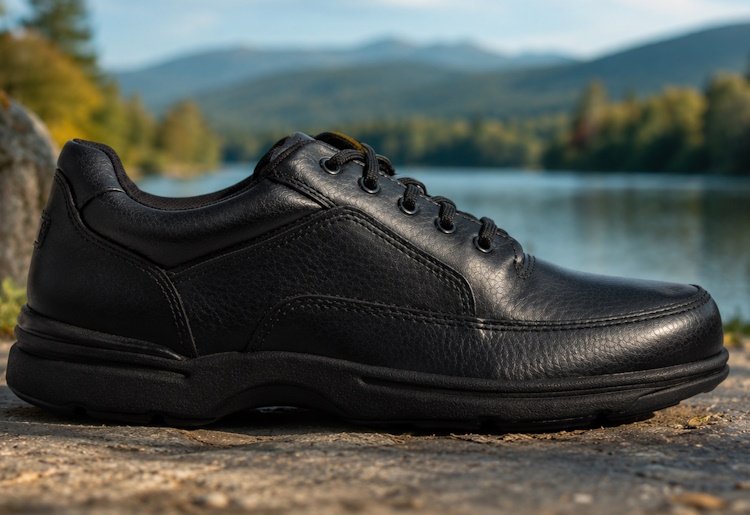
If you stand all day for work — nursing, retail, teaching, hospitality, healthcare — you know the specific misery of 4 PM feet: aching arches, burning balls of feet, throbbing heels. The wrong shoes don’t just hurt; they cause back pain, knee problems, and exhaustion that follows you home. What are the best shoes for standing all day at work? The ones engineered for it — with the right support, cushioning, and fit. Here’s what to look for and the categories that deliver.
What Standing-All-Day Shoes Need
- Arch support: the #1 factor. Your arches bear your weight all day; without support, they collapse into pain. Look for contoured footbeds, not flat insoles.
- Cushioning with rebound: soft enough to absorb impact, resilient enough not to bottom out by hour six. Memory foam feels great initially but compresses; look for EVA or polyurethane that maintains structure.
- Wide toe box: feet swell during the day (up to half a size). Cramped toes = bunions, blisters, numbness. Shop in the afternoon when feet are largest.
- Stable heel counter: the back of the shoe should grip your heel firmly — slippage causes blisters and instability.
- Slip resistance: essential for healthcare, food service, and anywhere floors get wet. Look for rated slip-resistant outsoles.
- Proper fit: thumb’s width at the toe, no pinching, heel secure. Break them in before a full shift — never debut new shoes on a 12-hour day.
Best Categories by Profession
- Healthcare (nurses, doctors): clogs (Dansko, Crocs work lines) and supportive sneakers (Hoka, Brooks, New Balance). Easy to clean, slip-resistant, maximum cushioning. Compression socks multiply the benefit.
- Retail and hospitality: supportive loafers, cushioned flats, or dress-casual sneakers depending on dress code. Brands like Vionic, Clarks, and Ecco balance professional looks with orthotic-grade support.
- Teachers: stylish comfort — supportive flats, low block heels with cushioning, or clean sneakers. You’ll walk miles daily; treat shoe choice like athletic equipment.
- Food service: non-slip is mandatory — Shoes for Crews, Hoka work models, or any rated slip-resistant shoe. Waterproof or wipeable uppers for spills.
- Professional offices (standing desks): cushioned loafers, supportive flats, or dress sneakers. The stylish-comfortable work balance applies here.
Brands That Consistently Deliver
Hoka — maximum cushioning, the healthcare worker favorite. Brooks — reliable support, great for wider feet. New Balance — wide sizes, work-specific lines. Dansko — the clog standard for medical professionals. Vionic — built-in orthotic support in professional styles. Clarks / Ecco — comfort-dress hybrids. Allbirds — lightweight comfort for casual workplaces (less structured support, though).
Honest note: the “best” shoe is the one that fits your feet. High arches, flat feet, wide feet, plantar fasciitis — these change the answer. If you have persistent foot pain, a podiatrist visit beats any shoe recommendation. Custom orthotics in decent shoes outperform expensive shoes without them.
Beyond Shoes: The Full Foot-Care System
- Compression socks: reduce swelling and fatigue dramatically for 10+ hour days. Not just for nurses — anyone standing benefits.
- Rotate shoes: alternate pairs daily. Different shoes stress feet differently, and rest days extend shoe life.
- Anti-fatigue mats: if you stand in one spot, a mat is transformative. Ask your employer — many provide them.
- Stretch and roll: calf stretches and a tennis ball under the arch for 2 minutes after shifts prevent the morning hobble.
- Replace on schedule: cushioning dies before uppers look worn. Replace daily-wear work shoes every 6-12 months depending on hours.
Keep whatever you choose in good shape — our leather shoe care guide covers maintenance for leather pairs, and white sneaker cleaning for the sneaker rotation.
What Are the Best Shoes for Standing All Day at Work? Your Questions Answered
How often should I replace work shoes?
For daily all-day wear: every 6-12 months, depending on hours and your weight. The tricky part is that cushioning dies long before uppers look worn — a shoe can look fine while its support is gone. The tests: press your thumb into the midsole — if it doesn’t spring back, it’s done. Compare to a new pair — if yours feel flat, they are. Track mileage like a runner would: 300-500 miles of standing/walking is a reasonable lifespan for cushioned work shoes. Replacing on schedule prevents the gradual pain creep that people blame on everything except their dead shoes.
Are expensive work shoes worth it?
Up to a point. The jump from $40 to $100-150 buys genuinely better cushioning, support, durability, and materials — it’s the sweet spot for work shoes. Beyond $150-200, you’re often paying for brand or aesthetics rather than comfort engineering. The exception: people with specific foot conditions, where a $200 shoe with proper support beats $80 shoes plus $300 custom orthotics math differently. For most standing workers, $100-150 from a comfort-engineered brand (Hoka, Brooks, Vionic, Ecco) is the value optimum. And two $120 pairs in rotation outlast and outperform one $240 pair worn daily.
Can I wear my running shoes for standing all day at work?
Often yes — running shoes are engineered for impact absorption and many workplaces accept clean, neutral-colored athletic shoes. The caveats: running shoes prioritize forward motion over lateral stability (fine for standing, less ideal for jobs with lots of pivoting), they lack slip-resistance ratings many workplaces require (healthcare, food service), and their cushioning is designed for running gait, not static standing. For office and retail standing, quality running shoes are excellent. For regulated workplaces, get the work-rated version. The American Podiatric Medical Association’s seal of acceptance is a reliable indicator of foot-health claims.
Do compression socks really help?
Yes — they’re one of the highest-ROI additions for standing workers. Graduated compression (15-20 mmHg for daily wear, 20-30 for long shifts) improves venous return, reducing the swelling, heaviness, and fatigue that accumulate over hours on your feet. The evidence is solid for occupational standing. Get the right size (measure your calf — too tight is counterproductive), put them on before swelling starts (morning, before your shift), and replace every 3-6 months as elasticity fades. They’re not glamorous, but neither is limping to your car at 7 PM.
The Bottom Line
The best shoes for standing all day combine real arch support, resilient cushioning, a wide toe box, and slip resistance matched to your workplace — from Hoka and Brooks for healthcare to Vionic and Ecco for professional settings. Fit them in the afternoon, break them in before long shifts, add compression socks, and replace before the cushioning dies. Your feet carry your career; equip them properly.


