
Two dress codes, one word apart, genuinely different meanings — and getting them wrong ranges from mildly awkward to interview-ending. What is the difference between business casual and smart casual? Business casual is professional relaxed; smart casual is casual polished. The distinction matters, and it’s simpler than the internet makes it seem.
The Core Distinction
Business casual starts from business and relaxes it: think office-appropriate without a suit. The context is professional — workplaces, conferences, business dinners. The baseline assumption is that you look work-ready.
Smart casual starts from casual and sharpens it: think everyday clothes made polished. The context is social — dinners out, events, nice restaurants, creative workplaces. The baseline assumption is that you look put-together, not corporate.
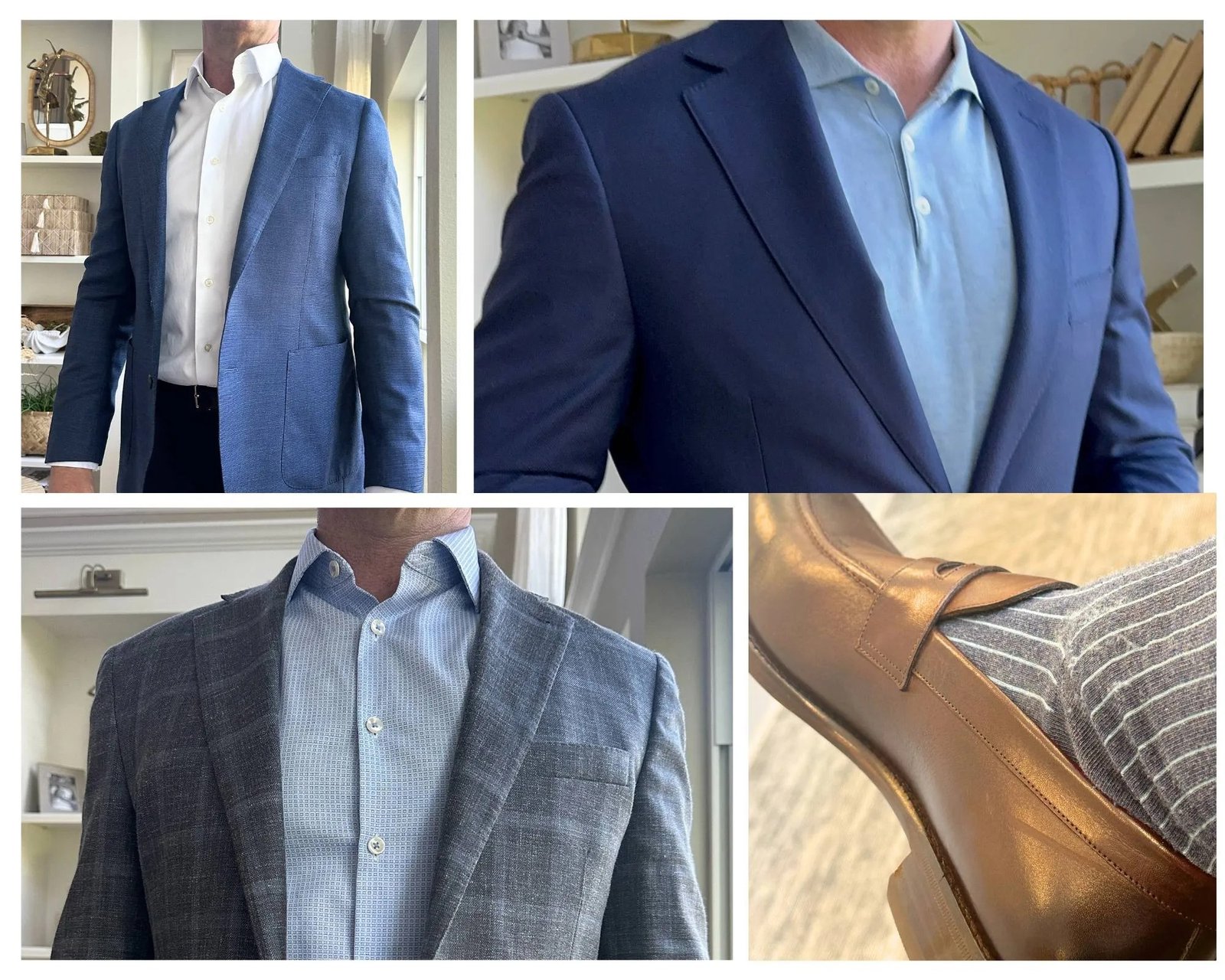
Same blazer, different worlds: with trousers and a button-down, it’s business casual. With dark jeans and a tee, it’s smart casual. The pieces overlap; the intention and context differ.
Business Casual: The Rules
- Tops: button-downs, blouses, knit tops, sweaters, polos (in relaxed offices). Collars or structure expected.
- Bottoms: chinos, dress pants, skirts, tailored trousers. Dark jeans only if the office explicitly allows.
- Layers: blazers, cardigans, knit jackets — the third piece is common.
- Shoes: loafers, dress shoes, professional flats, low heels. Clean and polished.
- Never: shorts, flip-flops, gym clothes, graphic tees, ripped anything, overly casual sneakers.
- The test: would this look appropriate in a client meeting? If yes, it’s business casual.
Smart Casual: The Rules
- Tops: quality tees, henleys, casual button-downs (untucked okay), nice sweaters, polo shirts.
- Bottoms: dark jeans (no distressing), chinos, casual skirts, tailored shorts in summer contexts.
- Layers: blazers (unstructured okay), leather jackets, denim jackets, sharp cardigans.
- Shoes: clean minimal sneakers, loafers, boots, stylish flats, mules.
- Never: gym wear, flip-flops, ripped jeans, graphic tees with jokes, anything sloppy.
- The test: would this look right at a nice restaurant on a Friday night? If yes, it’s smart casual.
Side-by-Side Examples
- Women, business casual: navy trousers + white blouse + blazer + loafers
- Women, smart casual: dark jeans + silk top + blazer + heeled boots
- Men, business casual: chinos + button-down + blazer + dress shoes
- Men, smart casual: dark jeans + henley + unstructured blazer + clean sneakers
Notice: the blazer appears in all four. The companions determine the code. For interview contexts, our creative interview guide navigates the trickier edge cases; for formal events, see men’s semi-formal guide.
How to Handle Ambiguous Invitations
- “Dress code: casual” for a work event → aim smart casual, leaning business casual. Work-casual is always a half-step dressier than social-casual.
- No dress code listed → match the venue and ask someone who’s been. Slightly overdressed beats underdressed.
- Industry matters: tech “business casual” is fashion’s “smart casual.” Finance “smart casual” is everyone else’s “business casual.” Calibrate to the room.
- When truly uncertain: dark jeans + blazer + polished shoes is the universal safe zone — it reads correctly in both codes.
What Is the Difference Between Business Casual and Smart Casual? Your Questions Answered
Can jeans ever be business casual?
It depends entirely on the specific workplace — “business casual” isn’t a universal standard, it’s a company-culture dialect. In tech and creative industries, dark undistressed jeans are standard business casual. In finance, law, and traditional corporate, jeans are never business casual regardless of how dark. The rule: observe what people at your level wear, and when in doubt, don’t be the jeans pioneer — let someone else test the boundary first. Dark, well-fitting, undistressed jeans are the only jeans that ever qualify; ripped, faded, or baggy jeans are smart casual at best, never business casual.
What does “dressy casual” mean compared to these?
“Dressy casual” sits between smart casual and cocktail — it’s the social-event equivalent of business casual’s polish. Think: what you’d wear to a nice restaurant, a daytime wedding, or an upscale party. It’s dressier than smart casual (which handles everyday nice outings) but stops short of formal. The confusion is understandable — the fashion industry has generated overlapping terms (dressy casual, smart casual, elevated casual) that all describe slightly different points on the same spectrum. When an invitation says “dressy casual,” aim for the polished end: a dress or elevated separates, real shoes, intentional accessories.
How do I dress business casual as a man without looking boring?
The boring-business-casual trap is real: khakis and a blue button-down on repeat. The fixes: texture (a knit blazer instead of a smooth one, textured trousers), color (burgundy, forest, rust within professional bounds), pattern (subtle checks, micro-patterns), and the details (interesting watch, quality shoes, a pocket square). Fit does the heaviest lifting — tailored business casual looks intentional; off-the-rack boxy looks default. And grooming: the difference between boring and sharp is often just a good haircut and polished shoes. GQ’s office style coverage is a good reference for business casual with personality.
Is smart casual appropriate for a job interview?
Generally no — interviews warrant at least business casual, and often more. The exception: companies that explicitly say “dress casually for the interview” (some tech firms do) — and even then, aim for the sharp end of smart casual, not the relaxed end. The interview power dynamic means overdressing slightly is always safer than matching the office’s daily casual. A candidate in business casual at a casual company looks respectful; a candidate in smart casual at a formal company looks unaware. When the dress code is ambiguous, the dress code spectrum is your map — and interviews sit above daily wear, always.
What shoes work for both dress codes?
The crossover champions: loafers (dressy enough for business casual, relaxed enough for smart casual), clean minimal white sneakers (smart casual only — never business casual in traditional offices), Chelsea boots (bridge both beautifully), and polished ballet flats or mules for women. The shoe is often what determines the code: the same outfit with loafers reads business casual, with sneakers reads smart casual. When navigating an ambiguous dress code, choose the shoe first — it sets the register, and everything else follows. Keep them clean and in good repair; shoes are the most noticed detail in both codes.
The Bottom Line
Business casual = professional relaxed (office context, structured pieces, no denim unless allowed). Smart casual = casual polished (social context, dark jeans okay, sneakers okay if clean). The same pieces shift codes based on companions and context. When in doubt, the blazer-and-dark-jeans middle ground rarely fails.


