
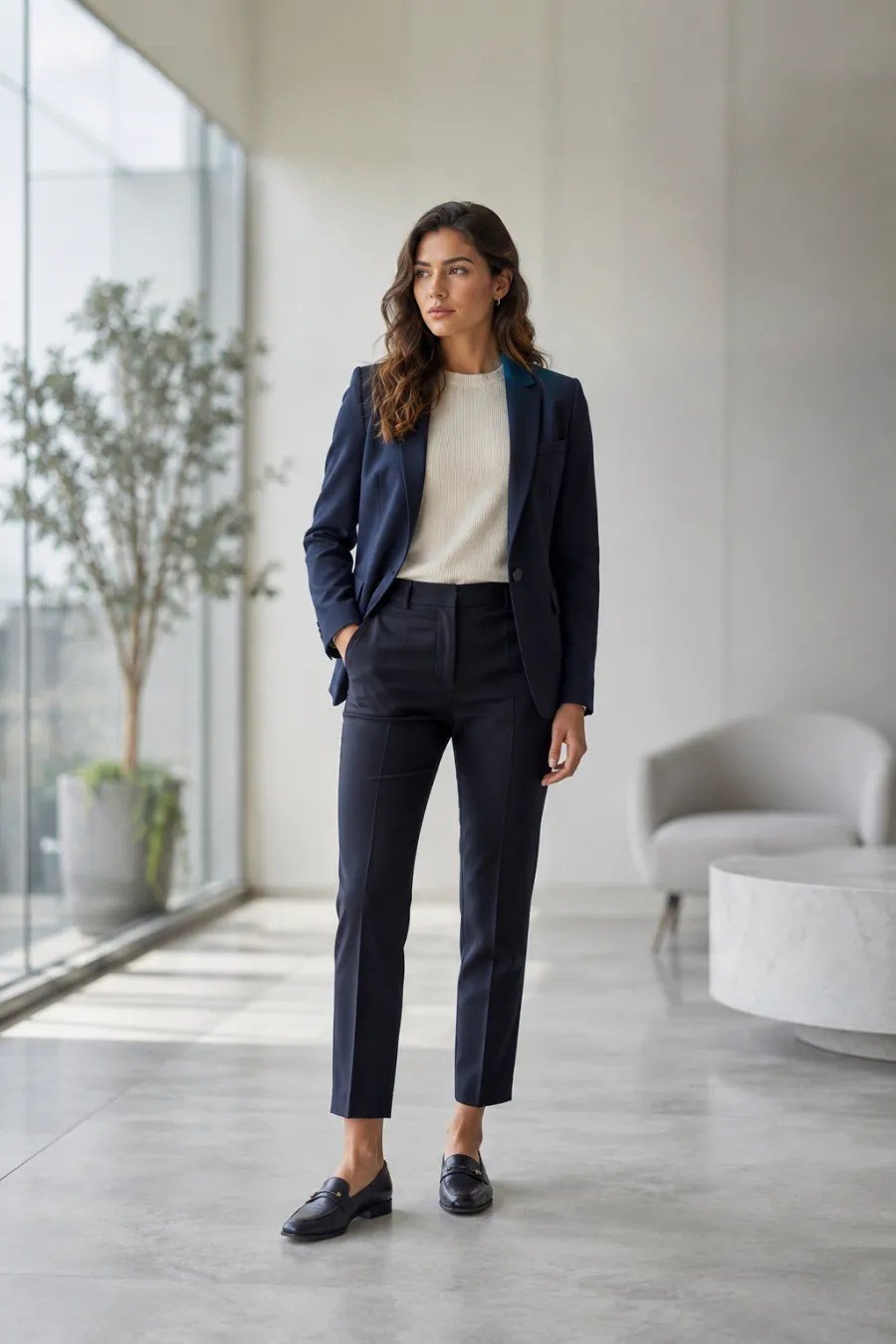
Creative job interviews come with a special kind of outfit anxiety. Dress too corporate and you look like you don’t get the culture. Dress too casual and you look like you don’t care. The sweet spot — polished, personal, intentional — is narrower than it seems. What should I wear to a job interview in a creative field? Something that says “I understand this industry” before you say a word.
The Golden Rule: One Level Up From the Team
Research the company’s actual dress code — check their social media, “life at” pages, and employee photos, not just the careers page. Then dress one notch above what the team wears daily. Design studio in jeans and tees? You wear dark jeans, a blazer, and sharp shoes. Agency in smart casual? You wear the polished version of smart casual. Startup in hoodies? Clean dark jeans, a nice sweater or button-down, and intentional shoes.
The goal is to look like a slightly sharper version of someone who already works there — belonging, plus effort. Never the full corporate suit unless it’s a creative role inside a traditional company (advertising at a bank, design at a law firm), where the company culture wins.
Outfit Formulas That Work
For design, media, and agency roles: dark jeans or tailored trousers + an interesting top or button-down + a blazer or structured jacket + clean, intentional shoes. The blazer is doing heavy lifting here — it signals professionalism while the rest signals creativity.
For fashion, beauty, and editorial: this is the one arena where a fashion-forward outfit is genuinely expected. Wear something with a point of view — but still interview-appropriate. Avoid anything that needs adjusting, wrinkle-prone fabrics, or looks better in photos than in person.
For tech and startups: polished casual. Dark jeans or chinos, a quality sweater or casual button-down, clean minimal sneakers or boots. Look deliberate, not like you rolled out of bed — the difference between “startup casual” and “sloppy” is fit and grooming.
For creative leadership roles: lean more polished regardless of industry. A creative director interview can handle a full suit styled with personality — interesting shoes, a textured tie or none, a pocket square. Authority with flair.
Show Personality Strategically
Creative fields want to see who you are — that’s the opportunity. One or two distinctive elements: interesting glasses, a signature color, textured fabrics, distinctive (tasteful) jewelry, great shoes. Portfolio people especially: your outfit is part of your presentation design.
But keep it to accents, not costume. The interviewer should remember you, not your outfit. Avoid: anything they’d describe before your name (“the one in the…”), strong fragrance (interview rooms are small), noisy jewelry, and brand-new shoes you haven’t broken in (limping into an interview is memorable for the wrong reasons).
Grooming and Details Matter More Here
In creative industries, details get noticed — that’s literally the job. Clean, trimmed nails. Hair intentional (whatever your style, make it look deliberate). Clothes pressed or steamed, lint-rolled, no loose threads. Bag or portfolio clean and professional. These details signal the same care you’d bring to the work.
If budget is tight, focus spending on fit and shoes — our guide to affordable workwear that looks professional covers building interview-ready outfits without overspending. And a well-styled blazer for a polished look is the single most versatile interview investment.
What Not to Wear
- Anything wrinkled, stained, or visibly worn — in a visual industry, this reads as a portfolio flaw
- Full corporate suit (unless the company is corporate) — signals you didn’t research the culture
- Overly casual: shorts, flip-flops, gym clothes, graphic tees with jokes
- Anything uncomfortable — fidgeting with your outfit distracts from your answers
- Strong perfume or cologne — keep it minimal or skip it
Video Interview Notes
For remote creative interviews: solid colors read better on camera than busy patterns. Test your outfit on camera beforehand — some textures moiré, some colors wash out. Frame from the waist up, but still wear full professional bottoms (standing up unexpectedly happens). Good lighting matters more than an expensive outfit.
What Should I Wear to a Job Interview in a Creative Field? Your Questions Answered
Can I wear all black to a creative interview?
Yes — all black is the creative industry’s unofficial uniform, and it reads as intentional rather than funereal in these contexts. The key is texture and fit: black jeans, black tee or shirt, black blazer or leather jacket in different textures (so it’s an outfit, not a void), with one interesting detail — great shoes, distinctive glasses, a textured fabric. What makes all-black fail is when it’s shapeless or sloppy; when it’s sharp, it’s the safest strong choice in creative fields. GQ’s style coverage regularly showcases how monochrome dressing works when the details are right.
What should I bring to a creative interview besides my outfit?
Your portfolio (physical or tablet — don’t rely on their wifi for yours), a notebook and pen (taking notes signals seriousness), copies of your resume (someone always asks), and a list of questions for them (the interview is two-way). For design roles, consider leaving behind a small physical artifact of your work — a beautifully printed piece beats a URL they’ll never click. And bring your energy: creative interviews assess cultural fit and enthusiasm as much as skills. The outfit gets you in the door; the preparation and personality close it.
How do I dress for a creative interview on video?
Solid colors and clean lines read best on camera — busy patterns can moiré (that shimmering effect) on video. Test your outfit on camera beforehand: sit where you’ll sit, check the lighting, and see what the frame actually shows. Jewel tones and saturated colors look great on video; washed-out pastels can disappear. And dress fully — not just waist-up. Standing to grab something in pajama pants is a story you don’t want. Good lighting and a clean background matter as much as the outfit itself.
The Bottom Line
For a creative job interview, dress one level above the team’s daily wear, add one or two personal touches, nail the grooming details, and make sure everything fits and is comfortable. Research the culture, lean polished, and let your personality show through intentional choices. The outfit should support your story, not tell a different one.


