
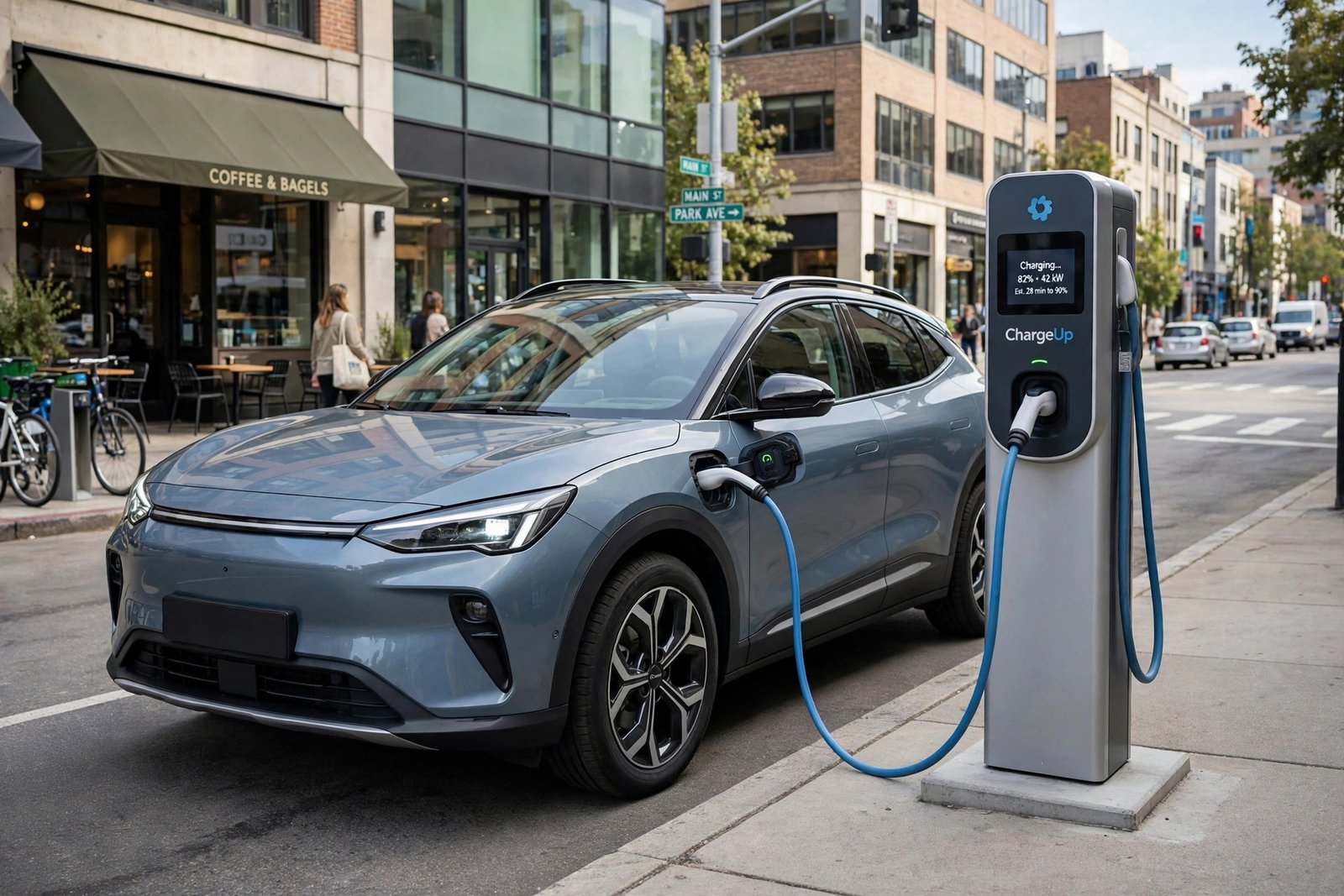
Electric cars have crossed the chasm: in 2026, you no longer need $60,000+ to get a genuinely good EV. Federal tax credits, fierce competition (especially from Korean and American automakers), and maturing battery tech have pushed several excellent electric cars under the $40,000 mark — some well under $30,000 after incentives. This guide covers the best electric cars under $40,000 you can actually buy right now, what the real ownership costs look like, and how to choose between them.
How we judge: what matters under $40,000
Budget EVs live or die on four things: real-world range (EPA estimates are optimistic — subtract 10–20% for highway driving and winter), charging speed (a car that charges at 150kW+ turns road trips from painful to fine), total cost after incentives (the $7,500 federal credit changes everything, but not all cars qualify — check current eligibility at fueleconomy.gov), and everyday livability (cargo space, tech, warranty). A cheap EV with 200 miles of range and slow charging is a city car; one with 300+ miles and fast charging is a do-everything car.
The top picks
Chevrolet Equinox EV — the value king
Starting around $35,000 before incentives (potentially under $28,000 after the federal credit for qualifying buyers), the Equinox EV delivers ~319 miles of EPA range, 150kW DC fast charging, and proper crossover space. It is the first affordable EV with no major compromises — the default recommendation for most buyers. Chevy’s Ultium platform has proven reliable, and the warranty (8yr/100k miles on battery) is standard-strong.
Hyundai Kona Electric — the city-friendly pick
Around $33,000 starting, ~261 miles of range, compact dimensions that make urban parking painless. The Kona has been refined over multiple generations — it is the safe, proven choice. Slightly slower charging (100kW) than the newest rivals, but perfectly adequate for daily driving and occasional trips.
Tesla Model 3 (base) — the tech and charging pick
Periodically dipping near or under $40,000 (Tesla adjusts pricing frequently), the base Model 3 offers ~272 miles of range, access to the Supercharger network (still the gold standard for road-trip charging), and the industry’s best software. Build quality and service experiences vary — go in with eyes open — but for charging infrastructure alone, it remains compelling.
Kia Niro EV — the practical all-rounder
Around $40,000 (often discounted below), ~253 miles of range, wagon-like cargo versatility, and Kia’s excellent warranty. The Niro is less exciting than its rivals but more practical — the car for buyers who prioritize function over flash.
Chevrolet Bolt EUV / next-gen Bolt — the budget champion
The outgoing Bolt was America’s cheapest EV (~$28,000); its Ultium-based successor targets similar pricing with modern fast charging. If rock-bottom price is the priority, the Bolt lineage remains unmatched — a genuine EV for the price of a base Civic.
Nissan Leaf — the deal-hunter’s special
Often available well under $30,000 after discounts, the Leaf is dated (CHAdeMO charging is a dying standard) but absurdly cheap. Only for buyers who charge at home and rarely road-trip — within those constraints, the value is undeniable.
The incentive math (do not skip this)
The $7,500 federal clean vehicle credit applies to qualifying new EVs under $55,000 (cars) — but eligibility depends on battery sourcing, assembly location, and your income, and the rules have shifted multiple times. As of 2024+, many buyers can transfer the credit to the dealer as an instant point-of-sale discount — no waiting for tax season. State incentives stack on top: New York’s Drive Clean Rebate offers up to $2,000, and several states add thousands more. A $35,000 Equinox EV can realistically cost $25,500–$28,000 after federal and state incentives — Honda Civic money for a 319-mile EV. Verify current eligibility before you buy; the DOE’s electric vehicle portal tracks the latest rules. Used EVs get a separate $4,000 federal credit — a 2–3 year old EV is often the best value in all of motoring.
Real ownership costs: the honest math
“Fuel”: at $0.17/kWh home charging, a 3.5 mi/kWh EV costs ~$0.05/mile versus ~$0.15/mile for a 30-mpg gas car at $4.50/gallon. Driving 12,000 miles/year saves roughly $1,200 annually — more where gas is expensive.
Maintenance: no oil changes, no transmission services, regenerative braking that barely wears pads. Expect roughly half the maintenance cost of a gas car — though tires wear faster (EVs are heavy) and out-of-warranty battery replacement is expensive (mitigated by 8yr/100k-mile federal battery warranties).
Insurance: EVs often cost 10–20% more to insure (expensive repairs, pricey parts). Get quotes before buying — insurance on EVs typically runs 10–20% higher than comparable gas cars, so factor it into the total cost of ownership.
Charging at home vs. public: home charging (a $400–$800 Level 2 install) is the EV dream — cheap, convenient, always full. Apartment dwellers relying on public charging pay 2–3x more per kWh and lose the convenience edge. Be honest about your charging situation: no home charging plus no workplace charging equals a compromised EV experience. Our guide to making your home more energy-efficient pairs well with the home-charging setup.
Who should (and should not) buy a budget EV
Ideal: homeowners who can install Level 2 charging, commuters driving 30–80 miles daily (maximum fuel savings), two-car households (EV for daily, gas for edge cases), and anyone in a state with strong incentives.
Think twice: apartment dwellers with no charging access, frequent long-distance towers (EV towing range is poor), road-trippers in charging deserts, and buyers who keep cars 15+ years (battery degradation over very long horizons is the open question). For urbanites deciding whether to own any car, the cheapest ways to get around NYC might convince you to skip ownership entirely — and rooftop solar plus an EV is the ultimate home-energy combo for homeowners.
Conclusion
The best electric cars under $40,000 in 2026 — led by the Chevrolet Equinox EV, Hyundai Kona Electric, Tesla Model 3, and Kia Niro EV — are genuinely good cars, not compromises, with 250–320 miles of range and real fast charging. After federal and state incentives, several land in the mid-$20,000s — cheaper than equivalent gas cars before fuel savings. The keys: verify incentive eligibility before you buy, be honest about your charging situation, and get insurance quotes early. For the right buyer, a budget EV is not just the green choice — it is the cheap choice.
Frequently Asked Questions
What is the cheapest electric car in 2026?
The Chevrolet Bolt lineup targets the low-$30,000s before incentives (potentially mid-$20,000s after), making it America’s cheapest new EV. Used EVs with the $4,000 federal credit can go under $20,000.
Do all EVs qualify for the $7,500 tax credit?
No — eligibility depends on assembly location, battery sourcing, vehicle price caps, and buyer income. Many 2026 models qualify for at least partial credit, transferable as a point-of-sale discount. Check fueleconomy.gov for current status.
How much does it cost to charge an EV at home?
Roughly $0.04–$0.07 per mile at average residential rates — about a third the per-mile cost of gasoline. A Level 2 home charger installation costs $400–$800.
How long do EV batteries last?
Modern EV batteries typically retain 80–90% capacity after 100,000+ miles and are federally warranted for 8 years/100,000 miles. Most will outlast the car for typical owners.
Can I road-trip in a budget EV?
Yes, if it has 250+ miles of range and 100kW+ DC fast charging — plan charging stops every 2–3 hours. The Tesla Supercharger network (now opening to other brands) makes it easiest.