Why Is Recycling So Confusing in New York City?
Why is recycling so confusing in New York City? The real reasons behind the chaos: changing rules, wishcycling, building logistics, and how NYC is fixing it in 2026.
Written by admin
Published November 5, 2026
Reading time 6 minutes
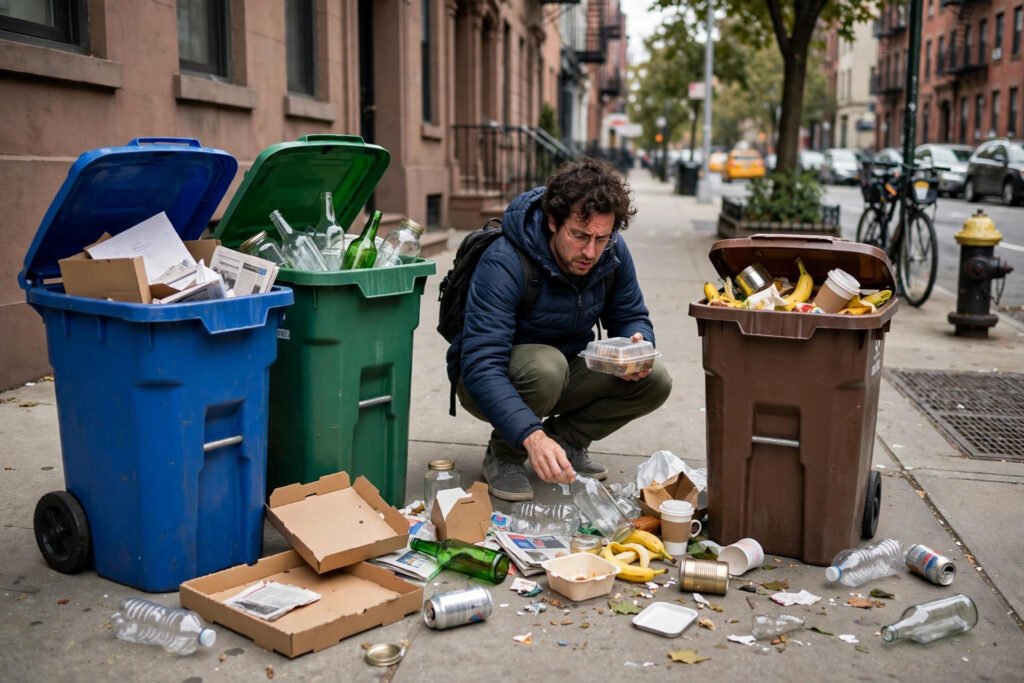
Pizza boxes: yes or no? (It depends.) Plastic bags: recyclable? (No — never in curbside bins.) That yogurt cup with the foil lid? New York City’s recycling rules have changed multiple times in recent years, differ from every suburb’s rules, and come with enough exceptions to confuse even well-meaning recyclers. The result: “wishcycling” — tossing questionable items in the bin hoping they are recyclable — which contaminates entire truckloads.
Why is recycling so confusing in New York City? The reasons are structural, not your fault. Understanding them makes the rules finally stick.
Reason 1: The Rules Keep Changing
NYC’s recycling program has evolved significantly: the expansion of curbside composting to all boroughs, changes in what plastics are accepted, new textile and e-waste programs, and shifting commercial requirements. Each change is well-intentioned, but every change resets public understanding to zero. Most New Yorkers learned the rules once — years ago — and never updated.
The deeper issue: recycling rules are local, not national. What is recyclable in NYC differs from Westchester, which differs from New Jersey — but products are labeled with generic national symbols that do not map to local reality. The chasing-arrows symbol on plastic does not mean “recyclable here”; it is just a resin code. This mismatch between national packaging and local rules is confusion by design.
Reason 2: The System Is Genuinely Complex
NYC runs multiple parallel streams, each with its own rules:
Metal/glass/plastic/cartons (blue bin or clear bag): bottles, cans, jugs, cartons — but not plastic bags, not styrofoam, not flexible pouches.
Paper and cardboard (green bin or bundled): newspapers, magazines, mail, boxes — but not greasy pizza boxes (the oil contaminates paper recycling; tear off the clean lid to recycle, trash the greasy bottom), not paper towels, not wax-coated cups.
Compostables (brown bin): food scraps, yard waste, food-soiled paper — NYC’s curbside composting expansion made this universal, but participation and understanding lag.
Special handling: electronics (banned from trash — e-cycleNYC or drop-off), textiles (donate or textile recycling, not curbside bins), batteries (never in bins — fire hazard), paint and chemicals (special events).
Four-plus streams with different containers, schedules, and exceptions is objectively a lot to track — especially in buildings where management communicates poorly. NYC’s sanitation resources are the authoritative reference; bookmark them, because memory is unreliable.
Reason 3: Buildings Make It Worse
In single-family homes, you control your bins. In NYC apartment buildings — where most New Yorkers live — recycling depends on building infrastructure: whether supers provide and label bins correctly, whether chute rooms are organized, whether neighbors comply. One contaminating neighbor can spoil a building’s whole stream, and inconsistent building-level communication means residents in identical buildings follow different rules.
Commercial buildings add another layer: businesses face different requirements and schedules than residences. If you have ever been confused about office recycling vs. home recycling, that is why — they genuinely differ.
Reason 4: Wishcycling and the Contamination Spiral
Wishcycling — tossing non-recyclables in the bin with hopeful intentions — is the system’s quiet killer. Plastic bags jam sorting machinery (shutting down facilities), greasy food contaminates paper bales, and “tanglers” (hoses, cords, clothes) wrap around equipment. A contaminated load can send an entire truck of genuinely recyclable material to landfill.
The painful irony: wishcycling comes from caring. The fix is caring accurately: when in doubt, throw it out (for curbside bins). One wrong item in the trash is harmless; one wrong item in recycling can spoil tons of good material. This “when in doubt, trash it” rule is the single most useful heuristic in all of recycling.
Reason 5: Markets and Economics Shift Underneath
Recycling is a commodity business. When China banned most recyclable imports in 2018 (“National Sword”), global markets convulsed — materials once profitably recycled became costly to process, and some programs quietly narrowed what they accept. NYC’s program weathered this better than many, but the economics still shape the rules: if there is no buyer for a material, the city cannot recycle it no matter how recyclable it theoretically is. Rules follow markets, markets shift, rules change — and residents are left confused.
The EPA’s recycling data tracks these national trends, and NYC 311 can answer specific “is this recyclable?” questions for the current rules.
Making It Simple: The 80/20 of NYC Recycling
Forget memorizing everything. Master these and you will outperform 90% of recyclers:
Do recycle: bottles, cans, clean cardboard, paper, cartons. Rinse containers (no need to scrub — just empty). Flatten cardboard.
Do not recycle curbside: plastic bags/film (return to store drop-offs), styrofoam, flexible pouches, greasy pizza box bottoms, paper towels, batteries, electronics, textiles, “tanglers.”
Compost: all food scraps, coffee grounds, food-soiled paper in the brown bin.
Special drop-off: electronics, batteries, paint, chemicals, textiles.
When in doubt, trash it. Seriously. This one rule prevents most contamination.
Clothing deserves special mention: textiles are one of the fastest-growing waste streams, and making fast fashion purchases more sustainable covers what to do with worn-out clothes instead of binning them.
For the complete item-by-item list, see our companion guide to what you can actually recycle in NYC — and for the bigger picture of household sustainability, practical ways to live more sustainably at home.
From Confusion to Action: Your 15-Minute Recycling Reset
Enough theory — here is the 15-minute reset that fixes 90% of household recycling errors. Minutes 1–5: pull up the current rules on nyc.gov and read the three-stream summary (blue, green, brown) — just the headlines, not the footnotes. Minutes 5–10: walk to your building’s bin area and check what is actually there — mislabeled bins, missing brown bins, and contamination in action. Photograph problems. Minutes 10–15: fix your own kitchen setup — three labeled containers (or bags) matching the three streams, plus a small box for batteries and a bag for plastic film destined for store drop-off. Report building-level problems via 311 with your photos. That is it: fifteen minutes, once, and your household recycling goes from confused to correct permanently. Tape the quick-reference list inside a cabinet door, revisit when rules change (check annually), and you will never wishcycle again. The system is confusing; your kitchen does not have to be.
Conclusion
Recycling is confusing in NYC because the rules are local but packaging is national, the system has multiple streams, buildings implement inconsistently, markets shift the economics, and well-meaning wishcycling contaminates the stream. None of this is your fault — but now you know the 80/20 rules that cut through it: recycle the obvious, compost food scraps, use drop-offs for specials, and when in doubt, trash it. Confusion is the system’s problem; accuracy is yours to choose.
Frequently Asked Questions
Can I recycle pizza boxes in NYC?
The clean lid — yes. The greasy bottom — no; oil contaminates paper recycling. Tear them apart and recycle only the clean part, or compost the greasy part in your brown bin.
Why can’t plastic bags go in recycling bins?
They jam sorting machinery at recycling facilities, causing shutdowns. Return clean plastic bags and film to grocery store drop-off bins instead.
What is wishcycling?
Tossing non-recyclable items in the recycling bin hoping they will be recycled. It contaminates loads and can send entire truckloads of good recyclables to landfill. When in doubt, throw it out.
Does NYC recycle glass?
Yes — glass bottles and jars go in the blue bin (metal/glass/plastic/cartons). Rinse them; no need to remove labels.
Where do I recycle electronics in NYC?
Electronics are banned from trash. Use e-cycleNYC (free pickup for qualifying buildings), manufacturer take-back programs, or DSNY drop-off events. See our e-waste disposal guide for details.