
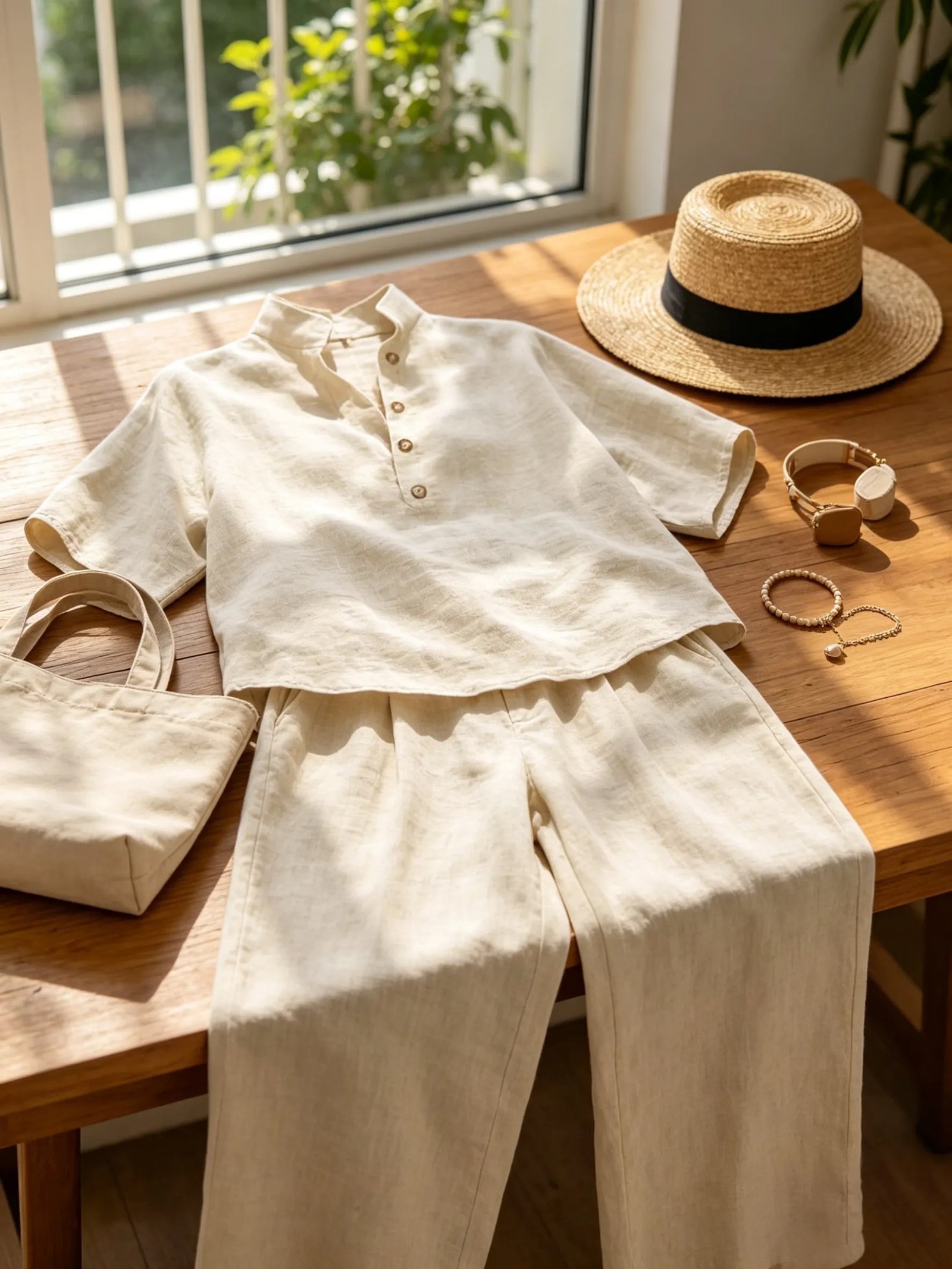
Two people can wear the “same” summer outfit — a dress, say — and one is comfortable while the other is melting. The difference is almost always fabric. What is the best fabric for summer clothes? The short answer: natural, breathable, moisture-friendly fibers — with linen as the undisputed champion. Here’s the full ranking and the science of why.
What Makes a Fabric Good for Summer
Three properties matter: breathability (air flows through, carrying heat away), moisture absorption and release (pulls sweat from skin and evaporates it — evaporation is what actually cools you), and light weight / loose weave (less fabric touching skin = less heat trapped). The best summer fabrics excel at all three; the worst fail at all three.
The Best Summer Fabrics (Ranked)
- 1. Linen. The king of summer. Made from flax, linen is exceptionally breathable, absorbs moisture without feeling damp, and gets softer with washing. Yes, it wrinkles — embrace it; linen wrinkles are part of the aesthetic. Look for 100% linen or linen blends for structure.
- 2. Cotton (lightweight). Breathable, absorbent, soft, affordable. The everyday summer workhorse — but note: cotton holds moisture rather than wicking it, so in extreme humidity it can feel damp. Seersucker and madras are cotton weaves engineered for summer.
- 3. Chambray. The denim look without denim’s weight — lightweight plain-weave cotton that breathes beautifully. All the style, none of the sweat.
- 4. Rayon/viscose (from bamboo or wood pulp). Silky, drapey, breathable, and affordable. Excellent for flowy summer dresses and blouses. Wrinkles moderately; hand-wash extends life.
- 5. Tencel/lyocell. The eco-upgrade to rayon — breathable, moisture-managing, silky, and more durable. Worth seeking out for summer blouses and dresses.
- 6. Silk (lightweight). Naturally temperature-regulating and breathable — but shows sweat and needs care. Best for evening summer wear rather than midday heat.
- 7. Performance synthetics (for active use). Modern athletic fabrics wick moisture brilliantly — but for daily wear they trap odor and feel plasticky. Right tool for sport, wrong tool for dinner.
Fabrics to Avoid in Summer
- Polyester (non-performance): traps heat and odor, doesn’t breathe. The reason cheap “summer” clothes feel awful.
- Nylon: similar issues — hot, non-absorbent, clingy when you sweat.
- Heavy denim: jeans in a heatwave are a choice. If you must, lightweight or stretch denim.
- Leather/faux leather: zero breathability. Save it for fall.
- Velvet, wool suiting, heavy knits: obviously seasonal — but check linings too; a “summer” dress with polyester lining defeats the purpose.
Beyond Fabric: Construction Matters Too
Fabric is half the equation; construction is the other half. Loose fits allow air circulation — a linen shift beats a linen bodycon in 95°F. Light colors reflect heat; dark colors absorb it (the white-vs-black shirt difference is measurable). Unlined or half-lined garments breathe better. And ventilation details — eyelets, open weaves, vented backs — aren’t just style; they’re function. When pairing shoes with summer dresses, the same breathability logic applies to footwear.
Care Tips for Summer Fabrics
Linen and lightweight cotton wrinkle — steam, don’t iron aggressively (a little texture is fine). Wash summer whites separately and sun-dry for natural brightening. Rotate garments to let fibers recover between wears. Store properly between seasons — our seasonal storage guide prevents musty surprises next June. And for sweat stains before they set, see removing stains from clothes.
What Is the Best Fabric for Summer Clothes? Your Questions Answered
Is linen worth the wrinkling?
Yes — and the wrinkling is part of the deal you accept for linen’s unmatched breathability. But you can minimize it: choose linen blends (linen-cotton or linen-Tencel wrinkle less than pure linen), embrace the relaxed aesthetic (linen wrinkles look intentional, not sloppy — it’s the fabric’s nature), steam rather than iron (a steamer relaxes linen beautifully), and hang garments immediately after washing. The people who hate linen are usually fighting its nature; the people who love it dress with it — relaxed silhouettes where wrinkles read as texture. In serious heat, nothing beats it, wrinkles and all.
Why does polyester feel so hot in summer?
Physics: polyester fibers don’t absorb moisture — they trap it against your skin while blocking airflow. Your sweat can’t evaporate (which is what actually cools you), so heat builds up in the microclimate between fabric and skin. It also traps odor because bacteria thrive in that warm, moist environment. This is why a polyester “summer” top feels awful while a cotton one breathes: it’s not the weight, it’s the moisture handling. Performance polyesters (athletic wear) are engineered differently with wicking treatments — but standard polyester in fashion garments is summer’s worst fabric. Check labels; the difference is tangible.
What’s the coolest fabric for extreme heat and humidity?
For dry heat: linen and lightweight cotton — breathability matters most. For humid heat (where evaporation is impaired): the priorities shift slightly toward moisture management — Tencel/lyocell and performance blends that move sweat off skin, plus the loosest fits that maximize airflow. In true tropical humidity, no fabric performs miracles; the biggest factors become fit (loose), color (light), and construction (unlined, ventilated). The history of linen as humanity’s hot-climate fabric spans millennia — there’s a reason it never got replaced.
Do I need different fabrics for summer workwear?
Yes — professional summer dressing is its own challenge because structure (blazers, trousers) traditionally means heavier fabrics. The solutions: tropical-weight wool (yes, wool — lightweight tropical wool breathes remarkably well and is the traditional summer suiting fabric), cotton-linen blazer blends, seersucker and madras for casual-professional, and Tencel-blend shirting. Unlined or half-lined jackets make an enormous difference — a fully lined “summer” blazer defeats its own fabric. And the undershirt question: lightweight moisture-wicking undershirts actually keep you cooler by managing sweat, despite the extra layer.
How do I prevent sweat stains on summer clothes?
Prevention beats treatment: apply antiperspirant at night (it’s more effective than morning application), let it dry fully before dressing, wear breathable fabrics (sweat evaporates instead of pooling), and consider sweat guards or undershirts for precious garments. For existing stains, treat promptly — oxygen bleach soaks work on fresh stains; set-in yellow needs the baking-soda-peroxide paste method from our stain removal guide. And rotate garments: wearing the same shirt two days running in heat guarantees stains that one wearing wouldn’t cause.
The Bottom Line
Linen is the best fabric for summer clothes, followed by lightweight cotton, chambray, and Tencel — all breathable, moisture-friendly, and comfortable in heat. Avoid polyester and heavy synthetics that trap heat. Pair the right fabric with loose fits and light colors, and summer dressing stops being an endurance test.


