
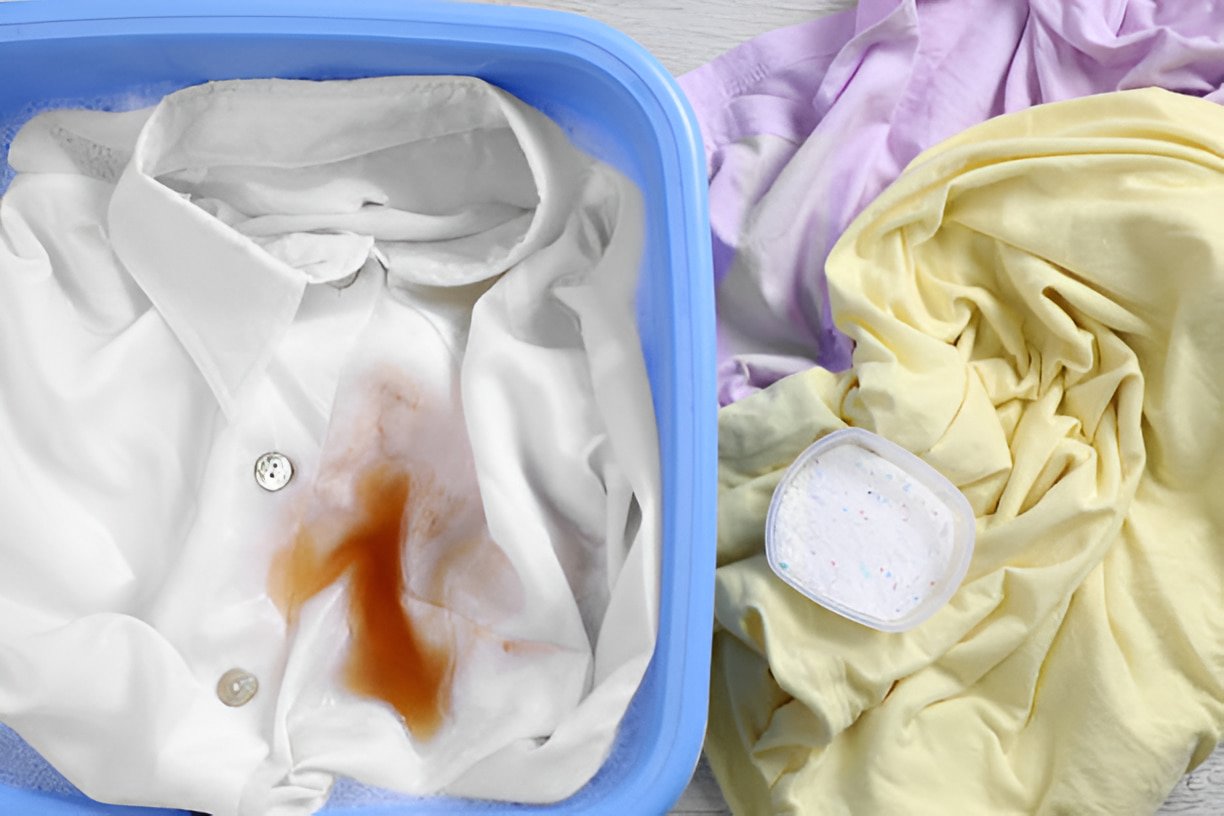
White clothes are a high-risk, high-reward game: nothing looks crisper, and nothing shows a stain like a crime scene. But most stains aren’t death sentences — they’re chemistry problems with known solutions. How do I remove stains from white clothes? Act fast, use the right treatment for the stain type, and never do the things that set stains permanently. Here’s the complete guide.
The Universal Rules (Read First)
- Act fast. Fresh stains are 10x easier to remove than set ones. Blot (don’t rub) immediately with a clean cloth.
- Cold water first. Hot water sets protein stains (blood, egg, dairy, sweat) permanently. Always start cold.
- Never rub. Rubbing spreads the stain and drives it deeper into fibers. Blot from the outside in.
- Test first. Try any treatment on a hidden spot (inside seam) before the visible stain.
- Don’t machine-dry until the stain is gone. Dryer heat sets stains permanently. Air-dry and check first.
- Identify the stain type. Protein, tannin, oil, and dye stains need different treatments — using the wrong one can set the stain.
Stain-by-Stain Treatments
- Coffee/tea (tannin): flush with cold water, apply liquid dish soap or white vinegar, let sit 15 minutes, rinse. For dried stains, soak in oxygen bleach solution before washing.
- Red wine (tannin/dye): blot immediately, cover with salt or baking soda to absorb, then treat with white wine or club soda (yes, really) followed by dish soap. Never use hot water first.
- Sweat/yellow armpits (protein): paste of baking soda + hydrogen peroxide + dish soap, applied 30 minutes before washing. For set-in yellowing, soak in oxygen bleach. Prevention: let deodorant dry fully before dressing, and wear undershirts.
- Blood (protein): cold water immediately — hydrogen peroxide on dried blood works like magic (it’ll foam). Never hot water, never the dryer until gone.
- Grease/oil: dish soap is designed for this — apply directly, work in gently, let sit, wash in the hottest water the fabric allows. For dried grease, chalk or cornstarch absorbs before treatment.
- Ink: rubbing alcohol or hand sanitizer dabbed on (not rubbed), blotting with clean cloth, repeat. Ballpoint responds well; permanent marker is harder but worth attempting.
- Tomato sauce: scrape off excess, cold water flush from the back, dish soap treatment, then oxygen bleach soak if needed.
- Grass: white vinegar or rubbing alcohol pre-treatment, then enzyme-based stain remover.
- Makeup/foundation: dish soap or micellar water pre-treatment; oil-based removers for long-wear formulas.
The Whitening Arsenal
- Oxygen bleach (sodium percarbonate): the MVP. Safe for most fabrics, lifts dinginess and stains, no chlorine damage. Soak whites for 1-6 hours.
- White vinegar: deodorizes, softens, mild brightening. Add a cup to the rinse cycle.
- Baking soda: half a cup in the wash boosts detergent and brightens.
- Hydrogen peroxide (3%): mild bleach alternative for spot treatment.
- Sunlight: UV is a natural whitener and disinfectant. Sun-dry whites when possible.
- Bluing agents: old-school but effective — counteracts yellowing optically.
Avoid chlorine bleach as a default: it weakens fibers, yellows with overuse, and damages elastic. Oxygen bleach does the job without the destruction.
Prevention: Keep Whites White
- Wash whites separately — always. One dark sock undoes everything.
- Don’t overload the washer — clothes need room to rinse clean.
- Use the right detergent amount — excess detergent leaves residue that grays whites.
- Clean your washing machine monthly — buildup transfers to clothes.
- Store whites clean — body oils yellow in storage. Our seasonal storage guide covers proper prep.
- For white sneakers specifically, see keeping white sneakers clean — different materials, different methods.
How Do I Remove Stains From White Clothes? Your Questions Answered
What’s the best stain remover to buy?
For a single product: an oxygen-bleach powder (OxiClean or store-brand sodium percarbonate). It handles the widest range of stains safely on most fabrics, doubles as a whitener, and costs pennies per use. For a two-product kit, add a good enzyme-based pre-treater (for protein stains like blood and sweat). The Good Housekeeping cleaning lab consistently rates oxygen bleach among the most effective and fabric-safe options. Skip the drawer full of specialized products — these two cover 95% of situations. Technique matters more than product variety.
Can old, set-in stains be removed?
Sometimes — it depends on the stain type and what’s been done to it. The killer is dryer heat: once a stain has been machine-dried, it’s often permanent because the heat chemically bonds it to fibers. But stains that were merely old (air-dried, never heat-set) often respond to extended oxygen-bleach soaks (6-8 hours or overnight). Protein stains (blood, sweat) are the hardest once set; tannin stains (coffee, wine) are more forgiving. The rule: always try before discarding. An overnight soak costs nothing and rescues a surprising number of “ruined” garments.
Why do my white clothes turn gray over time?
Four culprits: washing with dark colors (dye transfer is gradual as well as sudden), detergent buildup (too much detergent leaves residue that grays fabric — use the measured amount, not more), hard water minerals (they deposit on fibers; a water softener or washing soda helps), and body oils/sweat accumulating between washes. The fix: wash whites separately in hot water (as hot as the fabric allows), use the correct detergent dose, add oxygen bleach or washing soda periodically, and sun-dry when possible. Graying is gradual and reversible in early stages — a long oxygen soak restores most grayed whites dramatically.
How do I remove deodorant stains from white shirts?
The white marks are usually a combination of deodorant ingredients and sweat salts. Fresh marks: rub with a damp cloth or a dryer sheet (surprisingly effective). Set-in buildup: paste of baking soda and water, or crushed aspirin dissolved in water (the salicylic acid breaks down the residue) — apply for 30 minutes before washing. Prevention is easier: let antiperspirant dry completely before dressing (2-3 minutes), consider switching to a clear gel formula, and wear undershirts for precious white shirts. The armpit area takes the most abuse of any garment zone — treat it proactively.
The Bottom Line
Removing stains from white clothes means acting fast with cold water, matching the treatment to the stain type (protein vs. tannin vs. oil), and using oxygen bleach rather than chlorine. Never dryer-dry until the stain is fully gone. Most “ruined” white clothes just need the right chemistry — try the proper treatment before giving up on the garment.


