
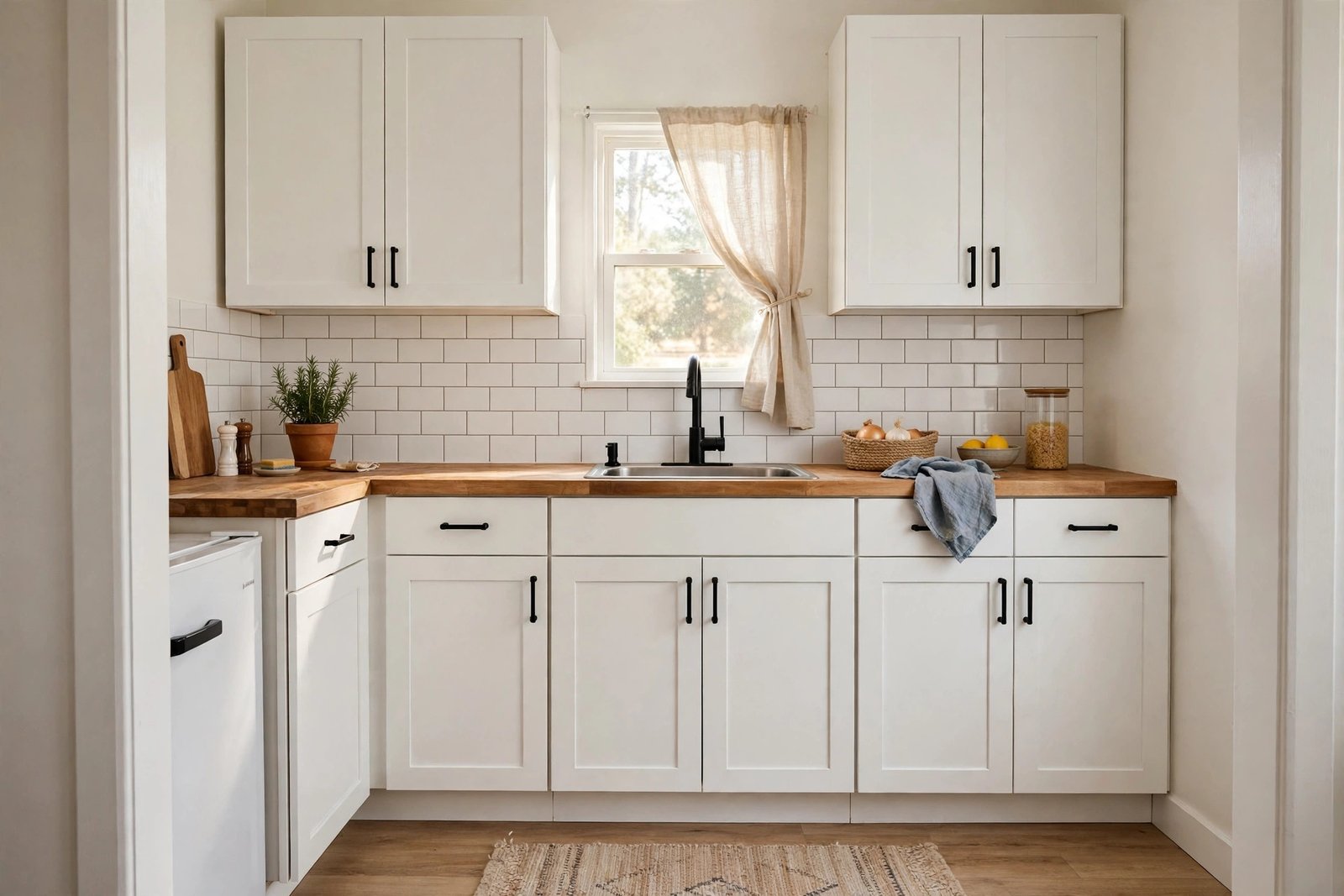
A full kitchen remodel averages $25,000–$50,000, which is why most of us just… live with the oak cabinets from 1994. But here’s the secret contractors won’t tell you: a kitchen can look dramatically different for under $1,000. So what are the cheapest ways to update a kitchen on a budget? These are the high-impact, low-cost upgrades that deliver the most visual change per dollar, ranked roughly by bang for buck.
1. Paint the Cabinets ($100–$300)
The single biggest transformation for the least money. A gallon or two of quality cabinet paint (use a urethane-alkyd enamel like Benjamin Moore Advance — it levels beautifully and cures hard) plus primer, sandpaper, and a weekend. White or light gray brightens everything; deep green or navy adds drama. The keys: clean with degreaser first (kitchen cabinets are filthy in ways you can’t see), sand lightly, prime, and do two thin coats. Remove doors and hardware and spray or roll them flat for a factory-smooth finish. If painting feels like too much, see how to update old kitchen cabinets without replacing them for even more options.
2. Swap the Hardware ($50–$200)
New cabinet pulls and knobs are jewelry for your kitchen. Dated brass or tiny wood knobs drag the whole room back decades; modern matte black, brushed brass, or sleek bar pulls instantly update it. Measure your existing hole spacing before ordering (3-inch and 3.75-inch are standard). Pro tip: buy one style in bulk packs online — it’s far cheaper per piece than hardware store singles.
3. Update the Lighting ($50–$300)
That builder-grade fluorescent box or sad dome light? Replace it. A statement pendant over the island or sink ($50–$150 each) changes the room’s entire personality. Under-cabinet LED strips ($20–$40) add task lighting that makes the kitchen feel high-end and makes cooking genuinely easier. And swap to warm-white bulbs (2700–3000K) everywhere — cool white makes kitchens feel like laboratories.
4. Paint the Walls ($50–$100)
If your kitchen walls are still the beige from move-in day, fresh paint is the cheapest facelift available. Light, warm colors open up small kitchens; a bold accent wall adds character. Use satin or semi-gloss — kitchens need wipeable walls. For finish guidance, check what paint finish is best for kitchen walls.
What Are the Cheapest Ways to Update a Kitchen on a Budget? More Under-$200 Wins
5. Add a backsplash ($100–$400)
Peel-and-stick tile has gotten genuinely good — modern options look like real ceramic or subway tile at a fraction of the cost and effort. A weekend project that makes the kitchen look custom. Real tile is a bigger job but still DIY-able; see whether beginners can install a backsplash before deciding.
6. Replace the faucet ($75–$250)
A modern pull-down faucet makes the whole sink area look new. It’s a 30-minute swap with basic tools (shut off the water first!). Match the finish to your new hardware for a coordinated look.
7. Refresh the caulk and grout ($10–$30)
Gross, discolored caulk around the sink and counters makes everything look old. Scrape it out, re-caulk with silicone, and clean the grout — the kitchen instantly looks more cared-for. Family Handyman has great tutorials if you’ve never caulked before.
8. Update window treatments ($30–$100)
Ditch the dusty mini-blinds for a simple woven shade or cafe curtains. Natural light + clean window dressing makes kitchens feel bigger and fresher.
9. Declutter and style the counters ($0–$50)
Free and transformative: clear everything off the counters except 2–3 intentional items (a cutting board, a plant, nice soap at the sink). Store small appliances you don’t use daily. A cluttered counter makes any kitchen look dated; a styled one looks designed.
10. New switch plates and outlet covers ($15–$30)
Yellowed plastic plates are a subtle age giveaway. Screw on new ones in a finish matching your hardware — a 20-minute job that polishes the whole room.
11. Open shelving for one cabinet run ($50–$150)
Remove the doors from one set of uppers (or replace a cabinet with floating shelves) and style it with dishes and glasses. It adds airiness and a custom look. Only do this if you can keep it tidy — open shelves punish clutter.
What to Skip on a Tight Budget
Don’t replace appliances piecemeal unless one dies — mismatched new/old looks worse than uniformly old. Don’t install cheap laminate counters as a “temporary” fix; they rarely look good and you’ll pay twice. And don’t start demolishing anything until you have the full plan and budget — a half-demoed kitchen is worse than a dated one.
The $100 Kitchen Refresh: Maximum Impact, Minimum Spend
What if the budget is truly tiny? Here’s what $100 buys when spent ruthlessly on the highest-visibility changes:
- $30: paint (one gallon of cabinet or wall paint). One accent wall, or the lower cabinets, or the island base — pick the single most visible surface and transform it. One gallon covers ~350 sq ft; a focused project needs less.
- $25: new cabinet hardware for the most visible run. You don’t need to do every cabinet — the uppers around the stove and sink get 90% of the visual attention. Twenty pulls from a bulk pack covers it.
- $20: under-cabinet LED strip. One strip over the main prep area. The task lighting upgrade makes the kitchen feel expensive at night, which is when you’re actually in it.
- $15: fresh caulk + grout pen. Re-caulk the sink, touch up the dingiest grout lines. The “clean” signal this sends is disproportionate to the cost.
- $10: a plant and a new dish towel set. Living greenery (a pothos survives kitchens) plus matching textiles. Staging 101: the kitchen looks designed instead of merely used.
Total: $100, one weekend, and a kitchen that photographs — and feels — noticeably better. The principle: concentrate spending on what the eye lands on (the cooking zone, the sink wall) rather than spreading it thin across the whole room. One dramatic change beats five subtle ones when the budget is tight.
Then, when the budget recovers, work through the bigger list methodically — paint the remaining cabinets, add the backsplash, swap the faucet. Kitchens transform in layers, and each layer builds on the last. The $100 refresh isn’t a compromise; it’s phase one of a plan.
The Practical Takeaway
The cheapest ways to update a kitchen on a budget, in order of impact: paint the cabinets, swap hardware, update lighting, paint walls, add a backsplash. That five-step combo runs $400–$1,000 total and can make a 1990s kitchen look current. Do the work in that order (paint before hardware, always), live with each change before deciding on the next, and remember: cohesion beats expense. A kitchen where everything matches and is clean looks expensive regardless of what it cost.


