How to Tell If a Tree is Dying: Step-by-Step Guide (2026)
How to tell if a tree is dying: signs in the canopy, trunk, bark, and roots, the scratch test, when a tree can be saved, and when to call an arborist.
Written by admin
Published November 8, 2026
Reading time 4 minutes
How to Tell If a Tree is Dying: Step-by-Step Guide (2026)
A tree is likely dying if you see dead branches throughout the canopy, bark peeling away from the trunk, large cracks or cavities, mushrooms growing at the base, or a sudden lean. One or two dead branches don’t mean the tree is doomed — but when several of these signs appear together, the tree is in serious decline.
Catching the signs early matters: a dying tree can sometimes be saved with pruning, watering, or treatment, while a dead tree near a house, sidewalk, or power line becomes a safety hazard. Here’s how to inspect your tree step by step.
Step 1: Check the Canopy (Branches and Leaves)
- Dead branches: Look for branches with no leaves during the growing season, or brittle twigs that snap instead of bending. A few dead branches are normal — widespread deadwood is not.
- Thinning canopy: If the crown looks noticeably thinner than previous years or than neighboring trees, the tree is declining.
- Premature leaf drop or discoloration: Leaves turning yellow, brown, or falling in early summer signal stress — often from disease, drought, or root damage.
- No new growth: Compare this year’s twig growth to older branches. Healthy trees add several inches of new growth annually; a tree with no new shoots is struggling.
Step 2: Inspect the Trunk and Bark
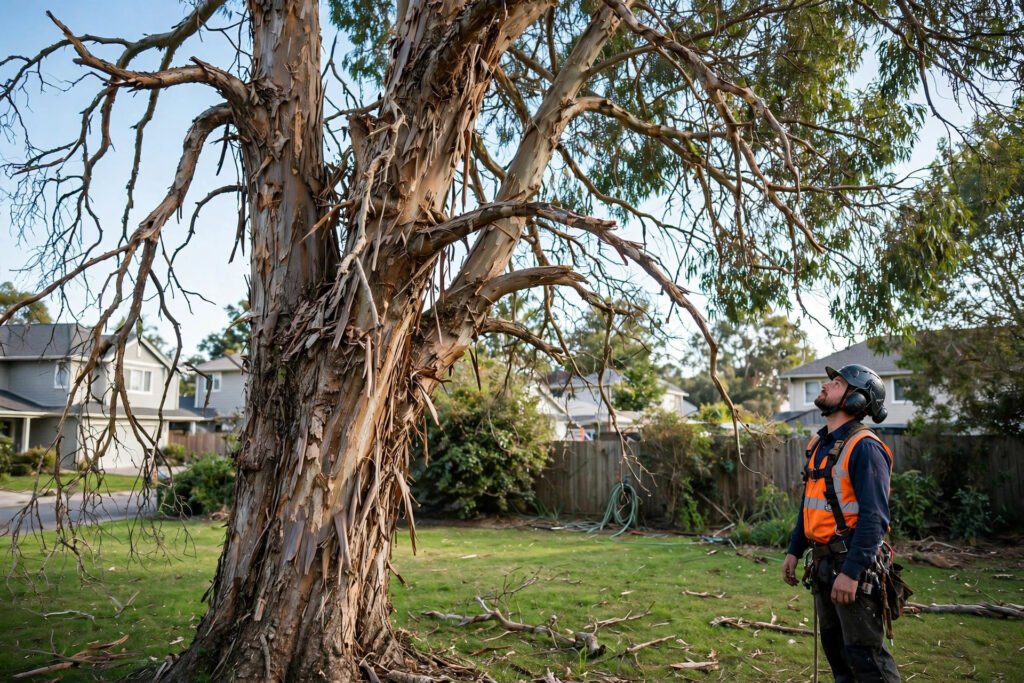
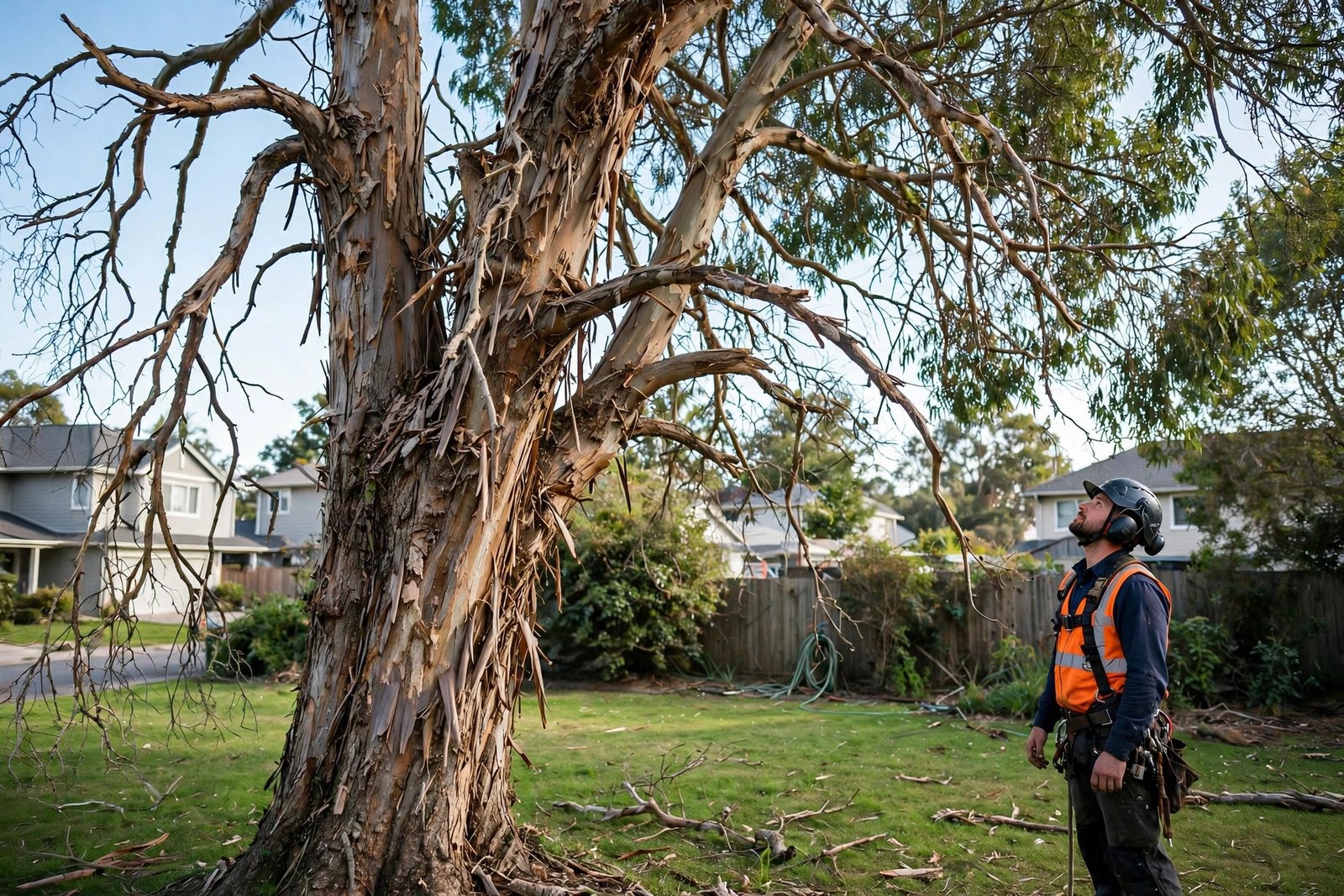
- Peeling or missing bark: Bark falling off in large sheets exposes the wood underneath and indicates dead tissue beneath.
- Deep cracks and cavities: Vertical cracks, holes, or hollow areas mean internal decay. A tree that’s more than about 30–40% hollow is structurally compromised.
- Oozing sap or cankers: Sunken, discolored areas on the bark (cankers) or persistent sap flow can indicate fungal or bacterial disease.
- Conks and mushrooms: Fungal growth on the trunk or large mushrooms at the base are signs of advanced internal rot — the tree’s structure is weakening from the inside.
Step 3: Look at the Base and Roots
- Mushrooms at the root flare: This often means root rot, one of the hardest tree problems to reverse.
- Heaving soil or exposed roots: Roots lifting out of the ground suggest the tree is destabilizing — a fall risk.
- Sudden lean: A tree that recently started leaning (check old photos to compare) may have damaged roots and could fall in a storm.
- Construction damage: If a driveway, patio, or foundation was recently built near the tree, root damage may take 2–5 years to show in the canopy.
The Scratch Test: Is It Dead or Dormant?
Scratch a small twig with your fingernail or a knife:
- Green and moist underneath → the branch is alive.
- Brown and dry underneath → that branch is dead.
Test several branches around the tree. If most or all are brown and dry, the tree is likely dead. Remember: in winter, healthy deciduous trees drop their leaves — always do this test in the growing season, or wait for spring budding, before concluding a leafless tree is dead.
Can a Dying Tree Be Saved?
Sometimes. It depends on the cause:
- Drought stress → deep watering and mulch often bring the tree back.
- Nutrient deficiency → a soil test and targeted fertilization can help.
- Diseased branches → pruning out infected limbs stops the spread.
- Advanced decay, root rot, or severe structural damage → usually not reversible. Removal is the safe option.
When in doubt, call a certified arborist — not a tree removal company. An arborist can diagnose the problem objectively and tell you honestly whether treatment or removal is the right call. In NYC, street trees are the city’s responsibility (report issues to 311), but trees on private property are yours to manage.
FAQs
How do you know if a tree is completely dead?
Do the scratch test on multiple branches — brown and dry everywhere means dead. No leaf buds in spring, bark falling off in sheets, and fungal conks on the trunk are confirming signs.
Should I remove a dying tree or wait?
Don’t wait if the tree is near your home, driveway, sidewalk, or power lines. A declining tree can drop large limbs or fall entirely, and removal gets more expensive (and dangerous) the longer you wait.
Can a tree with no leaves be alive?
Yes — in winter, deciduous trees are dormant, not dead. Wait until spring to see if buds and leaves emerge before making any decisions.
How much does tree removal cost?
Typically $500–$2,000 for an average tree, more for large trees near structures. In the NYC area, costs run 20–40% higher. Stump grinding adds $150–$400.
Do I need a permit to remove a tree in NYC?
You need a permit to remove or significantly prune a street tree, and some NYC neighborhoods and surrounding towns have tree preservation ordinances for private property. Check with your local parks department or building department first.