New York City issues millions of parking tickets every year, and the city counts on a significant chunk of drivers simply paying up without a fight. But here’s what experienced NYC drivers know: most tickets are avoidable with knowledge, and a surprising number of issued tickets are beatable with the right dispute. Parking in this city without getting tickets isn’t about luck — it’s about understanding a rulebook that was practically designed to confuse outsiders, building habits that make compliance automatic, and knowing exactly what to do when the orange envelope appears on your windshield anyway.
Learn the sign language (literally)
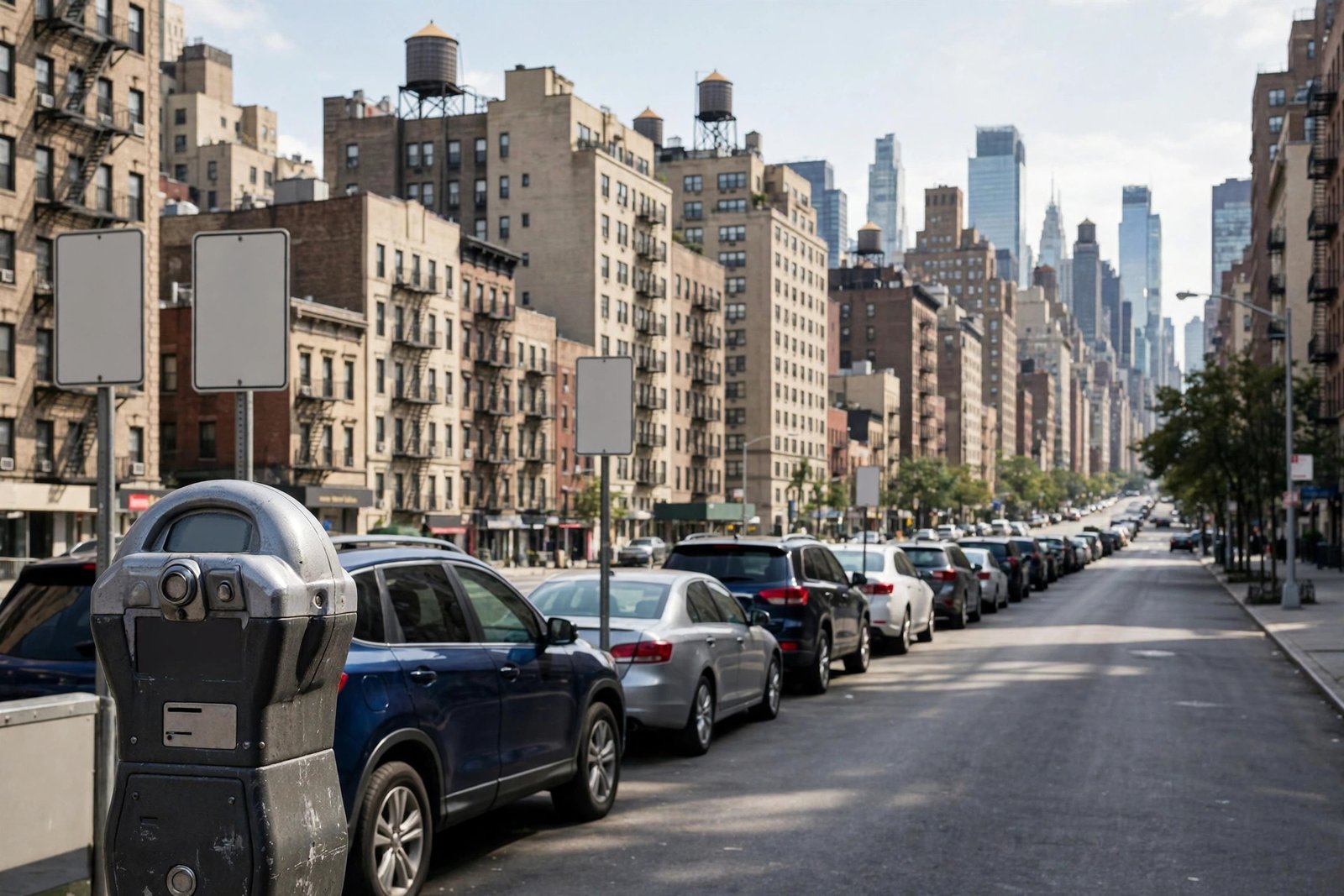
NYC parking signs are a dense visual code, and misreading them is the #1 ticket source. The hierarchy: red “No Standing” and “No Stopping” signs are the strictest (no stopping even momentarily, except the specific exceptions noted), “No Parking” means you can stop briefly to load or unload but can’t leave the car, and time-limited signs dictate the rest. Arrow directions matter enormously — signs apply in the direction the arrows point, and a single misread arrow is a $65 lesson.
The details that trap people: street-cleaning signs with day/time ranges (know your block’s schedule cold), “No Parking” zones that activate during rush hours, school-day restrictions, and the dreaded hydrant rule — 15 feet in either direction, unmarked, no sign needed. Fire hydrants ticket thousands of drivers yearly who parked “just for a minute.” Meters deserve respect too: an expired meter is among the most common tickets in Manhattan, and the meter’s grace period is shorter than you think. When in doubt, the NYC Department of Transportation publishes the official parking regulations — boring reading that saves real money.
The habits of ticket-free drivers
Ticket-proof parking is 90% habit. Always do a 360-degree sign check before walking away — signs on both sides of the street, plus any temporary signs (construction and film shoots post temporary no-parking signs that override everything). Photograph your parked car with the signs visible; if you ever need to dispute, that photo is gold. Set a phone alarm for meter expiration and ASP move times — memory is not a strategy.
Build a mental map of reliable spots: which blocks near your destinations have lenient rules, where the commercial zones free up after 7pm, which garages offer early-bird rates cheaper than a ticket gamble. Experienced drivers also learn the rhythm of enforcement — certain high-ticket corridors are patrolled relentlessly while residential side streets see sporadic enforcement. None of this is about gaming the system; it’s about allocating your attention where risk is highest. And honestly assess whether the trip needs a car at all — the cheapest way to get around New York City rarely involves parking it.
Alternate-side parking: the weekly boss battle
Alternate-side parking deserves its own strategy because it’s the most ticketed regulation in the city. Know your exact block’s days and hours — they vary street by street. Track the city’s suspension calendar: ASP is suspended on major holidays, during snow emergencies, and on designated days, and the city publishes the year’s schedule in advance. On suspension days, leave the car put and enjoy the small victory.
The double-park-and-wait technique is legal during the cleaning window on most streets: double-park beside the parked cars, wait for the sweeper to pass, then reclaim your spot. It requires being present and attentive, but it beats circling the block for an hour. Never leave a double-parked car unattended — that’s a ticket and a tow risk, and it blocks your neighbors.
Meters, muni-meters, and the app era
Manhattan’s muni-meter system confuses newcomers: you pay at a kiosk or via the ParkNYC app and display the receipt (or the app handles it digitally). Key facts: rates vary by zone and are highest in core Manhattan, time limits are strictly enforced, and feeding the meter past the posted maximum is itself ticketable — you can’t buy four hours in a two-hour zone by paying twice. The ParkNYC app is genuinely useful: remote top-ups (within legal limits), receipts, and expiration alerts.
Commercial vehicles have their own meter rules and higher rates — if you’re driving a commercial plate, learn them separately. And remember that many meters are suspended on Sundays and major holidays; free Sunday parking in metered zones is one of the city’s small mercies. Making your daily commute more enjoyable sometimes means timing trips for these free-parking windows.
Garages: when paying beats risking
Do the expected-value math: a $65 ticket (or $115+ in Manhattan core zones) versus a $20–40 garage stay. For trips over a few hours in high-enforcement areas, the garage usually wins — especially with early-bird specials (enter before 9–10am, flat rate) and app-based discounts. Monthly garage contracts in residential neighborhoods run $300–600+, which sounds steep until you compare it against the ticket-and-tow roulette of nightly street parking plus the ASP time tax.
Garage tips: compare app prices (SpotHero, ParkWhiz, and similar platforms routinely undercut drive-up rates), check clearance heights before entering with roof cargo, photograph your car’s condition at drop-off, and keep the claim ticket photographed on your phone. A garage is also the answer for snow emergencies and street-fair weekends when your usual spots vanish.
You got a ticket anyway: how to fight it
First, don’t ignore it — fines double after 30 days and can balloon into judgments that block vehicle registration renewal. You have 30 days to dispute, and NYC’s online dispute system is straightforward. Your odds are better than you’d think: common winning defenses include missing or obscured signs (your timestamped photo is crucial), incorrect information on the ticket (wrong plate, wrong location, wrong violation code), broken or missing meters (report them — the city tracks complaints), and ASP tickets issued during posted suspensions.
Write a clear, factual statement, attach photos, and cite the specific regulation. Be polite and precise — hearing officers respond to evidence, not outrage. Even if the ticket stands, you can often get fines reduced, and payment plans exist for accumulated tickets. The NYC Department of Finance handles disputes and payments; their site walks through the entire process step by step.
Conclusion
Parking in NYC without getting tickets is a learnable skill, not a lottery. Read every sign like a contract, photograph everything, set alarms for meters and ASP, use the ParkNYC app, choose garages when the math favors them, and dispute bad tickets instead of paying them reflexively. The drivers who never get tickets aren’t lucky — they’re systematic. Adopt the system, and the orange envelope becomes someone else’s problem.
Frequently Asked Questions
How much is a parking ticket in NYC?
Most common violations run $65 in outer boroughs and up to $115 in Manhattan’s core zones. Fines double if unpaid after 30 days, and penalties can eventually block registration renewal.
Can you fight a NYC parking ticket and win?
Yes — a meaningful percentage of disputes succeed. Strong defenses include missing or obscured signs (with timestamped photos), ticket errors, broken meters, and ASP tickets issued during posted suspensions.
How close can you park to a fire hydrant in NYC?
15 feet in either direction, with no sign required — it’s one of the most ticketed violations in the city. When in doubt, give hydrants a wide berth.
Is alternate-side parking suspended on holidays?
Yes, on major legal and religious holidays plus snow emergencies. The city publishes an annual suspension calendar — check it before moving your car on a holiday.