How to Lower Cyanuric Acid in Pool: Step-by-Step Guide (2026)
How to lower cyanuric acid in your pool: the drain-and-refill method explained step by step, safety warnings, and how to prevent high CYA from returning.
Written by admin
Published November 8, 2026
Reading time 4 minutes
How to Lower Cyanuric Acid in Pool: Step-by-Step Guide (2026)
The only reliable way to lower cyanuric acid (CYA) in a pool is to partially drain and refill it with fresh water. Replace about one-third of your pool water to cut CYA by roughly one-third — for example, if your CYA is 90 ppm, draining one-third and refilling brings it down to about 60 ppm. No chemical product reliably removes CYA, despite what some labels claim.
Cyanuric acid — also called stabilizer or conditioner — protects chlorine from the sun’s UV rays. But too much of it “locks up” your chlorine, leaving your pool cloudy, algae-prone, and hard to sanitize. Here’s how to fix high CYA the right way.
Why High Cyanuric Acid Is a Problem
The ideal CYA level is 30–50 ppm. Above 70–80 ppm, you run into trouble:
- Chlorine becomes sluggish. High CYA binds so much chlorine that sanitizing slows to a crawl — algae blooms even when your test kit shows “plenty” of chlorine.
- Cloudy water. Persistent haze that filtration and shocking can’t clear is a classic high-CYA symptom.
- Chlorine demand spikes. You keep adding chlorine, but it never seems to “hold” — you’re fighting the stabilizer, not the contaminants.
CYA gets into the pool from stabilized chlorine products — trichlor tablets/pucks and dichlor shock granules both add CYA with every dose. If you’ve used pucks all summer, your CYA has been climbing steadily.
How to Lower CYA: The Drain-and-Refill Method
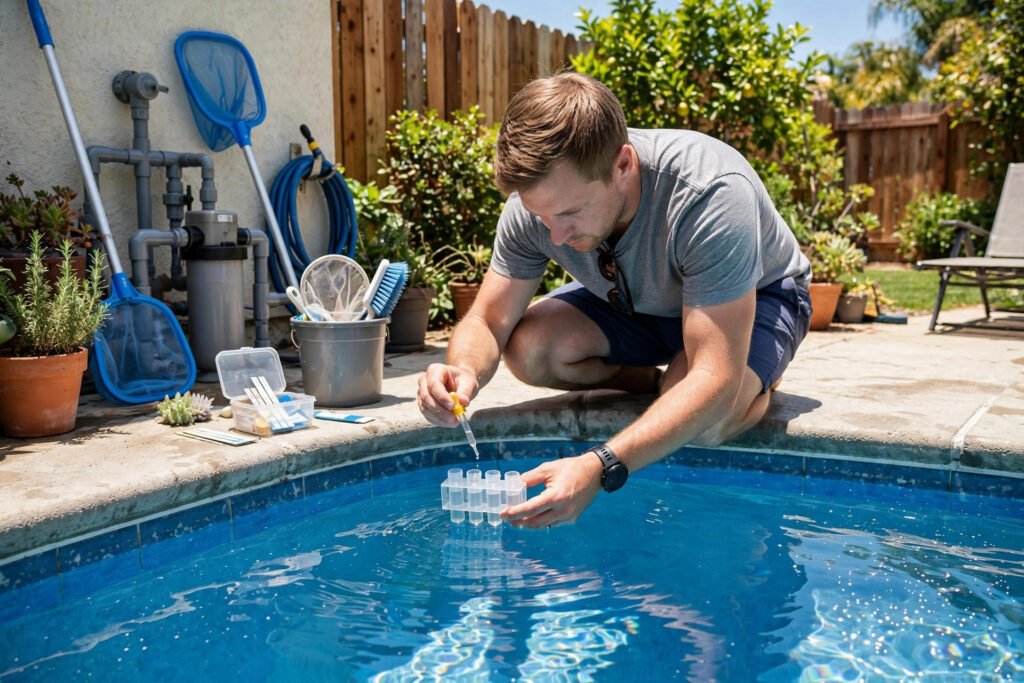
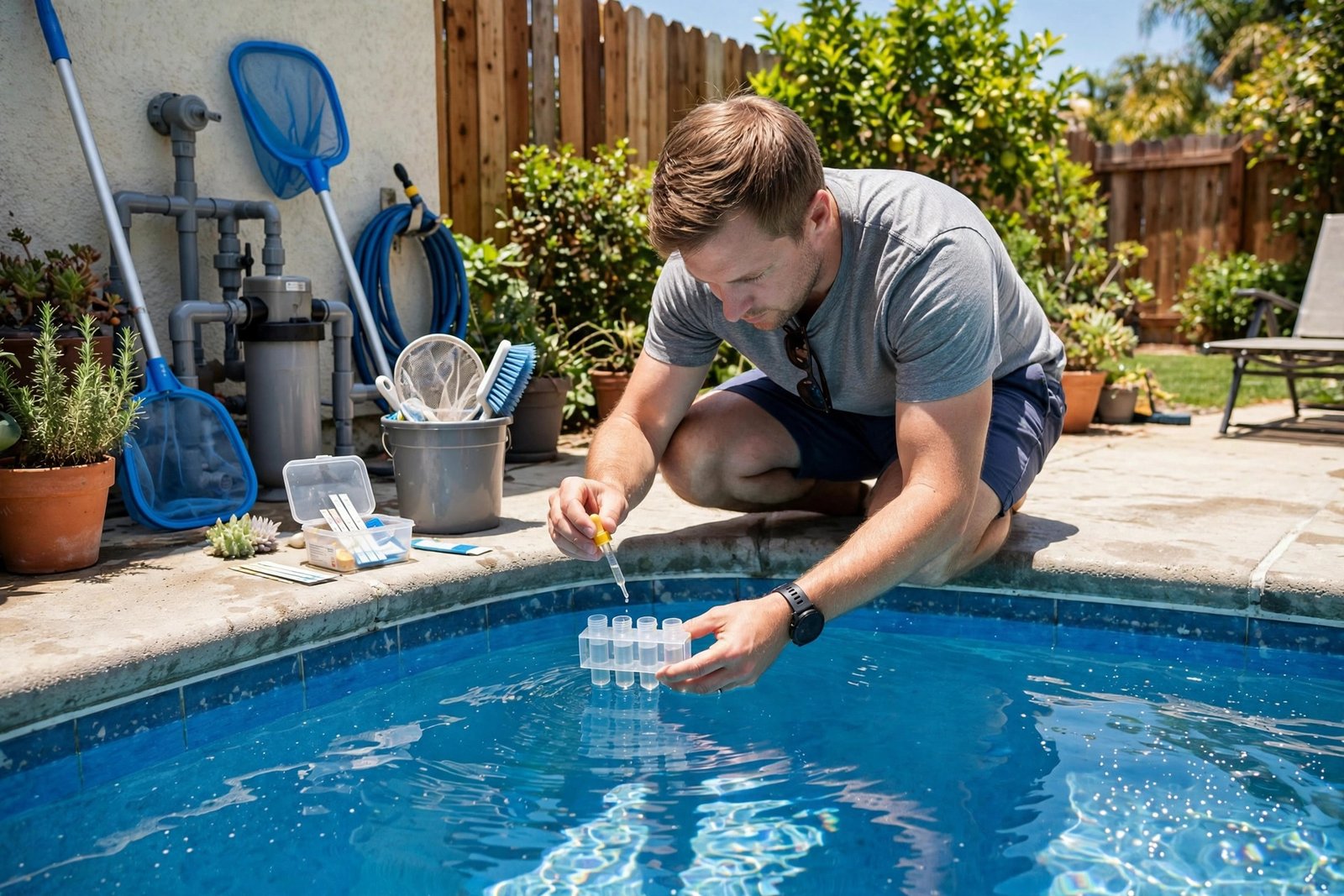
- Test your CYA level accurately. Use a drop-based test kit or take a water sample to a pool store. Test strips are unreliable for CYA — don’t base a drain decision on them.
- Calculate how much water to replace. Target roughly 40 ppm. If your CYA is 90, you need to replace about half your water (90 × 0.5 = 45). If it’s 120, replace about two-thirds.
- Check local rules first. Many municipalities — including parts of the NYC area — restrict draining pools into storm drains. Pump water into your home’s sewer cleanout or sanitary drain, and let chlorine dissipate before draining.
- Drain partially with a submersible pump. Rent one for $50–$75/day or buy one for $150–$300. Never drain a pool completely — an empty pool can pop out of the ground (hydrostatic pressure) or suffer liner damage.
- Refill with fresh water. Use a garden hose; this takes 8–24 hours depending on pool size. Keep the pump running to circulate the new water.
- Retest and rebalance. Test CYA, then rebalance pH, alkalinity, and chlorine. Expect to add chlorine — fresh fill water has none.
Important Safety Notes
- Don’t drain during heavy rain or if your water table is high. An empty or half-empty pool can literally float out of the ground. In coastal Long Island and low-lying areas, this is a real risk.
- Vinyl-liner pools: never drain below the shallow-end floor line — the liner can shrink and wrinkle.
- Fiberglass pools: avoid draining more than about one-third at a time without professional guidance.
- Gunite/concrete pools: safest for draining, but still avoid leaving them empty in summer heat.
What About “CYA Reducer” Products?
You’ll see products claiming to reduce cyanuric acid without draining. The honest truth: they don’t work reliably. Independent testing and pool industry professionals have consistently found these enzyme-based products ineffective or inconsistent. Drain-and-refill remains the only proven method. Don’t waste $30–$50 on a bottle that won’t move the needle.
Preventing CYA From Climbing Again
- Switch to unstabilized chlorine. Use liquid chlorine (sodium hypochlorite) or a saltwater chlorine generator instead of trichlor pucks. Liquid chlorine adds zero CYA.
- Use pucks sparingly. They’re convenient for vacations and slow feeding, but every puck adds stabilizer.
- Test CYA monthly. Catching a slow climb early means a small water exchange instead of a massive drain.
- Backwash and splash-out help. Normal water loss replaced with fresh water gradually dilutes CYA over the season.
FAQs
What is a safe cyanuric acid level?
30–50 ppm is ideal for outdoor pools. Indoor pools don’t need CYA at all (no UV to protect against). Most problems start above 70–80 ppm, and levels over 100 ppm are considered excessive.
Can I swim in a pool with high cyanuric acid?
High CYA itself isn’t dangerous to swimmers, but it makes chlorine ineffective — which means bacteria and algae can thrive. Fix the CYA, then shock the pool before heavy swimming.
How much does it cost to drain and refill a pool?
Just the cost of the water — typically $50–$150 for a residential pool depending on your local water rates, plus $50–$75 if you rent a submersible pump. It’s the cheapest major pool fix there is.
Will rain lower cyanuric acid?
Barely. Rainfall only dilutes CYA slightly, and only if the pool overflows. Normal rain has a negligible effect — you need a deliberate partial drain.
Do saltwater pools have CYA problems?
They can. Saltwater systems generate unstabilized chlorine, so CYA stays put once added — but many salt pool owners still use stabilized shock or pucks, which raise CYA over time. Test regularly either way.