How to Clean Electric Toothbrush: Step-by-Step Guide (2026)
Is your electric toothbrush getting gross? Learn how to clean it daily and deep-clean weekly, plus handle, charging base, and mold removal tips in 2026.
Written by admin
Published October 24, 2026
Reading time 5 minutes
How to Clean Electric Toothbrush: Step-by-Step Guide (2026)
Take a close look at the base of your brush head — if there’s a ring of gunk where it meets the handle, you’re not alone. Here’s the short answer: to clean an electric toothbrush, rinse the brush head thoroughly after every use; once a week, remove the head and soak it in mouthwash or diluted white vinegar for 15–30 minutes, wipe the handle with a damp cloth, and scrub the charging base to prevent moldy buildup. Replace the brush head every three months.
Electric toothbrushes harbor more bacteria and grime than most people realize — toothpaste residue, water, and bathroom humidity create a perfect breeding ground in the crevices. This guide covers the 30-second daily routine, the weekly deep clean, how to de-gunk the charging base, and the mistakes that can damage your brush.
The Quick Answer
Daily: rinse the head under running water after brushing, shake off excess water, and store it upright to air-dry. Weekly: deep-clean the head with a soak, wipe down the handle, and clean the charging base. Monthly: sanitize the head with a vinegar or hydrogen peroxide soak. That’s the whole system — about five minutes a week keeps the brush hygienic and extends its life.
Daily Cleaning: The 30-Second Routine
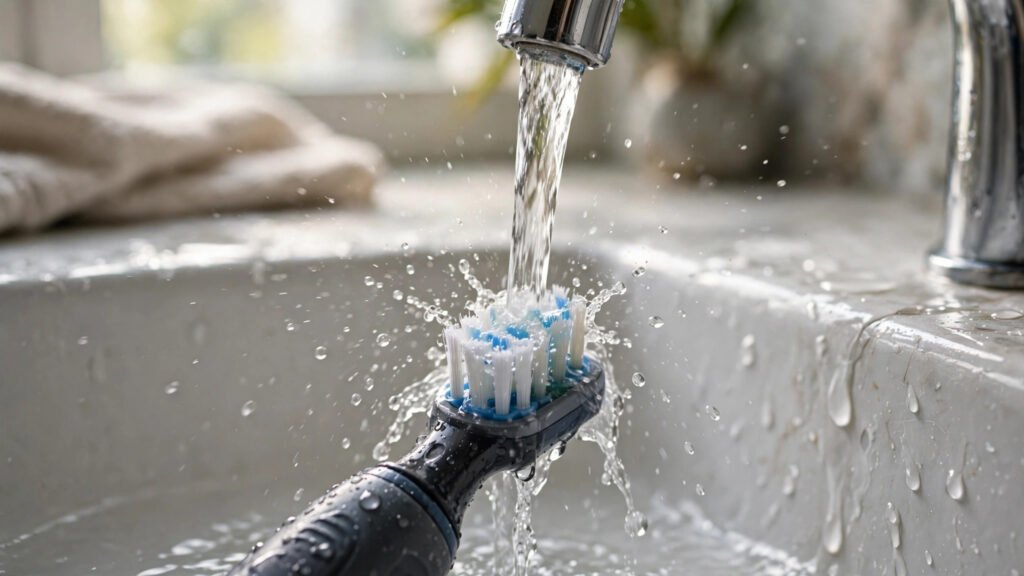
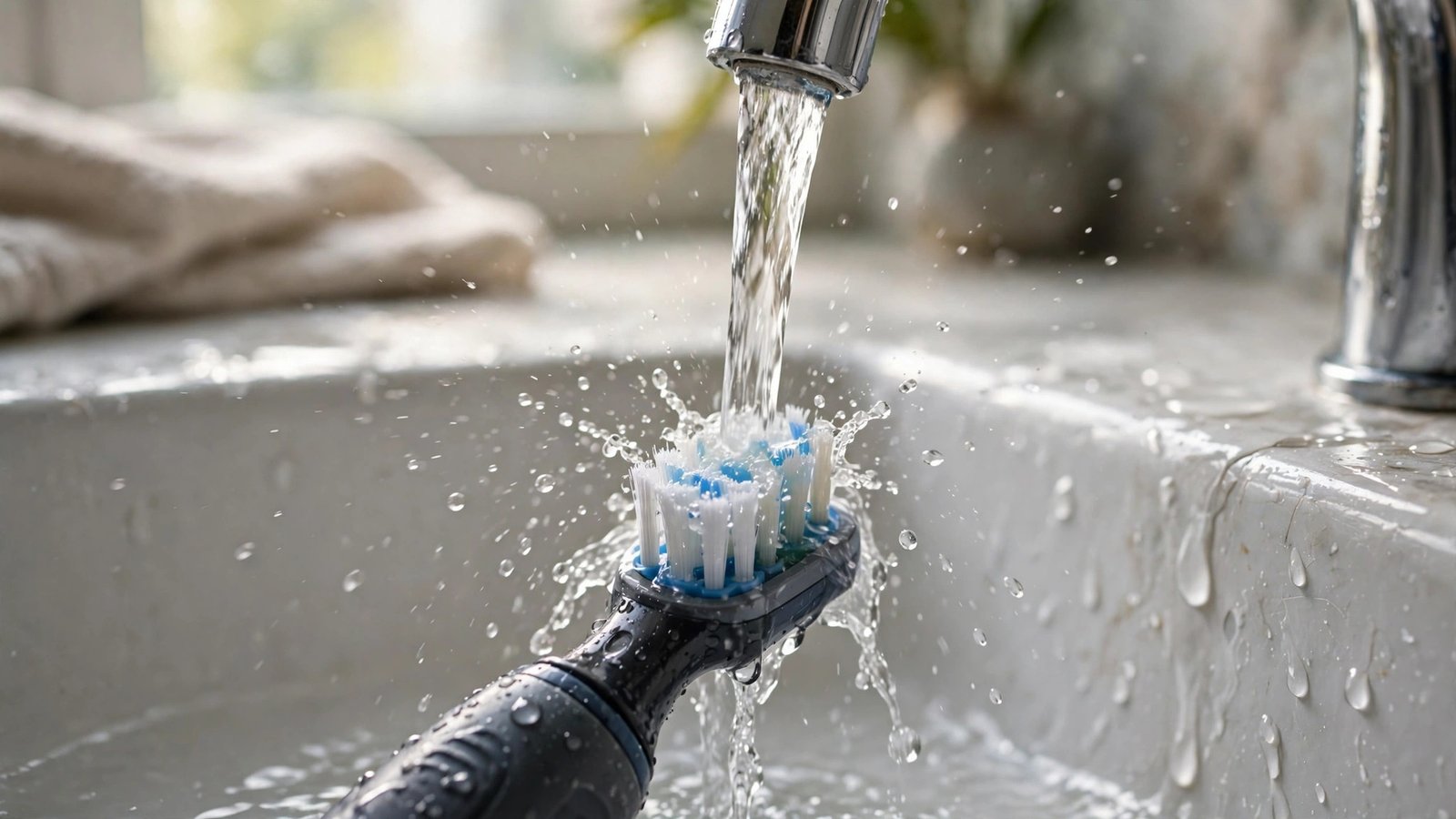
- Rinse the head thoroughly under warm running water after every brushing session, letting water flow through the bristles and around the base of the head.
- Shake off excess water — don’t wipe the bristles with a towel, which can fray them.
- Rinse the handle quickly to remove toothpaste drips, then wipe it with your hand or a damp cloth.
- Store upright and uncovered so air circulates. Closed caps and cups trap moisture and grow mildew — if your brush came with a travel cap, use it only for travel.
Weekly Deep Clean: Step-by-Step
Step 1: Remove the brush head
Pull the head straight off the handle. You’ll probably see a ring of dried toothpaste and grime on the metal/plastic shaft underneath — that’s the main target.
Step 2: Soak the brush head
Stand the head bristle-up in a small cup with enough antibacterial mouthwash or diluted white vinegar (one part vinegar to two parts water) to cover the bristles and the base of the head. Soak for 15–30 minutes. Both kill bacteria and dissolve mineral and toothpaste buildup.
Step 3: Scrub the handle and shaft
Dip an old soft toothbrush (or a cotton swab for tight crevices) in the same solution and scrub the shaft, the seam where the head attaches, and any textured grip areas. For stubborn buildup, make a paste of baking soda and water and scrub gently.
Step 4: Clean the charging base
Unplug the charger first. Wipe the base and the charging post with a cloth dampened with diluted vinegar or soapy water, using a cotton swab for the groove around the post where gunk collects. Dry it completely before plugging back in.
Step 5: Rinse and air-dry everything
Rinse the head under running water, shake off excess, and let all parts air-dry fully before reassembling.
Monthly Sanitizing
Once a month, give the brush head a deeper sanitizing soak: 3% hydrogen peroxide (undiluted) for 15 minutes, then rinse thoroughly. Hydrogen peroxide kills a broader range of microbes than mouthwash. Don’t use it weekly — it’s unnecessary and can wear bristles faster over time.
Dealing With Mold and Mildew
Black or pinkish spots around the base of the head or on the charger are usually mold or Serratia bacteria feeding on toothpaste residue and standing water. Scrub the affected areas with undiluted white vinegar, let it sit for 10 minutes, then scrub again and rinse. If mold has gotten inside the brush head’s hollow base where you can’t reach it, just replace the head — they’re inexpensive and not worth the health gamble. Prevent recurrence by always storing the brush upright and uncovered so it dries between uses.
When to Replace the Brush Head
- Every 3 months as a rule — the American Dental Association’s standard recommendation.
- Sooner if bristles are frayed, splayed, or faded (many heads have indicator bristles that fade as a reminder).
- After any illness — replace the head after a cold, flu, or stomach bug to avoid re-exposure.
- If it smells bad even after deep cleaning — odor that survives a vinegar soak means the head’s interior is compromised.
Mistakes to Avoid
- Submerging the handle in water. Electric toothbrush handles are water-resistant, not waterproof — soaking can kill the motor and void the warranty. Damp cloth only.
- Using boiling water. It warps bristles and can melt the plastic head. Warm water is plenty.
- Using bleach. It’s overkill, can degrade bristles and plastics, and leaves residues you don’t want near your mouth.
- Putting parts in the dishwasher. The heat warps brush heads and damages the handle’s seals.
- Sharing brush heads — or the handle without swapping heads. Bacteria transfer easily; every user needs their own head, and heads should never be shared even after cleaning.
- Storing it in a closed cabinet while wet. Dark + damp = mildew. Let it air-dry in the open.
FAQs
Can you put an electric toothbrush in the dishwasher?
No. Dishwasher heat warps the bristles, melts plastic components, and can destroy the watertight seals on the handle. Hand-cleaning with the methods above is faster and safer.
Can I use bleach to disinfect my toothbrush head?
You shouldn’t. Bleach degrades bristles and plastic, and any residue ends up in your mouth. Antibacterial mouthwash, diluted white vinegar, or 3% hydrogen peroxide all disinfect effectively without the downsides.
How often should I replace the brush head?
Every three months, or sooner if the bristles look frayed or splayed, the indicator bristles have faded, you’ve been sick, or the head retains an odor after deep cleaning.
Why does my electric toothbrush smell bad?
Almost always trapped moisture and toothpaste residue — usually in the hollow base of the brush head or the seam where the head meets the handle. A vinegar soak and thorough scrub fixes it; if the smell persists, replace the head.
Is it safe to share an electric toothbrush handle?
Sharing the handle is fine only if each person uses their own brush head and the handle is wiped down between users. Never share a brush head, even with family — it transfers oral bacteria directly.