How Long does Wood Glue Take to Dry? Complete Answer
How long does wood glue take to dry? Most wood glue sets in 30 to 60 minutes and fully cures in 24 hours. Learn all drying times and clamping tips here.
Written by admin
Published October 19, 2026
Reading time 5 minutes
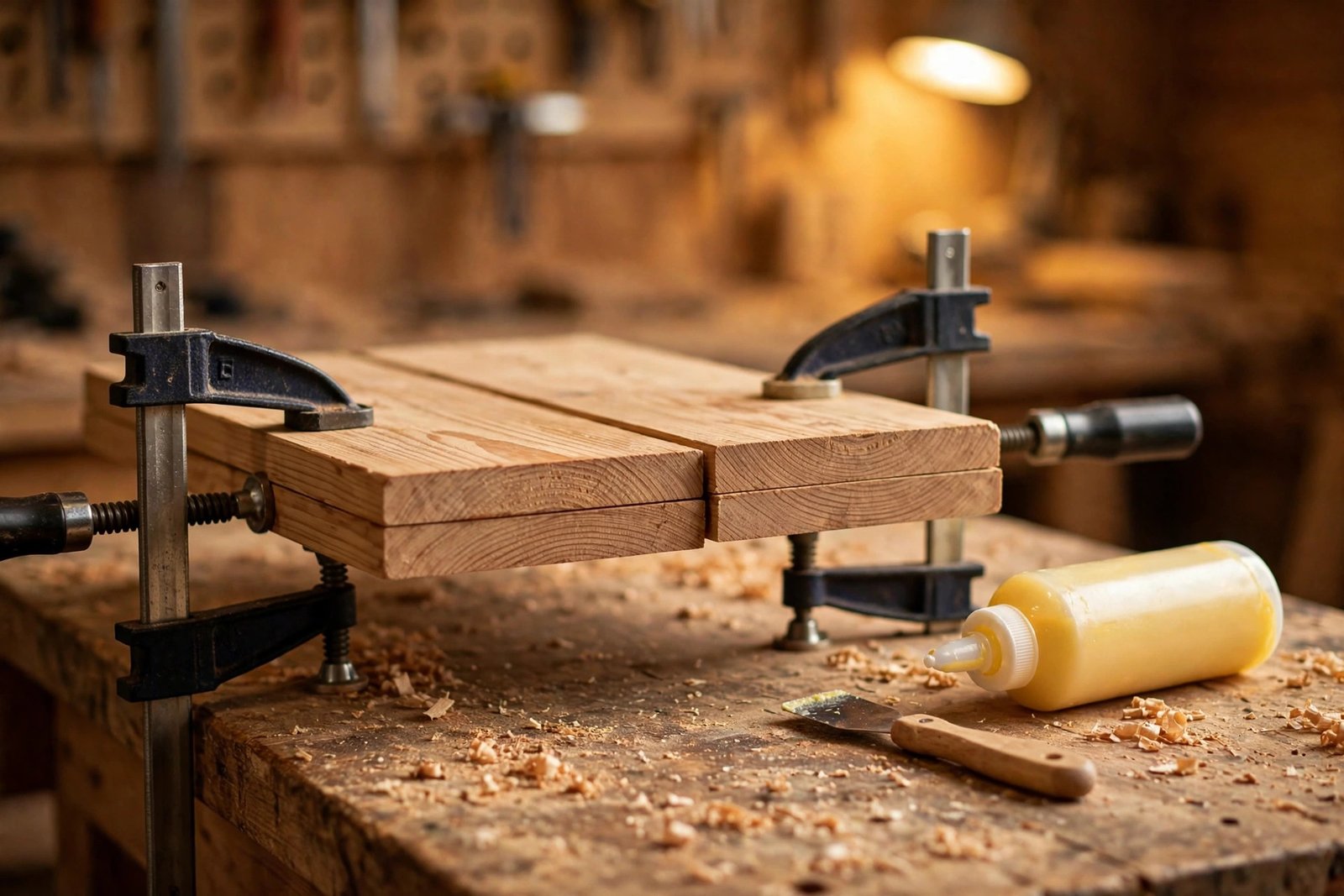
How Long does Wood Glue Take to Dry? Complete Answer
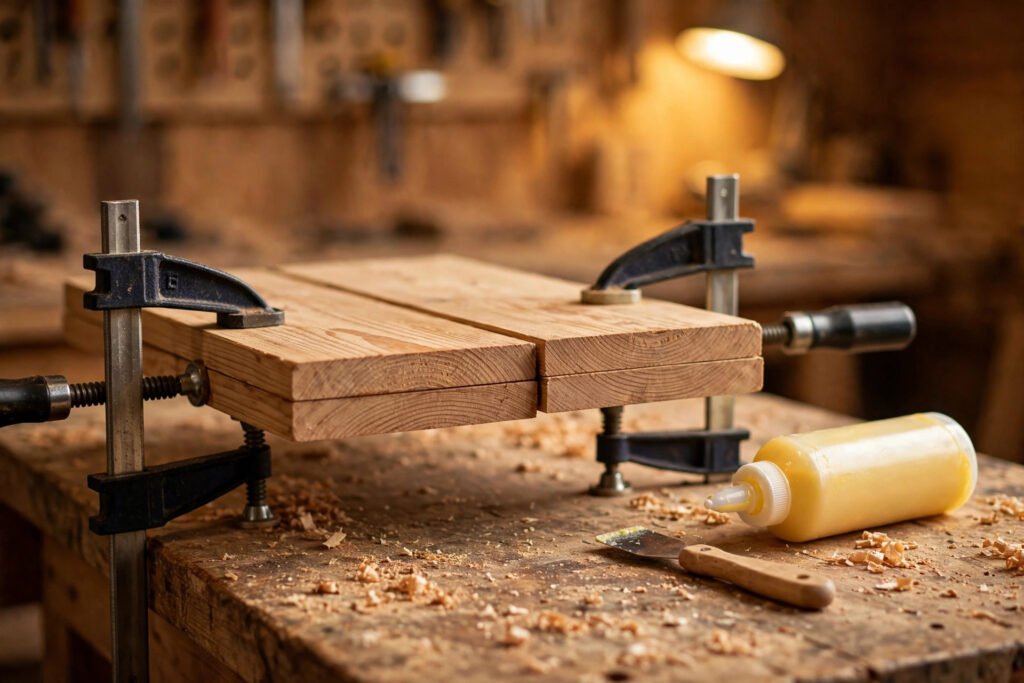
Most wood glue sets in 30 to 60 minutes and reaches full strength in 24 hours. That is the complete short answer: you can usually remove clamps after about an hour, but you should not stress the joint — sand it, hang weight on it, or put it into service — until a full day has passed. Drying times vary by glue type, temperature, humidity, and wood species, so here is the full breakdown.
Whether you are repairing a chair, building a bookshelf in a Brooklyn walk-up, or gluing up panels in a proper workshop, timing matters. Remove clamps too early and the joint slips; wait unnecessarily long and you waste a day. Understanding the difference between “set,” “dry,” and “cured” takes the guesswork out.
The Quick Answer: Wood Glue Drying Times
Wood glue goes through three stages:
- Open time (5 to 15 minutes): The window after application when you can still position the pieces. After this, the glue starts to skin over.
- Set time / clamp time (30 minutes to 2 hours): The joint holds together on its own and clamps can come off. For standard PVA glue (like the classic yellow wood glue), this is about 30 to 60 minutes.
- Full cure (24 hours): The glue reaches maximum strength. This is when you sand, finish, or load the joint.
Drying Times by Glue Type
Not all wood glues behave the same:
- PVA glue (yellow/white wood glue): Sets in 30 to 60 minutes, cures in 24 hours. The standard choice for most indoor woodworking.
- Polyurethane glue (e.g., Gorilla Glue): Clamp time of 1 to 2 hours, full cure in 24 hours. Expands as it cures, so use sparingly and clamp firmly.
- Hide glue (liquid): Sets in about 30 minutes to an hour, cures in 24 hours. Traditional choice for furniture repair and instrument making.
- Epoxy: Varies widely — 5-minute epoxies set fast but are weaker; standard woodworking epoxies need 30 minutes to several hours of clamp time and a full 24 to 72 hours to cure.
- CA glue (super glue): Sets in seconds to minutes. Useful for small repairs and temporary tacking, but brittle for structural joints — and it still benefits from several hours before stressing.
What Affects How Fast Wood Glue Dries
- Temperature: Glue cures best between 60 and 80 degrees Fahrenheit. Cold slows curing dramatically — below 50 degrees, PVA glue may never cure properly.
- Humidity: High humidity slows drying; very dry air speeds it. Aim for normal indoor conditions.
- Wood species: Dense hardwoods like maple and oak absorb glue slowly and need longer clamp times than porous softwoods like pine.
- Glue amount: A thin, even layer cures faster and stronger than a thick glob. More glue does not mean a stronger joint.
- Joint fit: Tight-fitting joints cure faster and hold better. Gaps filled with glue take longer and end up weaker.
- Airflow: Good air circulation around the joint helps moisture escape and speeds curing.
Clamping Guide: How Long to Leave Clamps On
Clamping is where most beginners go wrong. Follow these guidelines:
- Minimum clamp time for PVA glue: 30 minutes for softwoods in warm conditions, 60 minutes for hardwoods or cooler rooms.
- Safe default: Leave clamps on for 1 to 2 hours. There is no penalty for clamping longer.
- Do not overtighten: Snug is enough. Cranking clamps until glue squeezes out everywhere starves the joint — you want a thin, consistent bead of squeeze-out, not a flood.
- Protect the wood: Place scrap blocks or pads between clamp jaws and your workpiece to prevent dents.
- Check alignment early: In the first 10 minutes, while the glue is still workable, verify the pieces have not shifted under clamp pressure.
Tips for Faster, Stronger Glue-Ups
- Work in a warm room. If your shop or apartment is cold, bring the project indoors or use a space heater nearby (keeping it at a safe distance).
- Dry-fit everything first. Assemble the joint without glue to check the fit and plan your clamping — you do not want surprises during the short open time.
- Apply glue to both surfaces for dense hardwoods; one surface is fine for softwoods.
- Wipe squeeze-out promptly with a damp cloth. Dried glue squeeze-out resists stain and finish, leaving ugly light spots.
- Wait the full 24 hours before sanding, routing, or stressing the joint — even if it feels rock solid after two hours.
Mistakes to Avoid
- Removing clamps too early: The most common failure. When in doubt, leave them on longer.
- Stressing the joint before full cure: A chair glued at noon is not ready to sit on at dinner. Give it 24 hours.
- Gluing in freezing conditions: PVA glue that freezes before curing is ruined. Keep the project above 50 degrees Fahrenheit for the full cure period.
- Using old glue: Wood glue has a shelf life of about one to two years unopened, less once opened. If it is stringy, lumpy, or smells sour, replace it.
- Skipping surface prep: Glue bonds poorly to dusty, oily, or burnished surfaces. A quick wipe and light sanding make a big difference.
Frequently Asked Questions
Can I speed up wood glue drying with a hair dryer or heat gun?
Gentle warmth helps, but direct high heat is risky — it can skin over the surface while the inside stays wet, weakening the joint. A warm room with good airflow is safer and just as effective. Never use a heat gun on a glued joint.
How long should wood glue dry before sanding?
Wait the full 24-hour cure before sanding. Sanding partially cured glue gums up sandpaper and can tear the joint. If you must clean up squeeze-out sooner, carefully scrape it with a chisel after a few hours instead.
Does wood glue work in cold weather?
Standard PVA wood glue needs temperatures above 50 degrees Fahrenheit to cure properly, and ideally 60 to 80 degrees. In an unheated garage in winter, bring the project inside or use a polyurethane glue, which tolerates cooler conditions better.
Is wood glue stronger than the wood itself?
Yes — a properly fitted and clamped PVA glue joint is typically stronger than the surrounding wood. When these joints fail, the wood usually breaks before the glue line does. That is why surface prep and clamping matter more than the brand of glue.
How can I tell if my wood glue has gone bad?
Check the consistency: fresh wood glue pours smoothly. If it is thick and stringy, lumpy, separated, or has a sour smell, it is past its prime. When in doubt, test it on scrap wood — a fresh bottle of glue is cheap insurance against a failed project.
The rule to remember is simple: clamp for an hour, wait a day. Respect the full 24-hour cure and your glue joints will outlast the furniture around them.