
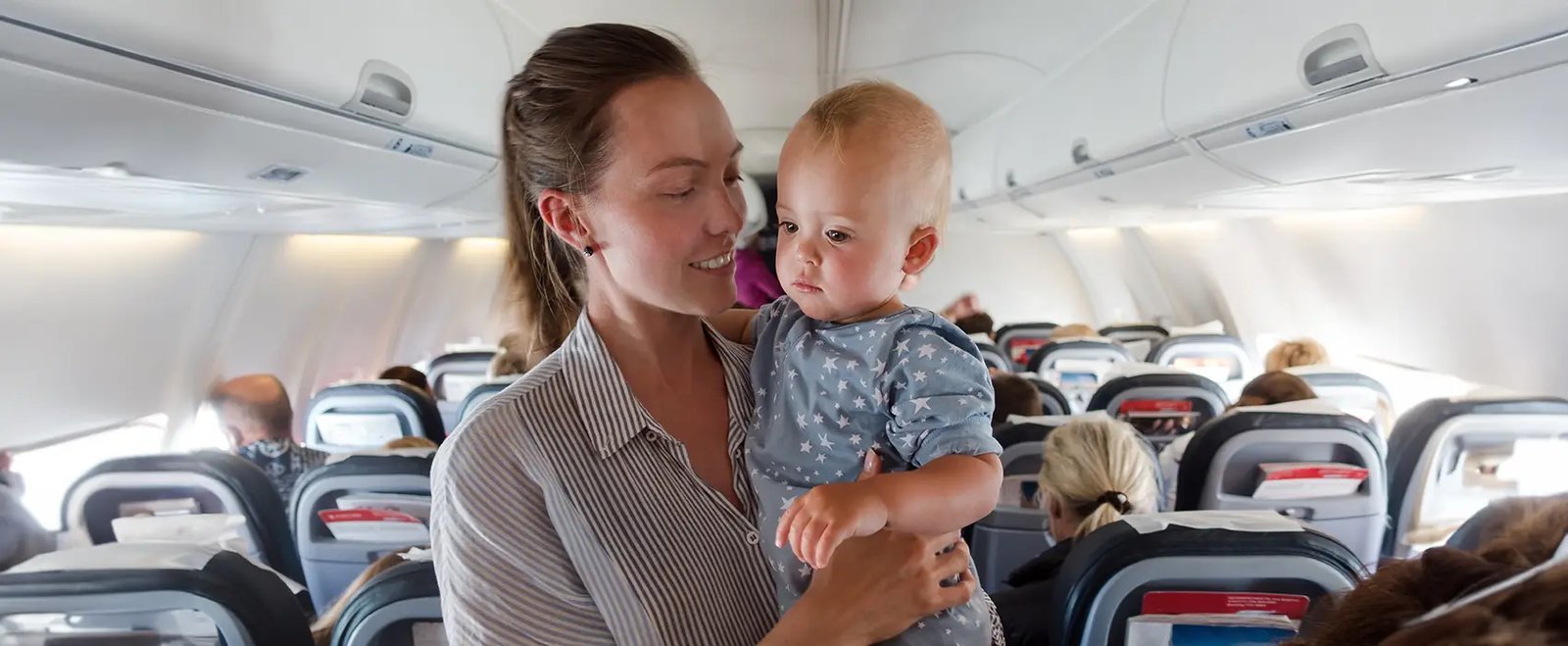
How Can I Travel Internationally With a Baby? (The Complete Guide)
Wondering how can I travel internationally with a baby and keep your sanity? Deep breath: millions of parents do this every year, and babies are actually easier international travelers than toddlers — they sleep anywhere, eat simply, and don’t have opinions about itineraries yet. The under-ones are the golden window; use it.
The keys are documents (start early), flight strategy (this matters enormously), ruthless gear minimalism, and expectations set to “flexible.” Here’s everything, from paperwork to landing.
Documents: Start Yesterday
- Baby needs a passport. Yes, even newborns. Both parents generally must appear in person for under-16 applications in the US. Processing takes weeks (expedited: faster, pricier) — apply the moment travel is even possible. The State Department’s travel.state.gov has current timelines; check them, then add buffer.
- Check destination entry rules. Some countries require additional documents for minors (birth certificates, consent letters if one parent travels alone — get this notarized to avoid nightmare scenarios).
- Visas. Babies need whatever visas adults need for the destination. Apply together.
- Copies of everything. Paper and phone copies of passports, birth certificate, insurance cards, pediatrician contact. Stored separately from originals.
The Flight: Strategy Matters Enormously
- Book the bassinet seat. Bulkhead bassinets (airline-provided, first-come) are the holy grail — call the airline directly after booking to request. Not all planes/routes have them; confirm the aircraft type.
- Lap infant vs. seat. International lap-infant fares are typically 10% of adult fare plus taxes. A separate seat (with car seat) is safer and often saner for long hauls — do the math on your route.
- Time flights to sleep. Overnight flights aligned with bedtime are worth real money. A baby that sleeps 6 hours of a 9-hour flight changes everything.
- Feed on takeoff and landing. Nursing, bottle, or pacifier during pressure changes — swallowing equalizes ears. This is the #1 crying-prevention tactic.
- Board last, not first. Controversial but wise: less time trapped on the plane. Send one parent early with bags if needed.
For the general long-haul comfort playbook, see making long flights comfortable — and avoiding jet lag applies to babies too (with adjusted expectations).
Gear: Less Than You Think
- The carrier is essential. A good soft carrier beats a stroller for airports, cobblestones, and crowds. This is the #1 gear item.
- Stroller: bring cheap or rent there. A lightweight umbrella stroller for the destination; gate-check it. Don’t bring the $800 system — it’ll suffer.
- Car seat decisions. If renting a car, bring yours (safety) or rent one there (convenience, variable quality). For taxis/transit-heavy trips, research local norms — many countries don’t use car seats in taxis.
- Diapers, formula, food: pack for 2x the trip. Your brand may not exist there. Diapers for the travel days plus buffer; locate stores at the destination for resupply.
- Sleep setup. Travel crib or bassinet — many hotels provide them free (request when booking). Familiar sleep sack + white noise app = continuity.
How Can I Travel Internationally With a Baby? Feeding, Sleep, and Health.
- Feeding. Nursing is the ultimate travel food — no packing, no heating, always ready. Formula: pre-measured dispensers, bottled water you trust. Solids: pouches for travel days, then local markets (babies eat what’s fresh everywhere).
- Sleep. Protect the sleep environment (dark, white noise, familiar routine) more than the schedule. Time zones: shift gradually 3–4 days before, or just roll with it — babies adjust in 2–4 days typically.
- Health. Pediatrician visit before travel (vaccine timing, destination-specific advice), travel insurance with medical coverage, a small kit (infant pain reliever, thermometer, saline, diaper cream, oral rehydration salts). Know the local emergency number.
- Water safety. In destinations where tap water is questionable, use bottled/boiled for formula and drinking — see tap water safety in Mexico for the general principles.
Mindset: Flexible Beats Perfect
Plan one anchor activity per day, not three. Build in downtime at the rental. Accept that you’ll see less and enjoy it differently — the trip becomes about experiencing a place as a family, slowly. Lower the sightseeing bar and raise the café-sitting bar. And remember: every parent on that plane has been where you are. The anxiety beforehand is worse than the reality — almost always.
Flying With a Baby: The Airport Gauntlet
- Gear check: carriers can go through security (you’ll walk through wearing baby); strollers get gate-checked free. Car seats: check free or bring aboard if you bought a seat.
- Security with baby supplies: formula, breast milk, and baby food are exempt from liquid limits — declare them, allow extra screening time.
- Feed during pressure changes: takeoff and initial descent — nursing, bottle, or pacifier. The swallowing equalizes ears; this prevents most crying.
- Board last, not first: less time confined on the plane. One parent boards early with bags; the other boards last with baby.
- Change before boarding: fresh diaper right before the flight buys you maximum time before the airplane-bathroom wrestling match.
Destination Survival: The First 48 Hours
The first two days set the trip’s tone: keep them deliberately light. Unpack fully (living from suitcases with a baby is chaos), locate the essentials (diapers, food, pharmacy), and protect sleep fiercely — the familiar routine in the new place (same bath-book-bed sequence, white noise, sleep sack) tells the baby that sleep still works here.
Grocery run on arrival day: diapers, wipes, familiar snacks, bottled water if needed. And give yourself grace — the first 48 hours with a baby in a new country are genuinely hard. By day three, you’ve got rhythms, you know the neighborhood, and the trip starts feeling like a trip instead of a relocation. Every experienced traveling parent promises: it gets easier fast.
The Bottom Line
Traveling internationally with a baby works when you handle documents early (passports take weeks), strategize the flight (bassinet seats, sleep-timed departures, feeding on ascent/descent), pack minimal but smart (carrier essential, 2x diapers/formula), and keep expectations flexible. Babies under one are the easiest travel companions you’ll ever have — the window is golden, so use it.


