
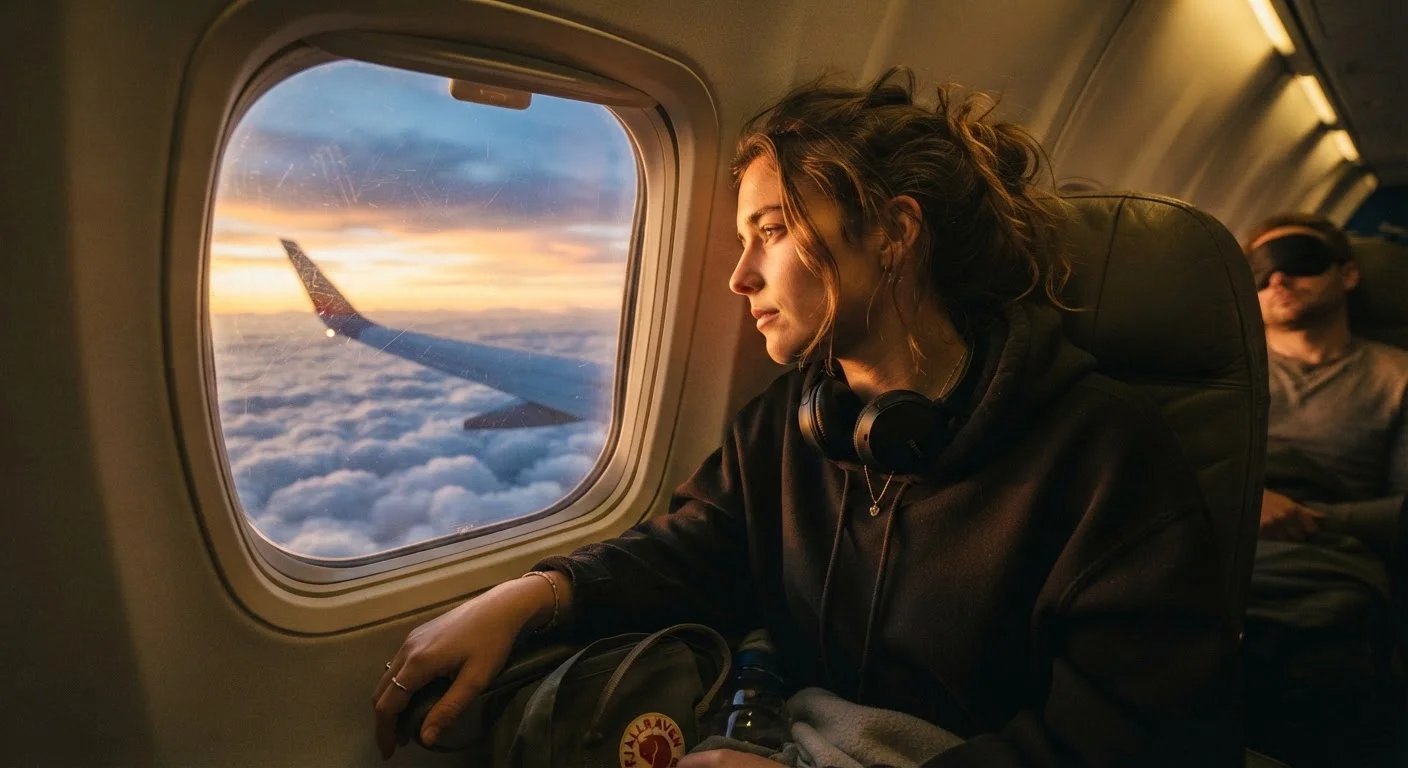
How Do I Avoid Jet Lag on Long International Flights? (The Science-Backed Plan)
Wondering how do I avoid jet lag on long international flights? You can’t entirely — crossing 6+ time zones will cost you something — but you can cut the misery from five days to one or two with a protocol based on actual circadian science, not folk wisdom. I’ve used this system crossing the Pacific a dozen times, and the difference is dramatic.
Jet lag is your body clock disagreeing with the local clock. Every tactic below is about giving your clock the right signals (light, sleep timing, food) at the right times to resync faster. Here’s the full before, during, and after plan.
Before: Shift Your Clock Early (3–4 Days Out)
- Traveling east (US to Europe): go to bed 1 hour earlier each night for 3–4 nights, get bright light first thing in the morning. East is harder — start earlier.
- Traveling west (US to Asia): go to bed 1 hour later each night, get bright light in the evening. West is easier; 2–3 days of shifting helps.
- Move meals too. Eat on the destination schedule as you shift — meal timing is a secondary clock-setter.
- Arrive rested. Starting sleep-deprived multiplies jet lag. Protect sleep the week before; don’t “save up” rest — it doesn’t work that way.
During: The Flight Protocol
- Set your watch to destination time at takeoff. Start living on the new clock immediately — eat and sleep by it.
- Sleep strategically. If it’s nighttime at your destination during the flight, sleep (eye mask, earplugs, neck pillow — see making long flights comfortable). If it’s daytime there, stay awake.
- Hydrate, limit alcohol/caffeine. Dehydration worsens every jet lag symptom. Alcohol fragments the sleep you do get.
- Move. Walk the aisle every couple of hours — circulation helps everything.
- Melatonin, timed right. 0.5–1mg taken at destination bedtime for the first few nights helps reset the clock. Timing matters more than dose — wrong-time melatonin can worsen things. Consult your doctor first.
How Do I Avoid Jet Lag on Long International Flights? The Arrival Plan (Most Important).
What you do on arrival day determines everything:
- Get sunlight immediately. The #1 reset signal. Traveling east: morning light. Traveling west: afternoon/evening light. 30+ minutes outside, no sunglasses if you can manage it. Light is more powerful than any supplement.
- Stay up until local bedtime. The brutal, essential rule. No “quick nap” at 3 p.m. — it becomes 5 hours and destroys the reset. If you must nap: 20 minutes max, before 2 p.m., with an alarm.
- Exercise lightly. A walk or easy workout on arrival day helps enormously — it signals daytime to your body and improves that night’s sleep.
- Eat on local schedule. Even if you’re not hungry. Meals anchor the peripheral clocks in your organs.
- Caffeine strategically. Morning coffee yes; afternoon caffeine no. You’re borrowing energy — don’t borrow past noon.
The East vs. West Cheat Sheet
- Eastward (harder): pre-shift sleep earlier, seek morning light on arrival, consider melatonin at local bedtime, allow one day of recovery per time zone crossed.
- Westward (easier): pre-shift sleep later, seek evening light on arrival, stay active late on day one, recovery is typically faster.
- The rule of thumb: roughly one day of adjustment per time zone — so 8 zones east ≈ up to a week unmitigated, or 2–3 days with this protocol.
The science of jet lag confirms light timing as the dominant lever — everything else is support. And if you’re traveling with little ones, traveling internationally with a baby covers the kid-specific version (spoiler: babies adjust faster than adults).
Jet Lag Supplements and Tools (What Works, What’s Hype)
- Melatonin (works, if timed right). 0.5–1mg at destination bedtime. Low dose beats high — more isn’t better with melatonin. Timing is everything; wrong-time doses worsen jet lag.
- Light therapy glasses/apps (work). Timed bright light is the most powerful clock-resetter. Apps calculate your optimal light schedule by itinerary.
- Caffeine (works strategically). Morning only at destination. It’s a tool, not a lifestyle — afternoon caffeine borrows from tonight’s sleep.
- “Jet lag pills” (mixed). Most are melatonin + vitamins at 10x markup. Read the label; buy the cheap melatonin instead.
- Alcohol as sleep aid (doesn’t work). Fragments sleep architecture. The plane wine is pleasure, not medicine — treat it accordingly.
- Prescription sleep aids (situational). For some travelers, doctor-prescribed options for the first night or two. Discuss with your doctor — not a casual decision.
The Business Traveler’s Jet Lag Protocol
When you must perform on arrival (meetings day one), the protocol tightens: shift sleep 3–4 days pre-trip (non-negotiable for eastward), book flights arriving late afternoon (forces the stay-up-till-bedtime pattern), schedule the critical meeting day two (not day one — protect yourself), use the hotel gym on arrival morning (exercise is the fastest legal performance enhancer for jet lag), and keep day-one commitments light and in the afternoon (your best window).
The unglamorous truth: frequent business travelers who manage jet lag well all do the same boring things — pre-shifting, light discipline, and protecting sleep. There’s no hack that replaces the protocol, only discipline that executes it.
Jet Lag With Kids: The Double Challenge
Kids’ body clocks are less flexible than adults’ — and a jet-lagged child affects the whole family’s trip. The strategy: shift their schedule 2–3 days before departure (easier with kids than adults, since you control bedtime), keep them hydrated and fed on the plane (hunger amplifies every symptom), and on arrival, get them into sunlight and activity immediately — the playground is better medicine than any supplement. Expect 1–2 rough days; plan light activities for them. And protect YOUR sleep too — a rested parent handles a cranky jet-lagged toddler; an exhausted one doesn’t.
For babies specifically, the adjustment is often faster than parents fear — 2–4 days typically. Keep the sleep environment consistent (dark, white noise, familiar routine) and let the schedule follow the sun. The family that plans for the adjustment enjoys the trip; the family that doesn’t spends it in a fog.
The Bottom Line
Avoiding jet lag is a three-phase protocol: shift sleep 1 hour/day toward destination time 3–4 days before, live on destination time during the flight (sleep when it’s night there), and on arrival get sunlight immediately, stay up until local bedtime, exercise lightly, and eat on schedule. East is harder than west; light timing beats every supplement. Do this and a week of zombie is two days of mild fog.


