
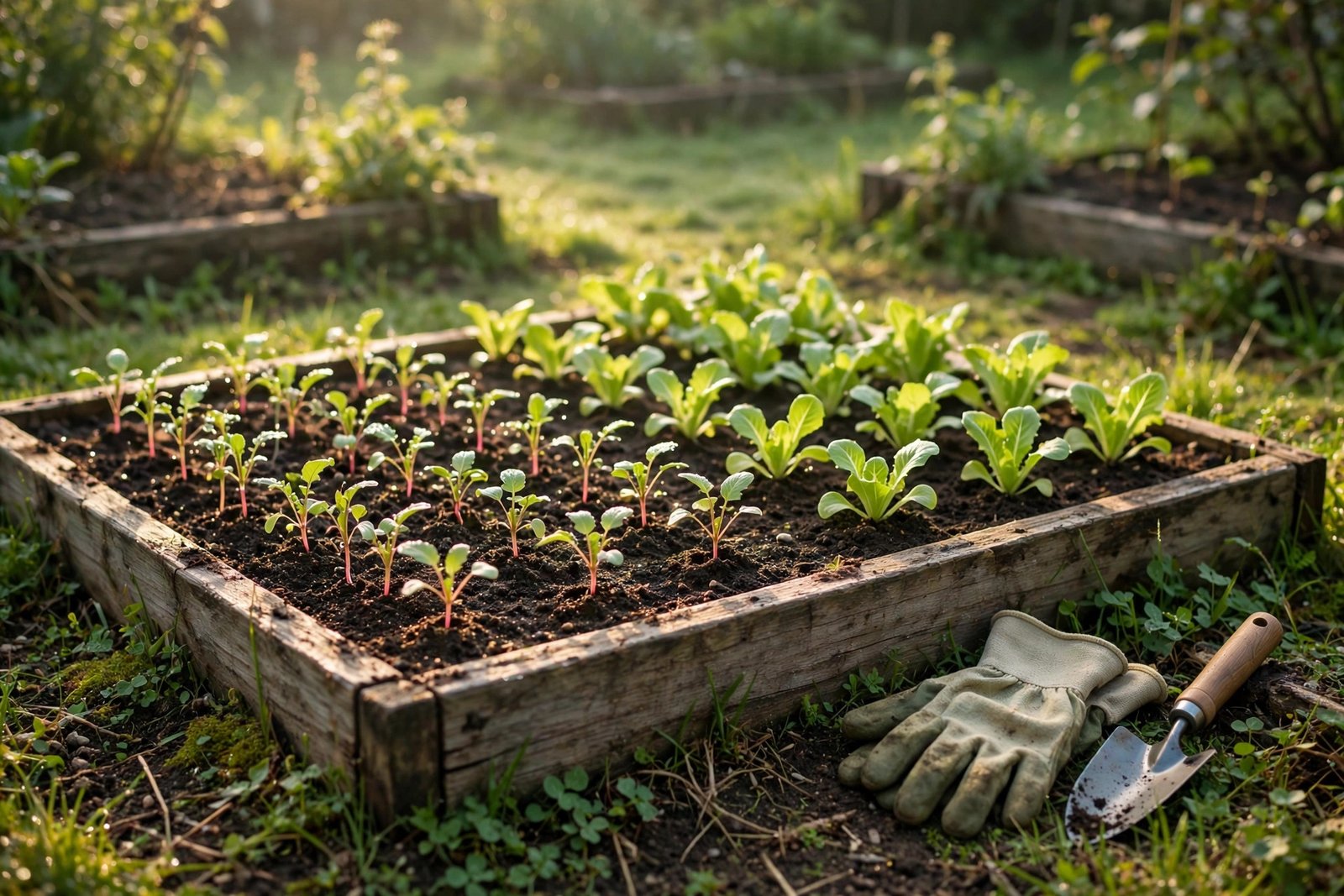
Every gardening journey starts with a single question: what can I actually grow without killing it? The answer matters, because nothing kills a new gardener’s enthusiasm like a summer of dead seedlings. The easiest vegetable to grow for beginners isn’t a matter of opinion — it’s the plant that germinates reliably, tolerates neglect, forgives beginner mistakes, and rewards you with an actual harvest fast enough to keep you hooked. That vegetable is the radish for speed, but the honest full answer depends on your setup. Here’s the definitive beginner ranking, what makes each one easy, and how to get your first harvest with minimal heartbreak.
The champion: radishes (harvest in 25 days)
If you plant one thing as a beginner, plant radishes. They germinate in 3–7 days, mature in 25–35 days, and grow in almost anything — garden beds, containers, even window boxes. That speed is pedagogically perfect: you see the full seed-to-harvest cycle in a month, which teaches you more about gardening than a whole season of slow crops. They tolerate mediocre soil, need no special care beyond consistent water, and tell you clearly when they’re ready (shoulders poking above the soil).
Sow seeds directly outdoors (they hate transplanting) about half an inch deep, thin seedlings to two inches apart — beginners always under-thin, and crowded radishes stay stunted — and harvest promptly, because oversized radishes turn woody and hot. Succession-sow every two weeks for a continuous supply, and try a few varieties — French breakfast types for mild flavor, Easter egg blends for color. One packet of seeds, one month, your first real harvest: that’s the radish promise.
The reliable workhorses: lettuce, beans, and zucchini
Lettuce and salad greens (arugula, spinach, mesclun mixes) are nearly as easy as radishes and far more useful in the kitchen. They germinate fast, grow in partial shade (perfect for balconies and small yards), and offer cut-and-come-again harvesting — snip outer leaves and the plant keeps producing for weeks. Sow in early spring and again in late summer; they bolt (turn bitter) in high heat, which is their one quirk.
Bush beans are the beginner’s protein crop: big seeds that are easy to handle, germination in about a week, and heavy yields from a small planting. They even improve your soil by fixing nitrogen. Plant after the last frost, give them sun and water, and harvest frequently — picking encourages more production. Zucchini is famously prolific to the point of comedy (gardeners joke about locking their cars in August), needing only sun, space, and water to bury you in squash. One plant per household is plenty — two is a part-time job.
Herbs: the gateway crop
Technically not vegetables, but herbs are where most beginners should start: they’re compact, forgiving, and immediately useful. Basil, mint, chives, and parsley thrive on windowsills and balconies with minimal care. Mint deserves its aggressive reputation — plant it in its own container or it will annex your entire garden. Basil wants sun and regular pinching (which gives you pesto ingredients as a byproduct). Chives are nearly indestructible perennials that return yearly.
Herbs teach the core gardening skills — watering judgment, harvesting technique, pest observation — on plants that forgive mistakes. And the economics are unbeatable: a $3 basil plant replaces $4 weekly grocery-store packets all summer. If you’re working with limited space, start with the best plants for a beginner indoor garden to build confidence before going bigger.
What makes a vegetable “easy” (the criteria)
Understanding why these plants are easy helps you evaluate anything else. Easy vegetables share traits: direct-sowable (no fiddly indoor seed-starting), fast germination (you see results quickly), tolerance for imperfect soil, minimal pest pressure, and clear harvest signals. Difficult vegetables fail beginners on these axes: carrots need perfect soil texture, celery needs a marathon growing season, cauliflower demands precise temperatures, and corn needs large blocks for pollination.
Match the plant to your conditions honestly. No full sun? Stick to lettuce, spinach, and herbs — don’t fight for tomatoes in shade. Tiny space? Containers favor radishes, lettuce, herbs, and bush beans over sprawling squash. The USDA’s planting resources help you identify your growing zone and frost dates, which determine everything about timing.
Setting up for success: the beginner’s plot
You don’t need much infrastructure. A single 4×4-foot raised bed — learn how to build a simple raised bed for under $100 — or a handful of 5-gallon containers handles a generous beginner garden. Fill with quality potting mix or a raised-bed blend, not yard dirt (which compacts and underperforms). Ensure drainage holes in every container. Mulch the soil surface to retain moisture and suppress weeds.
Water deeply but infrequently rather than sprinkling daily — you want roots growing downward. Morning watering beats evening (less disease). And start a simple garden journal: what you planted, when, and how it did. That notebook becomes your most valuable gardening tool within two seasons. The EPA’s water conservation guidance has excellent tips for efficient garden watering that also lowers your water bill.
Beginner mistakes that kill harvests
The top killers: planting too early (cold soil rots seeds — wait for the right soil temperature, not just the calendar), planting too deep (tiny seeds need barely a covering of soil), overcrowding (thin seedlings ruthlessly; every plant needs its space), underwatering containers (pots dry out far faster than ground soil — check daily in summer), and giving up after one failure. Every gardener kills plants; the good ones just keep planting.
Pests will find you eventually — start with prevention (healthy soil, proper spacing, row covers for vulnerable crops) before reaching for sprays. And remember: a “failed” crop that taught you something wasn’t a failure. The radishes that bolted taught you about heat; the lettuce that got leggy taught you about light. That’s the curriculum.
Conclusion
The easiest vegetable to grow for beginners is the radish — 25 days from seed to salad, nearly foolproof, and the perfect first teacher. Behind it stand lettuce, beans, zucchini, and herbs, each forgiving and generous. Start small, match plants to your conditions, water consistently, and keep notes. Your first harvest — even if it’s just a handful of radishes — will taste like the beginning of something. Because it is — and next season, you’ll plant twice as much and wonder why you waited so long to start your own rewarding gardening journey this very season. Happy growing.
Frequently Asked Questions
What is the absolute easiest vegetable to grow?
Radishes — they germinate in days, mature in under a month, tolerate mediocre soil, and need only consistent water. Lettuce, bush beans, and zucchini are close seconds.
Can beginners grow vegetables in containers?
Absolutely. Radishes, lettuce, herbs, bush beans, and even compact tomato varieties thrive in 5-gallon containers with drainage, quality potting mix, and adequate sun.
When should beginners start planting vegetables?
Cool-season crops (radishes, lettuce, spinach) go in 2–4 weeks before your last frost date; warm-season crops (beans, zucchini, tomatoes) after it. Check your USDA growing zone for exact timing.
Why do my seedlings keep dying?
The usual culprits: planting too early in cold soil, planting seeds too deep, overcrowding, underwatered containers, or insufficient light. Fix these five and most seedling deaths disappear.