
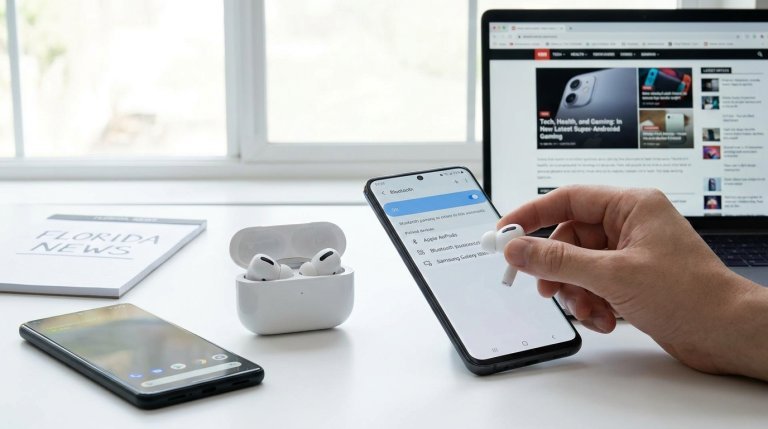
You switched to Android but those AirPods are still in the drawer. So can I use AirPods with an Android phone, or are they Apple-only paperweights now?
So, can I use AirPods with an Android phone? After looking at the options, the prices, and what people actually experience, here's my straightforward take.
Here’s the Deal
Yes — AirPods work as standard Bluetooth earbuds with any Android phone. Hold the setup button on the case until the light flashes white, then pair from Android's Bluetooth settings. Music, calls, and basic controls all work. What you lose: automatic device switching, Siri, spatial audio head-tracking, ear-tip fit test, and easy battery widgets (though free apps like MaterialPods or CAPod restore battery popups).
That's the short version. Now let's get into the parts that actually affect your wallet and your day.
If that piqued your interest, you’ll like How do I recover deleted photos from my Android phone too.
For the official word, check Apple's official AirPods support page, which lays out the details straight from the source.
Can I Use AirPods With an Android Phone? What Works and What Doesn't
- Real talk: Pairing is standard Bluetooth: case button until white flash, then connect from Android Bluetooth settings.
- Core audio — music, podcasts, calls — works perfectly, with the same sound quality as on iPhone.
- You lose: auto-switching between devices, Siri voice commands, and firmware updates (update via a friend's iPhone or iPad).
- Free Android apps (MaterialPods, AndroPods) bring back battery indicators and some missing features.
- Double-tap controls still work but can't be customized without an Apple device.
A Quick Real-World Example
My brother uses AirPods Pro with his Pixel. Calls and music are flawless; he just can't auto-switch to his tablet. His verdict after a year: 'I forget they're supposed to be iPhone-only until someone asks.'
Should You Buy AirPods for Android?
Let’s talk about the DIY-versus-pro question, because it comes up constantly. The internet makes everything look easy — a ten-minute video, a $20 kit, and you’re supposedly set. Sometimes that’s genuinely true. But the videos never show you the three hours of troubleshooting, the stripped screw, or the part that arrives broken. My rule of thumb: if a failed DIY attempt would cost you more than the pro would have charged in the first place, just hire the pro. Your time has value, and so does your sanity.
That said, there’s real satisfaction in fixing something yourself, and plenty of tech tasks are genuinely beginner-friendly once you know which ones. The trick is matching the job to your actual skill level, not the skill level of the YouTuber who does it for a living. Start small, read the comments (that’s where the real warnings live), and have a plan B before you open anything up.
A quick word on security, because this is where people get burned quietly. Most tech headaches I hear about — hacked accounts, lost photos, weird charges — trace back to boring basics: reused passwords, skipped updates, no backup. It’s not exciting advice, but a password manager and two-factor authentication will protect you more than any antivirus subscription ever will. Set them up once and they just work in the background.
Backups deserve their own mention. Not “I’ll get around to it” backups — automatic ones. The 3-2-1 rule is the gold standard for a reason: three copies of anything important, on two different types of storage, with one copy offsite. Cloud plus an external drive covers most people. The day your phone takes a swim or your laptop dies, you’ll either be relieved or devastated, and the difference is entirely decided beforehand.
You might also want to check out How do I fix a cracked phone screen myself at home.
Smart Moves to Make
- Here's one that saves people real money: if you already own AirPods, absolutely keep using them — they work fine.
- Don't skip this: don't buy new AirPods primarily for Android; Galaxy Buds or Pixel Buds integrate far better for the money.
- It's not glamorous, but it works: borrow an iPhone once to install firmware updates — they fix real bugs.
- It's not glamorous, but it works: install a battery-widget app on day one; not knowing charge levels gets old fast.
Where People Usually Go Wrong
- Here's one I see constantly: assuming they won't pair at all — they're just Bluetooth earbuds underneath. Don't let it happen to you.
- Here's one I see constantly: paying full price for AirPods when buying fresh for an Android phone. Don't let it happen to you.
- A lot of folks never updating firmware, then blaming Android for bugs Apple already fixed. — and honestly, it's an easy trap to fall into.
Quick Questions, Straight Answers
What's the biggest mistake beginners make?
Rushing. People either buy the first option they see or dive into a fix without reading the instructions twice. Slow down, compare at least three options, and read the fine print — especially around warranties, return windows, and what's actually included. Ten extra minutes of patience routinely saves hundreds of dollars.
How long does this usually take?
Honestly, it varies more than most guides admit. A straightforward case might take under an hour, while anything involving shipping, appointments, or waiting on parts can stretch to several days. My advice: ask for a realistic timeline up front, then add a buffer. If someone promises it'll be instant, get the details — 'instant' usually means 'the easy part is instant.'
Is the cheapest option ever the right call?
Sometimes, but rarely for things you depend on daily. The cheapest option usually cuts something — quality, support, longevity, or all three. The sweet spot is almost always the mid-range: proven, reasonably priced, with real support behind it. Buy cheap twice and you've spent more than buying right once.
Here’s My Honest Take
Already own them? They work great on Android for the essentials. Shopping new? Buy earbuds made for your platform — you'll get more features for less money.
Look, nobody wants to overthink this stuff. But twenty minutes of reading now beats an expensive mistake later.
Related reading: Why does my phone overheat when I charge it.
One more useful resource: Google's Pixel Buds page for comparison — worth bookmarking before you make any final decisions.


