Bathroom renovations in New York City are notoriously expensive — a project that costs $8,000 in Ohio can easily run $25,000 here. Between co-op board approvals, DOB permits, building insurance requirements, and contractors who charge Manhattan premiums, NYC bathroom remodels play by different rules. This guide breaks down what a bathroom renovation actually costs in NYC in 2026, what drives the price, where the money goes, and how to keep the budget under control.
The headline numbers
Budget refresh ($8,000–$15,000): new toilet, vanity, mirror, lighting, paint, and fixtures — keeping the existing layout and tile. Achievable in condos and houses with a handy contractor; tough in co-ops with strict alteration rules.
Mid-range gut renovation ($25,000–$45,000): the NYC standard — new tile, tub or shower, vanity, toilet, plumbing updates, electrical, and finishes. This is what most New Yorkers mean by “renovating the bathroom.”
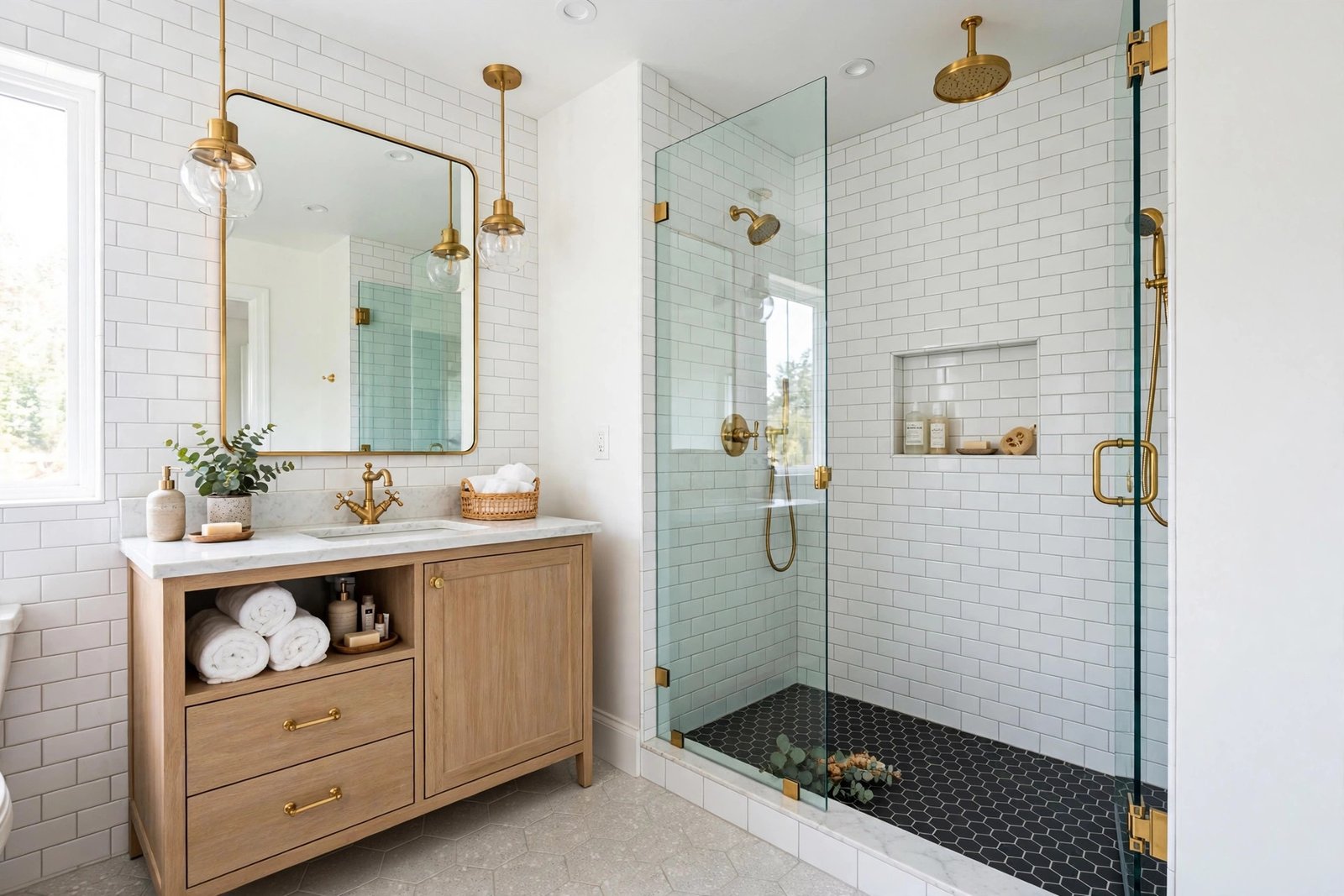
High-end renovation ($50,000–$100,000+): designer fixtures, stone tile, custom vanities, heated floors, steam showers, relocated plumbing. Common in luxury condos and brownstones.
The layout change multiplier: moving the toilet, shower, or sink — anything involving waste lines — adds $5,000–$15,000+ because it means opening floors, rerouting plumbing, and often board and DOB scrutiny. Keep the “wet” fixtures where they are and you save a fortune. For national context on remodel pricing, see what a bathroom remodel costs on average — then add the NYC premium explained below.
A note on co-op vs. condo vs. house costs
Your building type shapes the bill. Co-ops add the heaviest approval burden and the strictest contractor rules, but the apartment itself is often smaller, which caps material costs. Condos are slightly easier procedurally but tend to be larger, newer units where owners choose pricier finishes. One- and two-family houses in Queens, Brooklyn, and Staten Island skip board approvals entirely — but you lose the building’s infrastructure, so dumpster permits, street parking for work vehicles, and DOB filings fall on you. Know which game you are playing before collecting bids.
Why NYC costs so much more
Alteration agreements: co-ops (and many condos) require board approval before any renovation — a process taking 1–3 months, with application fees ($500–$2,000+), security deposits, and mandated work hours (often 9–5 weekdays only, which stretches timelines and labor costs).
Insurance requirements: buildings typically demand contractors carry $1M+ liability policies and name the building as additional insured. Small cheap contractors often cannot meet this — which is why building-approved contractors charge more.
Logistics: no driveway, elevator reservations, parking for work vehicles ($60+/day in Manhattan garages), debris removal by bag (no dumpsters on most streets), and material delivery up freight elevators. Every logistical friction adds labor hours.
Labor rates: licensed NYC plumbers and electricians charge $150–$300+/hour. A bathroom needs both, plus tile setters at $75–$150/hour. Labor is typically 40–60% of the total project cost.
Permits: plumbing and electrical work requires DOB permits and licensed professionals — unpermitted work risks fines, failed inspections, and insurance nightmares. Budget $1,000–$3,000 for permits and filings.
Where the money goes: a $35,000 breakdown
A typical mid-range NYC bathroom gut renovation allocates roughly: labor $14,000–$18,000 (demo, plumbing, electrical, tile, carpentry); tile and stone $4,000–$7,000 (materials plus setting); plumbing fixtures $3,000–$6,000 (tub/shower, toilet, faucets, shower system); vanity and mirror $1,500–$3,500; electrical and lighting $1,500–$2,500 (including GFCI, exhaust fan, heated floor wiring); permits, board fees, insurance $1,500–$3,000; contingency (10–15%) $3,000–$5,000. The contingency is not optional — behind every NYC bathroom wall lurks a surprise (the National Kitchen & Bath Association publishes annual cost-vs-value data if you want national benchmarks): corroded pipes, water damage, outdated wiring. Budget for it or the surprise budgets for you.
How to keep costs under control
Keep the layout. The single biggest saver. Moving plumbing doubles complexity.
Choose materials wisely. Porcelain tile that mimics marble costs a third of real marble and performs better in wet environments. A $400 vanity from a big-box store looks 90% as good as the $2,000 designer one once installed.
Time it right. Contractors are hungriest in winter (January–March) — you may negotiate 10–15% off peak-season pricing.
Get 3–5 bids. Bids for the same NYC bathroom routinely vary by 50%+. Detailed written bids (line items, not lump sums) let you compare honestly. Never pay more than 10–15% upfront; tie payments to milestones.
Handle the cosmetic DIY. Painting, installing mirrors, swapping light fixtures, and caulking are all learnable — fixing a leaky faucet yourself builds the skills for bathroom-adjacent DIY. But leave plumbing and electrical to licensed pros — the building requires it and the stakes are real.
Consider a refresh instead of a gut. Reglazing a tub ($400–$800), new fixtures, fresh caulk and paint, and a new mirror can make a bathroom feel new for under $3,000. And simple changes that make a bathroom look bigger — large mirrors, light colors, glass shower doors — deliver visual transformation without construction.
The process: what to expect timeline-wise
Weeks 1–8: board approval and permits (the hidden phase nobody budgets time for). Week 1 of work: demolition (2–3 days of noise — warn your neighbors). Weeks 2–3: plumbing and electrical rough-in, inspections. Weeks 3–5: tile, waterproofing (critical — failed waterproofing is the most expensive bathroom mistake), fixtures. Week 6: vanity, mirror, paint, punch list. Total: 4–6 weeks of work after 1–3 months of approvals. You will be without that bathroom the entire time — plan accordingly (gym showers, a neighbor’s goodwill).
Choosing a contractor (the decision that determines everything)
Get referrals from neighbors who renovated in your building — building-approved contractors who know your board’s rules are worth a premium. Verify licenses: plumbers and electricians must be licensed by the city; general contractors need a DOB license. Check the NYC Department of Consumer Affairs for complaints. Get everything in writing: scope, materials (brand and model), timeline with penalties, payment schedule, and warranty. Never pay cash, never pay in full upfront, and be wary of any bid dramatically below the others — it means corners you will discover later.
Conclusion
A bathroom renovation in NYC costs $25,000–$45,000 for a standard gut job — driven by board approvals, insurance requirements, logistics, and labor rates that dwarf national averages. Control costs by keeping the layout, choosing smart materials, bidding competitively, timing for winter, and DIY-ing only the cosmetic work. Budget a 15% contingency, expect 1–3 months of approvals before work starts, and hire licensed pros for plumbing and electrical. Do it right, and you get a bathroom you love plus genuine resale value in a market where updated bathrooms sell apartments.
Frequently Asked Questions
How much does a small bathroom renovation cost in NYC?
A mid-range gut renovation of a typical small NYC bathroom runs $25,000–$45,000. Budget refreshes (fixtures and finishes, no layout changes) can be done for $8,000–$15,000.
Do I need board approval to renovate my bathroom in a co-op?
Almost always yes. Co-ops require alteration agreements with application fees, security deposits, contractor insurance requirements, and restricted work hours. Allow 1–3 months for approval.
How long does a bathroom renovation take in NYC?
4–6 weeks of construction after 1–3 months of board approvals and permits. Moving plumbing fixtures extends both the timeline and the cost significantly.
Can I DIY a bathroom renovation in NYC?
Cosmetic work (painting, fixtures, mirrors) — yes. Plumbing and electrical — no; buildings require licensed professionals, and DOB permits are mandatory. Unpermitted work risks fines and insurance issues.
Does a bathroom renovation increase home value in NYC?
Yes — updated bathrooms are among the highest-ROI renovations in NYC, typically returning 60–80% of cost in resale value, plus making the apartment sell faster.