
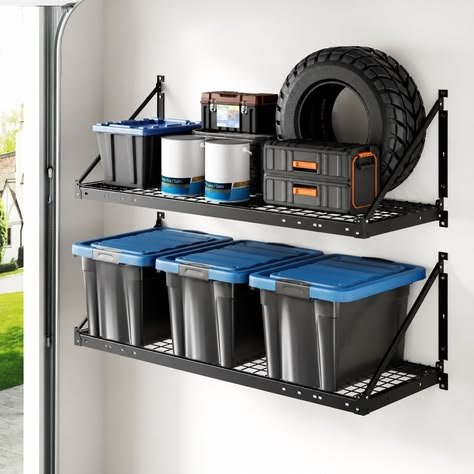
Every garage follows the same lifecycle: pristine on move-in day, then a slow descent into a place where you can’t find the screwdriver and park outside. So what is the best way to organize a garage on a budget? Not expensive custom cabinetry — a ruthless declutter followed by cheap, smart storage that uses your walls and ceiling. Here’s the system that actually stays organized.
Step 1: The Purge (Free, and Non-Negotiable)
No storage system fixes too much stuff. Pull everything out (yes, everything — driveway day), and sort into four piles: keep, donate/sell, trash, relocate (belongs elsewhere in the house). Be brutal: the broken weed whacker, the paint cans from 2015, the box of “cables” — let them go. Most garages lose 30–40% of their contents in this step. Hazardous stuff (old paint, chemicals, batteries) goes to your municipality’s hazardous waste collection — don’t trash it. This step costs nothing and does more than any shelving unit.
What Is the Best Way to Organize a Garage on a Budget? Zone It
Before buying anything, divide the garage into zones by activity:
- Tools and workshop — one wall, pegboard or shelves
- Yard and garden — near the door: mowers, trimmers, soil, pots
- Sports and recreation — bikes, balls, camping gear together
- Automotive — fluids, emergency kit, cleaning supplies near the car bay
- Seasonal/deep storage — holiday decor, luggage: up high or in back
- Trash and recycling — contained near the door they exit through
Zoning prevents the classic failure where everything migrates to the nearest flat surface. Every item gets a zone; every zone has a boundary.
The Budget Storage Arsenal (Under $300 Total)
- Freestanding metal shelving ($40–$80 per unit). The workhorse. 5-tier wire or solid shelves hold hundreds of pounds. Buy two or three and line one wall. Nothing beats them for dollar-per-cubic-foot.
- Pegboard ($20–$40 per 4×8 sheet). For hand tools: hooks arrange everything visibly. Trace tool outlines on the board (the classic workshop trick) so missing tools are obvious. Mount on furring strips so hooks have clearance behind.
- Clear plastic bins ($5–$12 each). Clear beats labeled opaque — you can see contents. One size, stackable, same brand so they nest. Label anyway (painter’s tape + marker).
- Ceiling-mounted storage racks ($60–$120). The secret weapon for seasonal items: 4×8 platforms hung from joists hold totes of holiday decor and camping gear, freeing massive floor space. Check joist capacity and use proper lag bolts.
- Wall hooks and bike hangers ($3–$10 each). Bikes on wall mounts, ladders on hooks, extension cords on reels — floor space is precious; walls are free real estate.
- Magnetic strips ($10–$15). For metal tools, drill bits, knives — mount inside cabinet doors or on the pegboard wall.
- A rolling cart ($40–$70). For active projects — keeps the current job’s tools together and mobile.
Lowe’s project guides have solid garage organization plans with exact product lists if you want a shopping list to start from.
Layout Rules That Keep It Working
- Floor rule: as little on the floor as possible. Everything on the floor becomes an obstacle and a dust collector. Shelves, hooks, and ceiling racks exist to defeat the floor.
- Daily-use at arm height. The tools and items you grab weekly live between knee and shoulder height. Seasonal stuff goes high; heavy rarely-used stuff goes low.
- Leave the car bays clear. Mark parking spots with tape on the floor. If storage creeps into the car space, the system is failing — reorganize, don’t expand into parking.
- One in, one out. The maintenance rule. New tool in? An old one gets donated. Without this, entropy wins within a year.
- Contain the small stuff. Screws, nails, bolts in labeled jars or parts organizers. A coffee can of mixed fasteners is where productivity goes to die.
Garage-Specific Gotchas
- Don’t store paint or chemicals in freezing garages — they degrade. Bring them inside or into conditioned space.
- Secure heavy shelving to walls — a loaded shelf tipping is dangerous, especially with kids around. Anti-tip straps are cheap.
- Keep a fire extinguisher accessible — garages hold fuel, paint, and electrical. Mount it near the door, not buried behind boxes.
- Lighting matters. A $30 LED shop light over the work area transforms usability. Dark garages don’t get organized; they get avoided.
Setting Up a Budget Garage Workshop
Once the garage is organized, a small workshop corner turns it from storage into the most useful room in the house. You don’t need much:
- The work surface. A solid-core door on two sawhorses ($40 total) makes a fantastic workbench — flat, sturdy, replaceable. Or a secondhand workbench from marketplace listings. Bolt a bench vise ($30–$50) to one end and you’re equipped for most tasks.
- Lighting. A $30 LED shop light over the bench. You can’t do precise work in a dim garage — this is the highest-ROI workshop upgrade.
- Power. A heavy-duty extension cord or, better, a power strip mounted under the bench. If your garage has one outlet for the whole space, a mounted power strip with a long cord changes everything.
- Tool wall. Pegboard above the bench with your most-used tools outlined. Everything visible, everything reachable without stepping away.
- Small parts station. A parts organizer + a magnetic tray ($8 — catches screws during disassembly). Tiny investment, enormous frustration savings.
- Safety corner. Fire extinguisher mounted (not buried), first aid kit, safety glasses and ear protection on hooks by the bench. Workshop injuries are usually “I didn’t bother” injuries.
What to make first: the workshop earns its keep on routine home maintenance — a dedicated space for sharpening mower blades, fixing the lamp, or assembling furniture beats the kitchen table every time. And as your skills grow, it becomes the staging ground for bigger DIY projects — the raised bed gets built here, the shelves get cut here, the lamp gets rewired here. Total setup cost: $150–$300. The alternative — doing every project on the floor surrounded by boxes — is how DIY goes to die.
The Practical Takeaway
Organizing a garage on a budget is 70% decluttering and zoning, 30% cheap storage: purge ruthlessly, divide into activity zones, then deploy metal shelving, pegboard, clear bins, ceiling racks, and wall hooks — all in for under $300. Keep floors clear, daily tools at arm height, and enforce one-in-one-out. Do the purge honestly and the storage almost organizes itself. Pair the new workshop wall with a proper basic homeowner toolkit and your garage goes from embarrassment to asset in one long weekend.


