
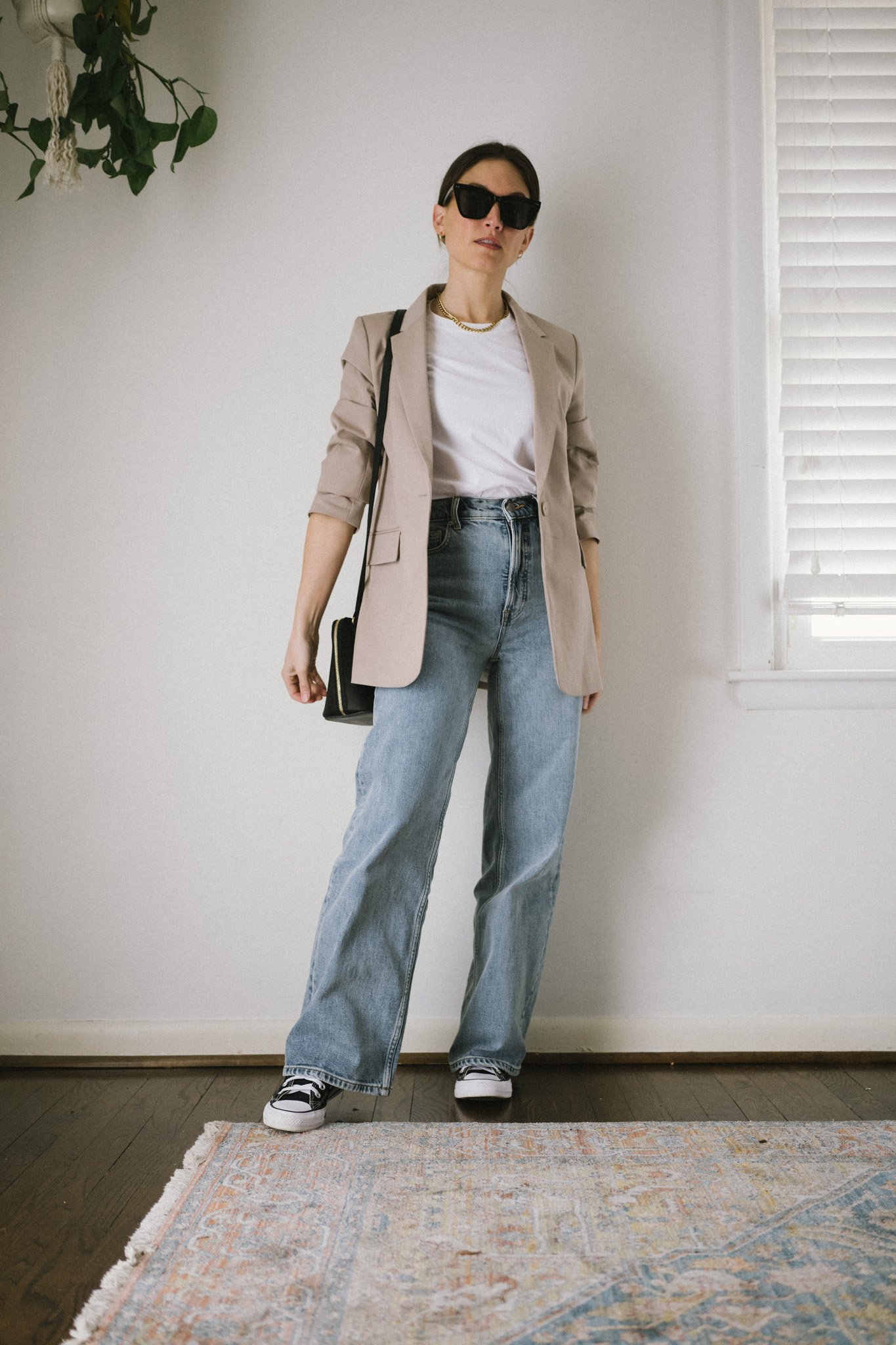
The blazer is the hardest-working layer in fashion — and its best role might be off-duty. A blazer over weekend clothes adds instant polish without any real effort, turning “I just threw this on” into “I have great style.” How do I style a blazer for a casual weekend look? By deliberately breaking its formality with relaxed companions. Here are ten formulas.
The 10 Weekend Blazer Formulas
- 1. Blazer + white tee + jeans + sneakers. The foundational casual-blazer outfit. The tee and sneakers relax it; the blazer sharpens them. Works with any blazer color.
- 2. Oversized blazer + leggings + chunky sneakers. The model-off-duty uniform. The blazer’s structure balances the leggings’ casualness — proportions do the work.
- 3. Blazer + graphic tee + jeans + boots. The graphic tee adds personality; the blazer keeps it intentional. Tuck the tee for polish.
- 4. Blazer + slip dress + sneakers. The dress-down/dress-up collision that always looks cool. The blazer bridges the formality gap.
- 5. Blazer + hoodie + jeans. Yes, really — a hoodie under a blazer is the high-low mix that fashion people love. Keep the hoodie fitted and clean.
- 6. Linen blazer + tank + shorts. Summer’s answer — an unstructured linen blazer over warm-weather basics adds polish without heat.
- 7. Blazer + striped top + white jeans. Preppy-casual perfection. The Breton stripe and blazer are a combination that never fails.
- 8. Blazer as the dress (belted). An oversized blazer belted over bare legs or bike shorts — the bold weekend look. Keep it to the right setting (not family brunch).
- 9. Double denim + blazer. Denim jacket or chambray shirt under a blazer — texture mixing that reads fashion-forward.
- 10. All-black casual + camel blazer. Black jeans, black tee, black boots, camel blazer — the contrast does everything.
Choosing the Right Blazer for Casual Wear
- Unstructured or soft-shouldered blazers read casual naturally; sharp padded shoulders read corporate.
- Fabrics: linen, cotton, jersey, and knit blazers relax instantly. Save the sharp wool suiting blazer for dressier contexts.
- Fit: slightly relaxed or oversized works best casually — see our oversized styling guide for the proportions.
- Colors: navy, camel, black, and plaid are the versatile casual-blazer colors. They pair with everything in a weekend wardrobe.
Styling Details That Sell It
- Push up the sleeves. The universal casual signal — instantly relaxes any blazer.
- Pop the collar (slightly). Or don’t — but a little collar attitude adds nonchalance.
- Mix the formality deliberately. The formula is always: blazer (polished) + at least two casual elements. One casual element looks like you forgot to change; two looks intentional.
- Shoes set the tone. Sneakers = fully casual; loafers = smart casual; heels = dressy. Same blazer, three different outfits via footwear.
- Keep it unfussy. The casual blazer look fails when over-accessorized. Simple jewelry, clean bag, done.
This versatility is why the blazer anchors so many guides — from creative interviews to night-out upgrades. One good casual blazer serves a dozen roles.
How Do I Style a Blazer for a Casual Weekend Look? Your Questions Answered
What kind of blazer works best for casual styling?
Unstructured or half-structured blazers in casual fabrics: cotton, linen, jersey, or knit. The structure is what reads “office” — sharp padded shoulders, stiff canvas interlining, precise tailoring. Remove that structure and the same silhouette reads “weekend.” Slightly oversized fits work best casually (the relaxed proportion matches the relaxed context). Colors: navy, camel, black, olive, and plaid are the versatile casual-blazer palette. Avoid: your sharpest wool suit blazer worn as a separate (the orphaned-suit-jacket look — it reads as a mistake, not a choice).
Can men style blazers casually too?
Absolutely — the men’s casual blazer is a cornerstone of smart casual. The formula mirrors women’s: unstructured blazer + casual companions (dark jeans or chinos, tee or henley, clean sneakers or loafers). The men’s version leans on texture: a cotton or linen blazer over a henley is the weekend uniform of well-dressed men everywhere. Same rules apply: push the sleeves, mix formality deliberately (blazer + two casual elements), and ensure the blazer isn’t an orphaned suit jacket. GQ’s casual tailoring coverage is the men’s reference for this balance.
How do I keep a casual blazer outfit from looking sloppy?
The line between “relaxed” and “sloppy” is grooming and intention signals: pushed-up sleeves (deliberate), a tuck or defined waist (structure), polished shoes (not beat-up sneakers), and good grooming (the casual outfit with great hair reads intentional; with messy hair reads accidental). Also: fit still matters — “casual” doesn’t mean “ill-fitting.” The blazer should fit in the shoulders even if the body is relaxed. And one polished element minimum: if everything is relaxed (tee, jeans, sneakers, unstructured blazer), add one sharp note — a watch, good bag, or intentional jewelry. That single polish signal carries the whole outfit.
What shoes work with a casual blazer?
The shoe sets the outfit’s register: clean minimal sneakers (fully casual), loafers or mules (smart casual sweet spot), ankle boots (edgy casual), ballet flats (polished casual). The blazer is constant; the shoe is the variable that tunes formality. Match the shoe to the occasion’s energy: brunch with friends = sneakers or flats; date night = boots or heels; gallery opening = loafers or mules. And keep them clean — scuffed shoes undermine the blazer’s polish instantly. The casual blazer deserves better than afterthought footwear.
Can I wear a blazer with shorts?
Yes, in the right context — it’s a legitimately stylish warm-weather combination. The formula: tailored (not gym) shorts hitting mid-thigh, a relaxed blazer, and loafers or clean sneakers. It works for resort settings, summer parties, and fashion-forward casual — not for offices or formal events. The shorts must be tailored (structured fabric, proper length); athletic or cargo shorts with a blazer clash rather than complement. It’s a confident look that reads intentional when the pieces are right and costume-y when they’re not. Know your audience.
The Bottom Line
Styling a blazer casually means pairing it with at least two relaxed elements (tee, jeans, sneakers), pushing up the sleeves, and choosing unstructured fabrics and relaxed fits. The blazer adds the polish; the casual pieces add the ease. Master this balance and you have a weekend uniform that looks effortlessly stylish every time.


