
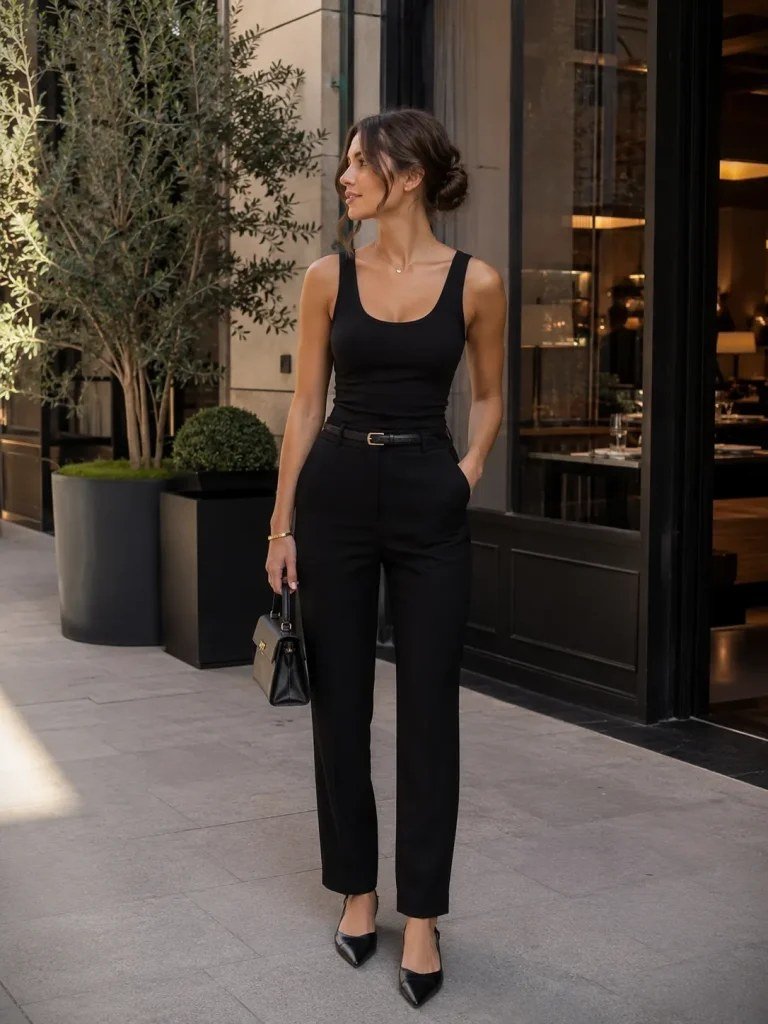
Height is mostly genetics — but perceived height is styling. The visual difference between someone who looks their height and someone who looks 3 inches taller is entirely in proportion choices: where lines break, where the eye travels, how the silhouette flows. How can I look taller with the right clothing choices? By creating long, unbroken vertical lines and keeping proportions clean. Here are 14 techniques that work.
The Core Principle: Unbroken Vertical Lines
Everything below serves one goal: the eye should travel smoothly from head to toe without visual interruptions. Every horizontal break — a contrasting belt, cropped proportions, ankle straps — chops the line and shortens perception. Every vertical element — monochrome, v-necks, long lines — extends it. You’re not changing your body; you’re directing traffic.
14 Elongating Techniques
- 1. Wear monochrome or tonal outfits. The single most powerful trick. One color head-to-toe (especially dark) creates an unbroken column. Navy on navy, black on black, camel on camel — instant length.
- 2. High-rise everything. High-waisted pants and skirts visually lengthen legs by raising the perceived waistline. Tuck tops in to show the rise — an untucked top over high-rise pants wastes the effect.
- 3. Show the waist. Tucked, belted, or cropped — a defined waistline creates the leg-to-torso ratio that reads “tall.” Undefined waists read short.
- 4. Choose v-necks and open necklines. They elongate the neck and draw the eye vertically. High necklines (turtlenecks, crew necks) can shorten — if you wear them, keep the rest of the outfit elongating.
- 5. Nude-for-you shoes. Shoes matching your skin tone extend the leg line instead of cutting it at the ankle. Pointed toes add further extension — the longest-looking shoe shape.
- 6. Avoid ankle straps (or match them). Straps cut the leg line visually. If you love them, choose nude tones that blend.
- 7. Keep hems intentional. Pants should graze the top of the shoe (no pooling — pooling fabric shortens dramatically). Skirts hit best just above the knee or at full midi/maxi — avoid the mid-calf dead zone that chops legs.
- 8. Vertical details. Pinstripes, vertical seams, long necklaces, open cardigans worn as vertical lines — all draw the eye up and down.
- 9. Fitted over baggy. Excess fabric swallows petite frames. Clothes should skim — see our fit guide. (Oversized can work — our oversized styling guide shows how — but it needs deliberate proportion play.)
- 10. Crop jackets at the waist. Short jackets (ending at the waist) lengthen the leg line; long jackets over short legs compress it. Match jacket length to your proportions.
- 11. Small-scale patterns. Large prints overwhelm smaller frames; small-to-medium prints harmonize. Vertical-oriented prints double the effect.
- 12. High hairstyles. A topknot or high ponytail literally adds inches and draws the eye up. Sleek hair elongates; wide hair widens.
- 13. Heels help (obviously). But the type matters: nude pointed heels maximize the effect; ankle boots in the same color as pants create an unbroken leg-to-foot line.
- 14. Tailor everything. Off-the-rack proportions assume average height. Hemming pants, shortening sleeves, and adjusting rises to your body is the ultimate elongating investment.
What to Avoid
- Capri pants and cropped wide-legs that end at the calf’s widest point
- Oversized bags that dwarf your frame (scale accessories to your size — see handbag sizing)
- Bold horizontal stripes across the torso
- Low-rise pants (shorten legs visually — the opposite of what you want)
- Tunic tops over pants with no waist definition (creates one long block)
- Cuffed pants that visually cut leg length (unless the cuff is minimal)
Jeans Specifically
Denim deserves special attention since it’s daily wear: high-rise, dark wash, fitted through the leg, hemmed to just graze the shoe. Flared jeans can elongate if the inseam is right (hem kissing the ground with heels) — but too-short flares do the opposite. Our jeans for your body shape guide covers the fitting details.
How Can I Look Taller With the Right Clothing Choices? Your Questions Answered
Do vertical stripes really make you look taller?
Yes — it’s one of the most robust findings in clothing perception research. Vertical lines draw the eye up and down, creating an elongated impression; the effect is measurable in perception studies. Pinstripes, vertical seams, and long necklaces all work on the same principle. But the effect has limits: extremely wide-spaced stripes or high-contrast bold stripes can backfire by drawing attention to width. The sweet spot is subtle vertical detailing — tonal pinstripes, seam lines, open cardigans worn as vertical panels. It’s a nudge, not a transformation — but combined with monochrome and high rises, the nudges compound.
Can short men use the same tricks?
Absolutely — the principles are identical regardless of gender: unbroken vertical lines, high rises, fitted (not baggy) clothes, nude/toned shoes, tailored hems. Men’s specific applications: trousers with minimal break (pooling fabric shortens dramatically), jackets that end at the hip (not below the seat), smaller-scale patterns, and monochromatic outfits. The most impactful single change for shorter men: tailoring trouser length. Off-the-rack inseams assume average height; hemming to the right break is transformative. And the shoe lift question: elevator shoes exist and work, but well-chosen regular shoes with a slight heel do 80% of the job without the secret.
What’s the biggest mistake that makes people look shorter?
Cropped proportions in the wrong places — specifically, garments that cut the leg line at its widest or most awkward point. Capri pants ending at mid-calf, midi skirts hitting mid-calf’s widest point, ankle straps cutting across the ankle, and untucked tops hiding the waistline all visually shorten. The common thread: horizontal breaks at unflattering points. The fix is almost always about where lines fall: hems at the ankle or above the knee (not between), tops tucked to show the waist, shoes that continue rather than interrupt the leg line. One adjustment to hem placement often matters more than the entire rest of the outfit.
Does hair affect perceived height?
More than people expect. Volume on top (a topknot, high ponytail, quiff, or simply styled-up hair) literally adds inches and draws the eye upward — it’s the cheapest height gain available. Conversely, wide, flat, or very long hair can visually widen and shorten by drawing the eye horizontally. This isn’t about cutting your hair — it’s about styling: even long hair worn up or half-up creates the vertical emphasis. For men, the same principle applies to hairstyle height. It’s a small lever, but it’s free and it works in every photo. For visual inspiration, Vogue’s petite style features regularly demonstrate these elongating principles on real outfits.
The Bottom Line
Looking taller with clothing means unbroken vertical lines: monochrome outfits, high rises with tucked tops, v-necks, nude pointed shoes, intentional hems, and tailored proportions. Avoid horizontal breaks and excess fabric. None of this changes your height — it changes how height is perceived, which is what actually matters in a room.


