
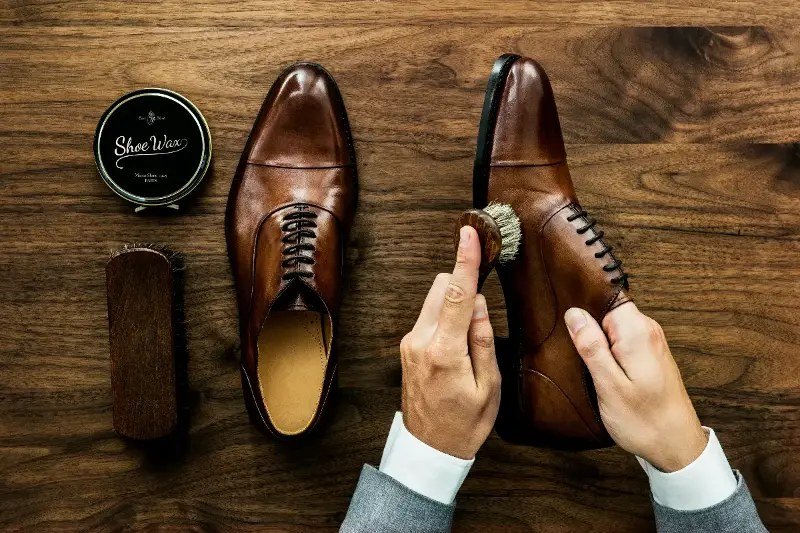
Good leather shoes are an investment — and like any investment, they need maintenance. The difference between leather shoes that last two years and ones that last twenty isn’t price; it’s care. What is the best way to care for leather shoes? A simple routine of cleaning, conditioning, polishing, and proper storage that takes minutes and adds years. Here’s the complete guide.
The Core Routine (Do This Regularly)
1. Clean after wearing. Wipe shoes with a soft, dry cloth after each wear to remove dust and dirt. For deeper cleaning, use a damp cloth with a tiny bit of saddle soap — never soak leather, and never use household cleaners. Let them air dry away from direct heat (radiators crack leather).
2. Condition every 3-6 months. Leather is skin — it dries out. Apply leather conditioner or cream with a soft cloth, working it in with small circular motions. Let it absorb for 15-20 minutes, then buff off excess. Conditioned leather stays supple and resists cracking. Skip this step and even expensive shoes deteriorate fast.
3. Polish for protection and shine. Cream polish nourishes and adds color; wax polish adds shine and water resistance. Apply thin layers with a horsehair brush or cloth, let dry, then buff vigorously. Two thin coats beat one thick one. Match the polish color to the shoe — or use neutral for everything.
4. Use shoe trees. Always. Cedar shoe trees are the single best investment in shoe care ($20-25). They absorb moisture, maintain shape, prevent creasing, and the cedar deodorizes. Insert them every time you take the shoes off — not just for storage.
The Rotation Rule
Never wear the same leather shoes two days in a row. Leather absorbs foot moisture (about a tablespoon per day per foot — unpleasant but true), and it needs 24 hours to dry fully. Wearing daily without rest breaks down the leather from the inside. Two pairs in rotation last dramatically longer than one pair worn daily — the math favors rotation even before considering variety. This applies doubly to shoes you stand in all day, which take the most punishment.
Weather Protection
- Waterproofing spray: apply to new shoes before first wear, reapply seasonally. It won’t make shoes waterproof, but it buys critical time in unexpected rain.
- Never dry wet leather with heat. Stuff with newspaper, insert shoe trees once damp-dry, and let them dry slowly at room temperature. Heat causes cracking and shrinkage.
- Salt stains: wipe with a cloth dampened with water and a little vinegar, then condition — road salt is leather’s winter enemy.
- Suede and nubuck: different rules — suede protector spray, suede brush (always brush one direction), suede eraser for stains. Never polish suede.
Storage Done Right
Store shoes with trees inserted, in a cool dry place with air circulation — not in plastic bags (traps moisture) or stacked under heavy items (deforms shape). Dust bags are ideal for good pairs. For seasonal storage, clean and condition before putting away — dirt left for months becomes permanent. Our guide to storing seasonal items covers the broader system.
When to See a Cobbler
Some things are DIY; some aren’t. Take shoes to a cobbler for: worn-down heels (reheeling is cheap and extends life enormously), separated soles, broken eyelets, deep scratches, or color restoration. A good cobbler can resole quality shoes multiple times — that’s how $300 shoes become a 20-year purchase instead of a 3-year one. Find one before you need one; ask well-dressed people where they go.
The Minimal Kit
You don’t need a professional setup: horsehair brush, soft cloths, leather conditioner, cream polish in your shoe colors (or neutral), wax polish for dress shoes, cedar shoe trees, and waterproofing spray. Total: $60-80, one time. It’ll maintain every leather shoe you own for years.
What Is the Best Way to Care for Leather Shoes? Your Questions Answered
How often should I polish my leather shoes?
For regularly worn dress shoes: cream polish every 4-6 wears, wax polish when you want extra shine or water resistance. For casual leather shoes: conditioning every 3-6 months matters more than frequent polishing. The signs your shoes need attention: leather looks dull or dry, small cracks appear at flex points, or water no longer beads on the surface. Over-polishing is possible — thick buildup of wax looks cloudy and attracts dust. Thin layers, buffed well, always beat heavy application. Think of polishing like moisturizing skin: regular light care beats occasional intensive rescue.
Can I wear leather shoes in the rain?
Occasional light rain is fine for most leather shoes — they’re not made of sugar. But regular soaking damages leather over time, and dress shoes with leather soles are particularly vulnerable (water wicks up through the sole). The protocol: waterproofing spray before the season, avoid downpours in your best pairs (keep beater shoes for bad weather), stuff with newspaper and dry slowly if they do get soaked, then condition after drying (water strips leather’s natural oils). One soaking won’t ruin good shoes; a season of commuting through puddles in them will. Good Housekeeping’s shoe care guides cover weatherproofing in detail.
What’s the difference between conditioner, cream polish, and wax polish?
Conditioner nourishes the leather (replaces oils, prevents cracking) with minimal color or shine — it’s skincare. Cream polish nourishes plus adds color (covers scuffs, evens tone) with a soft shine — it’s tinted moisturizer. Wax polish adds shine and water resistance with minimal nourishment — it’s the topcoat. The proper sequence: clean → condition → cream polish (if color needs refreshing) → wax polish (for dress shoes wanting mirror shine) → buff. Most casual shoes need only cleaning and conditioning; dress shoes earn the full treatment.
How do I fix scuffed leather shoes?
For surface scuffs: cream polish in the matching color, applied with a cloth using small circular motions, then buffed — this covers an astonishing range of sins. For deeper scuffs where the finish is damaged: lightly sand with fine-grit sandpaper (yes, really — 400+ grit, gently), then cream polish, then wax. For color loss: leather dye or edge dressing for sole edges. The rule: start with the least aggressive fix and escalate only if needed. Most scuffs that look fatal are actually surface-level and disappear with 5 minutes of cream polish. Cobblers handle the truly deep damage — and they’re cheaper than replacement.
The Bottom Line
Leather shoe care is simple: wipe after wearing, condition quarterly, polish as needed, always use cedar shoe trees, rotate pairs, and protect from water and heat. Fifteen minutes of care per month turns good shoes into decades-long companions. The most expensive shoes are the ones you replace — maintenance is always cheaper.


