
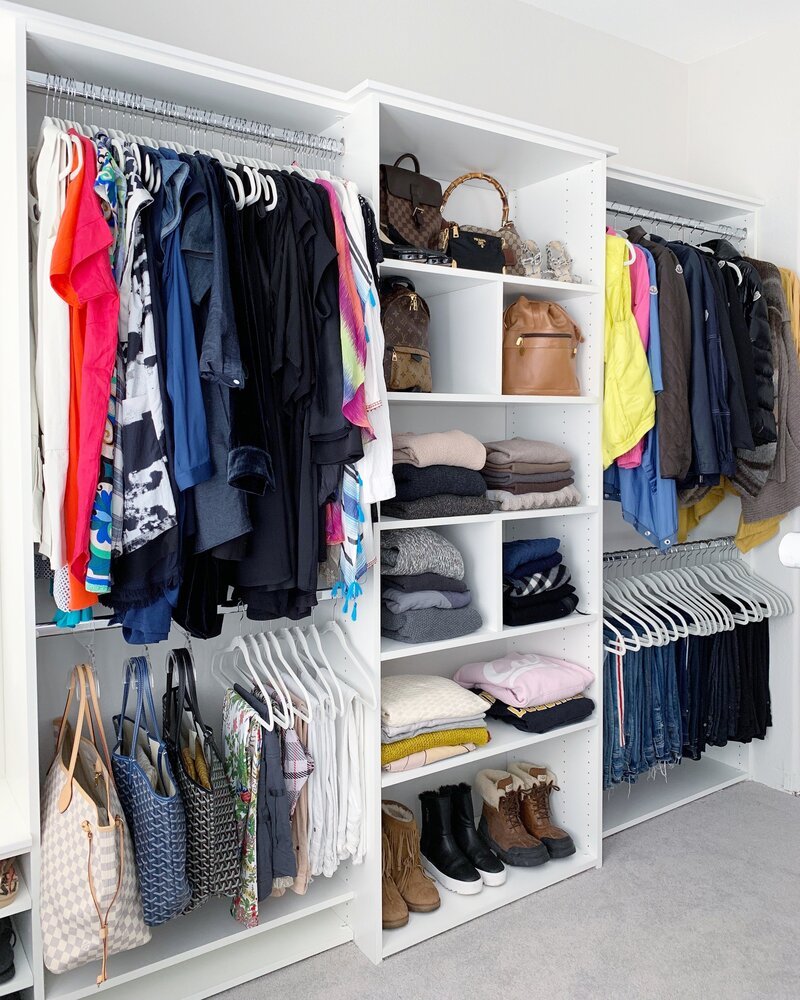
A small closet isn’t a storage problem — it’s an organization opportunity. Some of the most functional closets I’ve seen are tiny, because constraints force good systems. What is the best way to organize a small closet? Zone it by use, exploit vertical space ruthlessly, and keep only what earns its square footage. Here’s the complete method.
Step 1: The Ruthless Declutter
You cannot organize clutter — you can only rearrange it. Before buying a single organizer, empty the closet completely and sort everything into: keep, donate/sell, relocate (belongs elsewhere), and trash. Be honest about the “keep” pile: if you haven’t worn it in a year, it doesn’t fit your current life, or you keep it out of guilt, it goes.
The small-closet rule: every item must justify its space. In a walk-in, a “maybe” piece costs nothing. In a 3-foot closet, it costs you daily frustration. Aim to keep only what you actually wear — if you’re building a tighter wardrobe overall, our capsule wardrobe on a budget guide is the natural next step.
Step 2: Zone by Function
Divide your closet into zones so getting dressed is automatic:
- Prime real estate (eye to hip level): everyday clothes — work outfits, go-to casual. This is your most accessible space; reserve it for daily wear.
- Upper zone: off-season, occasion wear, and rarely used items in labeled bins.
- Lower zone: shoes on racks, plus bins for accessories.
- Door zone: the back of the door is free square footage — over-door hooks for tomorrow’s outfit, belts, scarves, bags.
Within prime real estate, organize by category then color: all tops together (light to dark), all bottoms together, dresses together. You should be able to find anything in 10 seconds without digging.
Step 3: Exploit Vertical Space
Small closets waste cubic feet, not square feet. The fixes:
- Double-hang rods. A tension rod or hanging double-rod instantly doubles hanging space — tops above, bottoms below. The single biggest small-closet upgrade.
- Shelf dividers. Stacked sweaters become avalanches without dividers. $10 dividers keep piles neat and visible.
- Hanging organizers. Canvas shelves for folded items, shoe organizers for shoes and accessories (rolled belts, clutches, scarves fit perfectly in shoe pockets).
- Slim hangers. Velvet slim hangers take half the space of plastic ones and grip clothes better. Replacing 30 hangers reclaims several inches of rod — significant in a small closet.
- Hooks everywhere. Wall and door hooks for bags, robes, tomorrow’s outfit, scarves. Hooks are the cheapest space creators.
- Under-shelf baskets. Slide under existing shelves for socks, underwear, accessories — dead space becomes storage.
Step 4: Fold Smarter, Hang Smarter
Hang: blazers, coats, dresses, button-downs, anything that wrinkles. Fold: knits (hanging stretches them), tees, jeans, sweaters. The file-folding method (clothes stood upright in drawers like files) lets you see everything at once and fits more per drawer — life-changing for small spaces. Our guide to folding clothes to save space has the full technique with visuals described step by step.
Seasonal rotation is essential in small closets: store off-season clothes elsewhere (under bed, top shelf, another room). A small closet holding only current-season clothes feels twice as big. See storing winter coats properly for the method.
Step 5: Maintain the System
Organization decays without maintenance. The systems that stick:
- One in, one out. New shirt in, old shirt out. Non-negotiable in small spaces.
- The hanger trick. Turn all hangers backward. When you wear something, return it facing forward. After 3 months, anything still backward goes.
- Weekly 5-minute reset. Sunday evening: rehang strays, refold the avalanche shelf, return drifted items to zones. Five minutes prevents the slow slide into chaos.
- Seasonal audit. Each season change, reassess: what didn’t get worn? What needs replacing? What can be refreshed instead of replaced?
What Is the Best Way to Organize a Small Closet? Your Questions Answered
Should I use matching hangers — does it really matter?
More than you’d expect, for two reasons. Practically, slim velvet hangers take up half the space of bulky plastic ones — in a small closet, replacing 30 hangers reclaims several inches of rod, which is significant. Psychologically, visual uniformity makes a closet feel calmer and more boutique-like, which makes you more likely to maintain it. It’s not about aesthetics for their own sake; it’s about reducing the visual chaos that makes small spaces feel overwhelming. One $20 pack of slim hangers is among the cheapest closet upgrades with the biggest perceived impact.
How do I organize a closet I share with someone?
Divide first, organize second. Split the space explicitly — even a piece of tape on the rod as a boundary prevents the slow territorial creep that causes shared-closet wars. Each person gets their own zones (his/hers/theirs sections), and shared items (if any) get a defined spot. The one-in-one-out rule becomes doubly important in shared small closets because clutter compounds with two people’s habits. And communicate about the system: the best organization fails if one person doesn’t know (or follow) it. A 10-minute conversation about zones saves months of frustration.
What’s the best way to store out-of-season clothes?
Clean everything before storing (moths love body oils and food residue), use breathable cotton storage bags or bins (never plastic long-term — trapped moisture causes mildew), add cedar blocks or lavender sachets for pest prevention, and store in a cool, dry place (under-bed beats damp basement). Vacuum bags save space but don’t use them for down, structured wool, or leather — compression damages those permanently. Label everything clearly; “winter sweaters” beats mystery bins when October arrives. The KonMari method’s core insight applies: store with respect, and you’ll actually wear what you stored.
How do I stop my closet from getting messy again?
Mess is a systems failure, not a character flaw. The systems that prevent re-cluttering: one-in-one-out (the non-negotiable), a designated “home” for every category (so putting away is mindless), the weekly 5-minute reset (catching drift before it compounds), and — most importantly — a closet sized to your actual wardrobe through regular decluttering. Closets get messy when they hold more than they comfortably fit. If you’re constantly fighting chaos, you probably need to remove 20% more, not buy better organizers. Space is the ultimate organizer.
The Bottom Line
Organizing a small closet means decluttering ruthlessly, zoning by use, doubling hanging space with a second rod, switching to slim hangers, exploiting doors and vertical space, and maintaining with one-in-one-out. You don’t need a bigger closet — you need a better system. Most people find their “too small” closet was actually just disorganized.


