
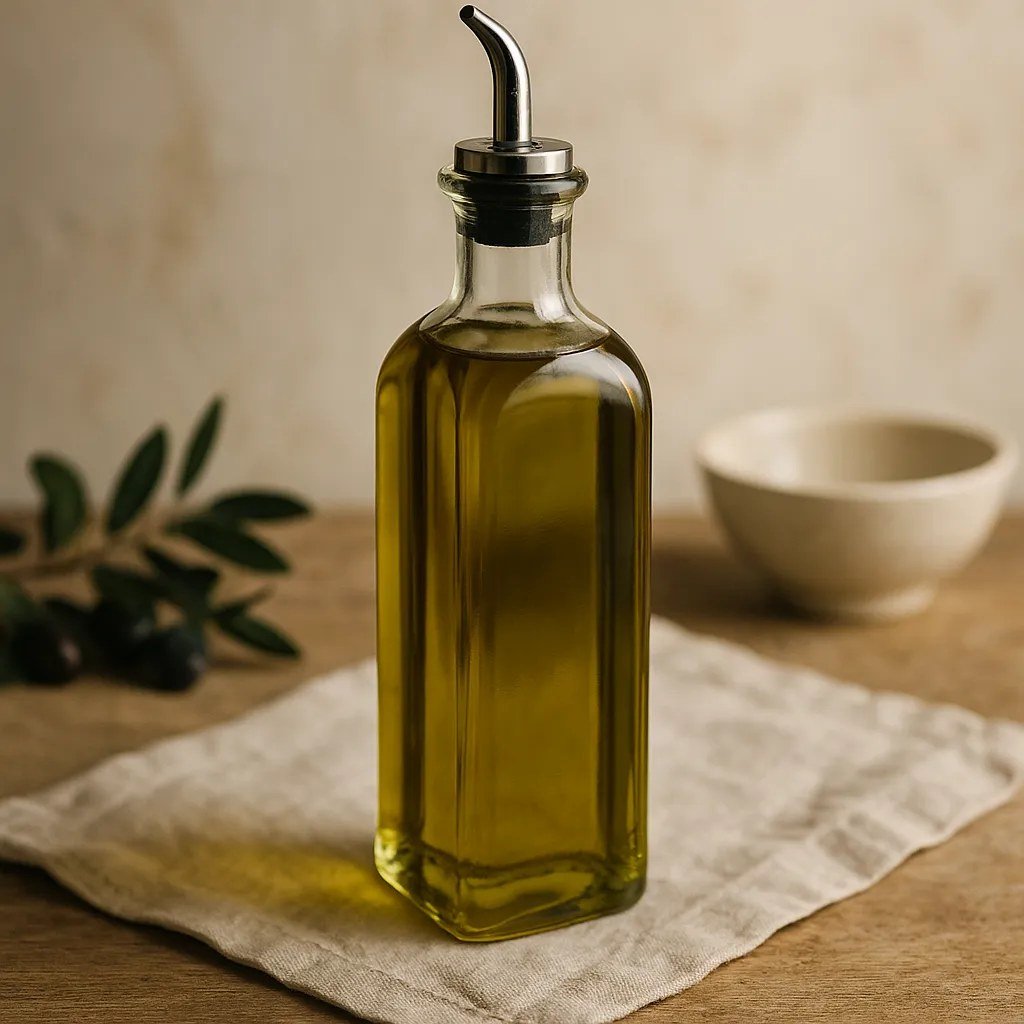
Walk down the cooking oil aisle and you’ll face twenty options all claiming health halos. So what is the healthiest cooking oil to use daily? Nutrition science has a fairly clear answer — with a couple of worthy runners-up and a few oils to demote. Here’s the evidence-based ranking.
What Is the Healthiest Cooking Oil to Use Daily? The Winner: Olive Oil
Extra virgin olive oil (EVOO) is the most studied cooking fat on earth, and the evidence is overwhelmingly positive: rich in monounsaturated fats and polyphenols with anti-inflammatory and antioxidant effects, linked in major trials (notably PREDIMED) to reduced cardiovascular events. It’s the cornerstone fat of the Mediterranean diet — the eating pattern with the strongest evidence base in nutrition science.
The smoke point worry is largely myth: good EVOO smokes around 375-410°F, fine for sautéing and most home cooking, and its antioxidants actually make it more stable than many “high heat” refined oils. Use it for dressings, drizzling, sautéing, and roasting. The American Heart Association’s guidance on cooking oils consistently favors unsaturated fats like olive oil over saturated options.
The Worthy Runners-Up
- Avocado oil: High monounsaturated fat like olive oil, with a genuinely high smoke point (~520°F refined). Excellent for searing and high-heat cooking. Downside: price, and frequent adulteration — buy reputable brands.
- Canola/rapeseed oil: The unglamorous workhorse — low saturated fat, decent omega profile, neutral taste, cheap. Unfairly maligned by wellness influencers; the evidence supports it as a solid everyday choice.
- High-oleic sunflower/safflower: Bred for monounsaturated content — good neutral high-heat options.
Oils to Use Sparingly
Coconut oil: ~90% saturated fat. It raises LDL cholesterol — the “but it’s natural!” defense doesn’t survive lipid panels. Fine as a flavor accent; poor as a daily driver. Palm oil: similar saturated fat concerns plus environmental issues. Butter/ghee: delicious, and fine in moderation within an overall healthy pattern — but as a daily primary cooking fat, unsaturated oils win on the evidence. This connects directly to foods for heart health and lowering cholesterol naturally.
Flaxseed oil: great omega-3s but never heat it — dressing-only. Truffle/m Specialty oils: flavor, not health vehicles.
Olive Oil Buying Guide: Labels Decoded
The olive oil aisle is a minefield of marketing. Here’s how to buy well.
Extra virgin vs. everything else: “Extra virgin” = first cold press, highest polyphenols, best flavor and health profile. “Virgin” = a step down. “Light” or “pure” olive oil = refined, fewer beneficial compounds — fine for high-heat cooking where flavor doesn’t matter, but not the health vehicle. For daily health use, extra virgin always.
What the labels really mean: “Cold pressed” / “first cold press” — good, indicates minimal processing. Harvest date — the most important date on the bottle (fresher = more polyphenols); “best by” alone tells you little. “Product of Italy/Greece/Spain” — often just bottled there from blended EU oils; single-origin and estate names signal higher quality. “Light tasting” — about flavor, not calories. Organic — nice, not essential for quality.
The fraud problem: Olive oil is one of the world’s most adulterated foods — cheaper oils blended in, old oil sold as fresh. Defense: buy from reputable brands, look for harvest dates and specific origins, be suspicious of prices too good to be true (real EVOO costs money to produce). Certification seals (COOC in California, for example) add assurance.
Storage and use: Dark bottle or tin, cool dark cabinet (not next to the stove — heat and light destroy polyphenols), use within 6-8 weeks of opening for peak benefit. Buy sizes you’ll finish — the 3-liter tin is economical only if you’ll use it. Taste it: good EVOO has a peppery bite at the back of the throat (that’s the polyphenols — the burn means it’s working). If your olive oil tastes like nothing, it’s giving you nothing. Spend the extra $3 for the real thing; it’s the highest-ROI $3 in your grocery cart.
Cooking Oil FAQs
Can I fry with olive oil?
Yes — sautéing, pan-frying, and even shallow frying are fine with EVOO; its smoke point (~375-410°F) covers normal cooking, and its antioxidants protect it under heat. For very high-heat searing or deep frying, avocado oil’s higher smoke point is the better tool. The “never heat olive oil” claim is the myth that won’t die — Mediterranean cooks have heated it for millennia.
Is coconut oil healthy?
Not as a primary cooking fat — ~90% saturated fat raises LDL cholesterol, and the “healthy” reputation came from marketing plus a misread of MCT research (coconut oil isn’t the MCT oil studied). Fine as an occasional flavor ingredient; poor as your daily driver. The evidence hierarchy is clear: unsaturated oils first.
How should I store cooking oils?
Cool, dark, sealed — heat, light, and air degrade all oils. Not next to the stove (the worst spot in most kitchens). Buy sizes you’ll use within 2-3 months; oils oxidize and go rancid. Good EVOO in a dark bottle, in a cabinet, used steadily — that’s the whole storage strategy.
Practical Daily Strategy
You don’t need twelve oils. Two cover everything: EVOO for most cooking and all raw uses, plus avocado oil (or canola) for high-heat searing. Buy EVOO in dark bottles, store away from heat and light (not next to the stove — that degrades it), and don’t hoard: oils oxidize, so buy sizes you’ll use within a couple months.
And keep perspective: oil choice is a real but modest lever. It matters far less than overall dietary pattern — immune-supporting foods, eating healthy affordably, vegetables, and not deep-frying everything. Get the big things right, use olive oil daily, and the oil aisle stops being stressful. That’s the whole game: one great default, used consistently.
The Bigger Picture on Fats
Oils are one piece of the fat puzzle. The broader evidence: replace saturated fats with unsaturated ones within an overall healthy dietary pattern — the Mediterranean template (vegetables, legumes, whole grains, fish, olive oil) has the strongest evidence base in nutrition science. No single oil choice outweighs the pattern. So yes, cook with olive oil daily — and also eat the vegetables you’re cooking in it. The oil is the vehicle; the overall diet is the destination. Get the pattern right and the oil choice becomes the easy final 5%.


