
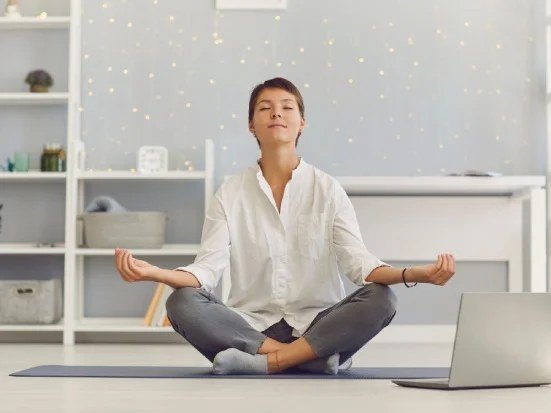
Stress is the background radiation of modern life — always there, slowly damaging. Medication helps some people enormously, but many want to try other approaches first (or alongside). So how can you reduce stress without medication? The evidence points to a toolkit of techniques that genuinely lower cortisol and calm the nervous system. Not vague “self-care” — specific, proven methods.
How Can I Reduce Stress Without Medication? Move Your Body
Exercise is the most powerful non-pharmaceutical stress intervention known. It burns off stress hormones, releases endorphins, and improves sleep — which further reduces stress. The dose doesn’t need to be heroic: a 20-minute brisk walk measurably reduces anxiety. Walking 30 minutes daily is the minimum effective dose; regular weekly exercise compounds the benefit.
Yoga and tai chi deserve special mention — they combine movement, breathing, and mindfulness, hitting multiple stress pathways at once. Studies show cortisol reductions comparable to some therapeutic interventions. If you’re starting from zero, beginner home exercises remove every barrier.
Breathe on Purpose
Your breath is a remote control for your nervous system — the only autonomic function you can consciously override. Techniques that work:
- Physiological sigh: Double inhale through the nose, long exhale through the mouth. One cycle measurably reduces stress in real time — discovered by Stanford researchers, usable anywhere.
- Box breathing: 4 counts in, 4 hold, 4 out, 4 hold. Used by Navy SEALs for composure under pressure. Boring and brutally effective.
- Extended exhale: Make exhales twice as long as inhales. Activates the parasympathetic “rest” system directly.
These aren’t placebo — they change heart rate variability and cortisol within minutes. Practice when calm so the skill is available when you’re not.
Fix the Foundations
Three foundations amplify every other technique:
Sleep: Sleep deprivation and stress form a vicious cycle — poor sleep raises cortisol, high cortisol ruins sleep. Breaking it starts with falling asleep faster and getting enough hours. This is the highest-leverage stress intervention most people ignore.
Social connection: Loneliness is as stressful physiologically as many “real” stressors. Call the friend. The venting helps, but the connection helps more — oxytocin directly counteracts cortisol.
Stress audit: List your top 5 stressors. For each: eliminate, delegate, or reframe. Many chronic stressors persist through inertia, not necessity. The boundary-setting and presentation anxiety techniques apply broadly — most stress is a specific problem wearing a vague costume.
The American Psychological Association’s stress resources provide excellent deeper guidance, including when stress crosses into territory needing professional help.
Mind Techniques That Work
- Meditation (even 10 minutes): Meditation genuinely reduces anxiety — the evidence is solid. Apps help beginners; consistency matters more than duration.
- Journaling: 15 minutes of expressive writing about what’s bothering you. Externalizing rumination breaks its loop — studies show measurable cortisol drops.
- Worry scheduling: Give worries a 15-minute daily appointment. When they intrude otherwise, note them for the appointment. Sounds silly; works remarkably well.
- Nature exposure: 20 minutes in green space measurably lowers cortisol. It’s the cheapest therapy available.
- Progressive muscle relaxation: Tense and release each muscle group. Teaches your body what “relaxed” actually feels like — many chronically stressed people have forgotten.
Building Your Personal Stress Toolkit
Techniques are generic; toolkits are personal. Here’s how to build yours.
Step 1: Know your stress signature. For one week, note when stress hits: what triggered it, how your body felt (jaw? shoulders? stomach?), what you did. Patterns emerge fast — most people discover 2-3 recurring triggers causing 80% of their stress. You can’t manage what you haven’t mapped.
Step 2: Match techniques to moments. Different stress needs different tools: Acute spike (before the presentation) → physiological sigh + box breathing ([[i:176|presentation anxiety]] protocol). Chronic background hum → daily exercise + sleep hygiene + the foundations. Rumination spiral → journaling + worry scheduling. Physical tension → progressive muscle relaxation + walking. Overwhelm → brain dump + prioritize three things + deliberately drop the rest. One technique per situation, practiced until automatic.
Step 3: Build the daily minimum. Your non-negotiable baseline — the 15 minutes that keeps you functional even on terrible days. Example: 10-minute walk + 5-minute breathing. Or: journaling + stretching. Pick yours, protect it like medication — because functionally, it is.
Step 4: Schedule recovery, not just work. Stress without recovery is what breaks people — athletes call it overtraining, and life works the same way. Block real downtime weekly: not “time to do errands,” but genuine restoration. Nature, hobbies, people you like, nothing at all. Recovery isn’t earned by productivity; it’s required for it.
Step 5: Review monthly. What’s working? What’s your current biggest trigger — and is it solvable, reducible, or acceptable? Toolkits evolve; the monthly 10-minute review keeps yours current. A personal stress toolkit isn’t self-indulgence — it’s maintenance for the machine that runs your entire life. Build it deliberately, use it daily, and watch what changes.
Stress Relief FAQs
What’s the fastest way to calm down right now?
The physiological sigh: double inhale through your nose, long slow exhale through your mouth. One cycle takes 10 seconds and measurably reduces stress physiology in real time. It’s the fastest evidence-backed calm-down known — faster than any app, supplement, or technique. Memorize it; use it everywhere.
Can stress really make you sick?
Yes — chronic stress suppresses immune function, raises blood pressure, disrupts sleep and digestion, and increases cardiovascular risk. It’s not “all in your head”; it’s in your cortisol, your inflammation markers, and your arteries. [[i:174|Stress causes real physical symptoms]] — managing it is medical, not optional.
When should I see a therapist about stress?
When it’s persistent (weeks, not days), overwhelming your coping, affecting sleep/appetite/functioning, or paired with anxiety/depression symptoms. Therapy isn’t the last resort — it’s a tool, and earlier is better. The techniques in this guide manage everyday stress; clinical support handles what techniques can’t. Using both isn’t failure; it’s intelligence.
Know When It’s More Than Stress
Important honesty: these techniques manage stress; they don’t treat anxiety disorders, depression, or burnout requiring clinical care. If stress is persistent, overwhelming, or paired with physical symptoms (stress can cause real physical pain), see a professional. Needing help isn’t failure — it’s data. The techniques above make good support better, not unnecessary. Reduce what you can, get help for the rest, and stop treating endurance as a virtue. Rest is productive. Calm is achievable. Start with a walk and a deep breath — today.


