How to Raise Alkalinity in Hot Tub: Step-by-Step Guide (2026)
Raise hot tub alkalinity with baking soda: 1 tbsp per 100 gallons adds ~10 ppm. Step-by-step dosing guide to reach the ideal 80–120 ppm range safely.
Written by admin
Published November 4, 2026
Reading time 4 minutes
How to Raise Alkalinity in Hot Tub: Step-by-Step Guide (2026)
To raise alkalinity in a hot tub, add sodium bicarbonate (baking soda) — about 1 tablespoon per 100 gallons raises total alkalinity by roughly 10 ppm. For a typical 400-gallon hot tub, that’s 4 tablespoons per 10 ppm. Add it with the jets running, wait 30–60 minutes, then retest. Aim for a total alkalinity of 80–120 ppm.
Low alkalinity makes your pH swing wildly, corrodes equipment, and irritates skin and eyes. The fix is simple and cheap, but the order matters: always adjust total alkalinity before pH, because alkalinity acts as pH’s buffer. Here’s the full step-by-step process.
What Total Alkalinity Is (and Why It Matters)
Total alkalinity (TA) measures the water’s ability to resist pH changes — think of it as pH’s shock absorber. The ideal range for hot tubs is 80–120 ppm (some manufacturers accept 80–150 ppm).
- Low TA (below 80 ppm): pH bounces up and down (“pH bounce”), water becomes corrosive to heaters and seals, and sanitizer burns off faster.
- High TA (above 120–150 ppm): pH drifts constantly upward, water gets cloudy, and scale forms on surfaces and equipment.
What You Need
- Sodium bicarbonate — plain baking soda from the grocery store works, or a spa-branded “alkalinity increaser” (same chemical, higher price)
- A reliable test method: test strips, liquid drop test kit, or digital tester
- A measuring spoon or kitchen scale
- Your hot tub’s gallon capacity (check the manual or manufacturer specs)
Step-by-Step: Raising Hot Tub Alkalinity
Step 1: Test the water
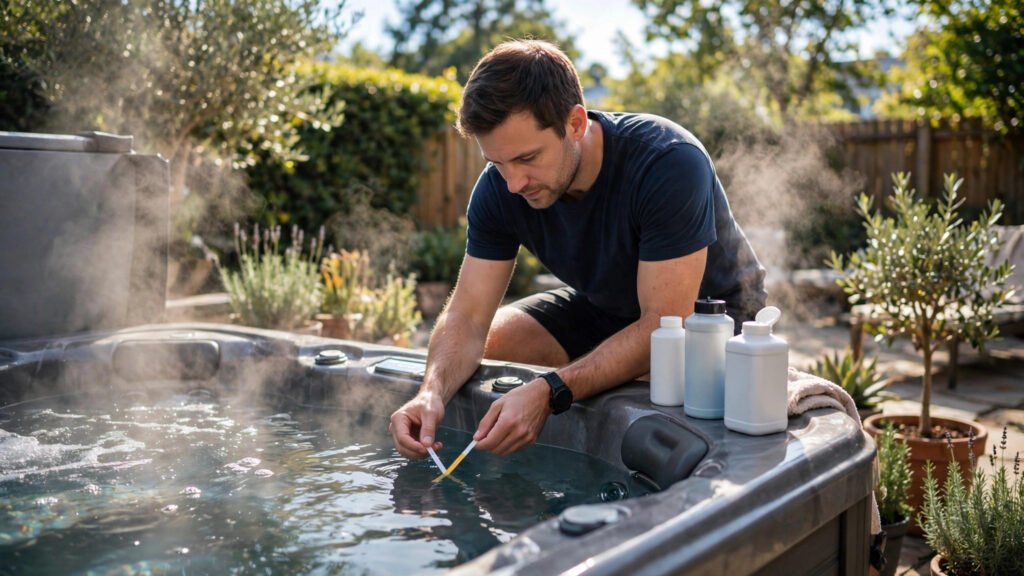
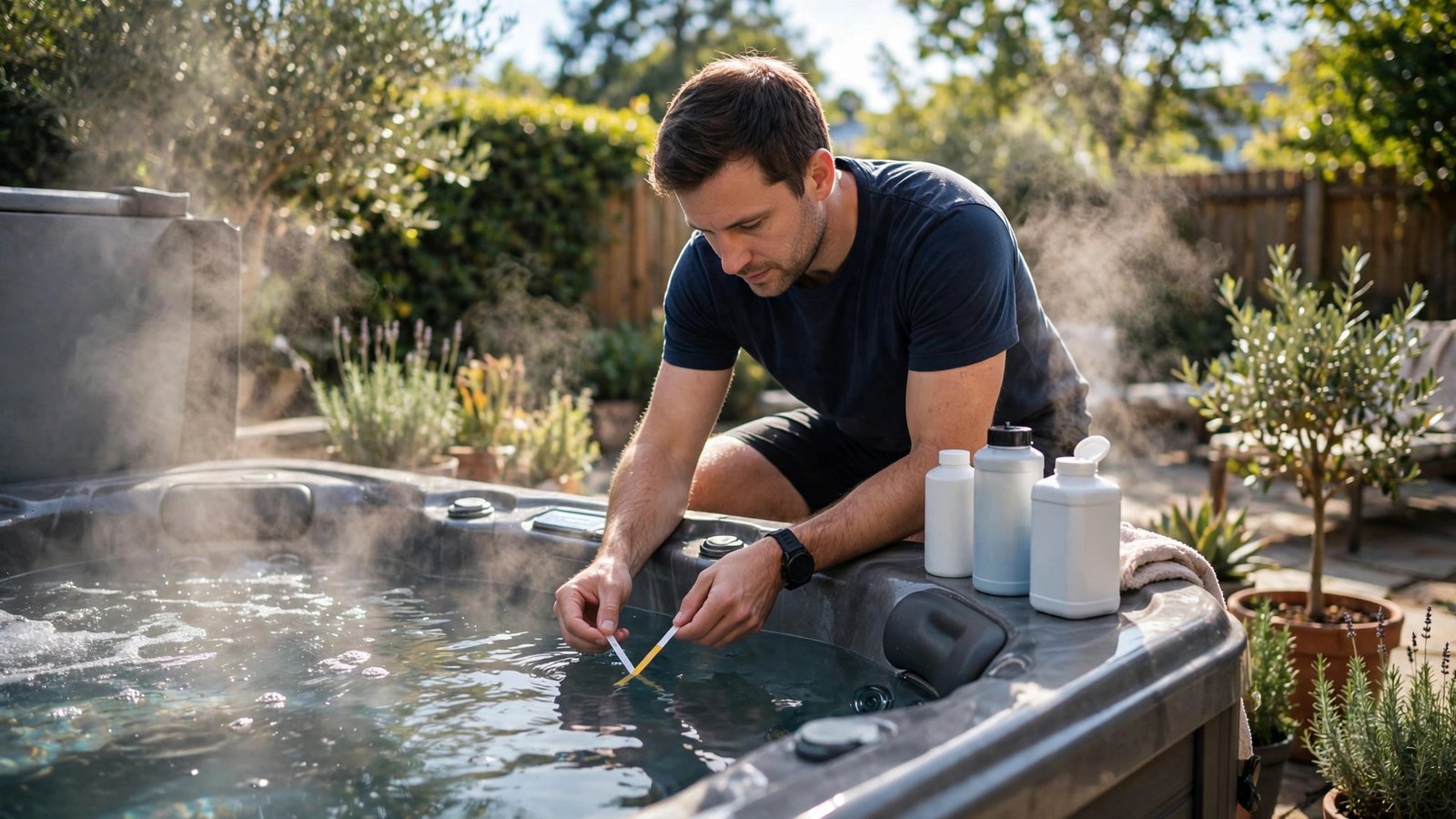
Dip a test strip or run your liquid test and record total alkalinity and pH. Don’t guess — knowing your starting number determines the dose. Test with the jets off for the most accurate reading.
Step 2: Calculate your dose
Use this rule of thumb: 1 tablespoon of baking soda per 100 gallons raises TA by ~10 ppm.
Example: your 400-gallon tub tests at 60 ppm and you want 100 ppm. That’s a 40 ppm increase → 4 tablespoons per 10 ppm × 4 = 16 tablespoons (1 cup) of baking soda.
Step 3: Add the baking soda with jets running
Turn the jets on high (air valves off is fine). Sprinkle the baking soda evenly across the water surface rather than dumping it in one spot. Let it circulate for at least 20–30 minutes.
Step 4: Wait, then retest
Wait 30–60 minutes with the cover on, then retest. If TA is still below 80 ppm, repeat with a smaller adjustment. It’s always better to creep up in stages than to overshoot.
Step 5: Adjust pH next
Raising alkalinity often nudges pH upward too. Once TA is in the 80–120 ppm range, test pH and adjust it to 7.2–7.8 if needed. Always fix alkalinity first, then pH — never the reverse.
How Often Should You Check Alkalinity?
Test TA at least once a week, and always after refilling the tub, heavy use (a party weekend), or heavy rain if the tub is uncovered. In areas with soft fill water — common in parts of the Northeast, including the NYC water supply, which is naturally soft and low in alkalinity — new fills almost always need an alkalinity boost right away.
Common Mistakes to Avoid
- Using soda ash (sodium carbonate) instead of baking soda. Soda ash is a pH increaser that spikes pH hard; baking soda (sodium bicarbonate) raises TA with minimal pH impact. They’re not interchangeable.
- Adjusting pH before alkalinity. Without the TA buffer in place, your pH correction won’t hold.
- Dumping the whole dose at once. Overshooting past 150 ppm means draining water to fix it. Add half, retest, then add the rest.
- Testing too soon after adding chemicals. Give it 30–60 minutes of circulation or you’ll chase false readings.
- Ignoring chronically low TA. If alkalinity keeps crashing, check for overuse of acidic sanitizers or test your fill water — you may need to pre-treat every fill.
FAQs
Can I use regular baking soda to raise hot tub alkalinity?
Yes. Plain sodium bicarbonate from the grocery store is chemically identical to spa-branded alkalinity increaser. It’s the standard, recommended product — just make sure it’s pure baking soda with no added fragrances.
How much baking soda do I add to raise alkalinity?
About 1 tablespoon per 100 gallons of water raises total alkalinity by roughly 10 ppm. For a 400-gallon tub, that’s 4 tablespoons per 10 ppm of increase. Always retest before adding more.
Should I adjust alkalinity or pH first?
Always adjust total alkalinity first, then pH. Alkalinity buffers pH, so pH adjustments made before TA is stable tend to drift right back.
Why does my hot tub alkalinity keep dropping?
Common causes include acidic sanitizers (like bromine tablets or MPS shock), heavy bather loads, rainwater dilution, and naturally soft fill water. Test your source water — if it starts low, every refill will need treatment.
What happens if alkalinity is too high in a hot tub?
TA above 150 ppm pushes pH up, causes cloudy water, forms scale on heaters and surfaces, and reduces sanitizer effectiveness. Fix it by adding small doses of pH decreaser (dry acid) or partially draining and refilling with fresh water.