
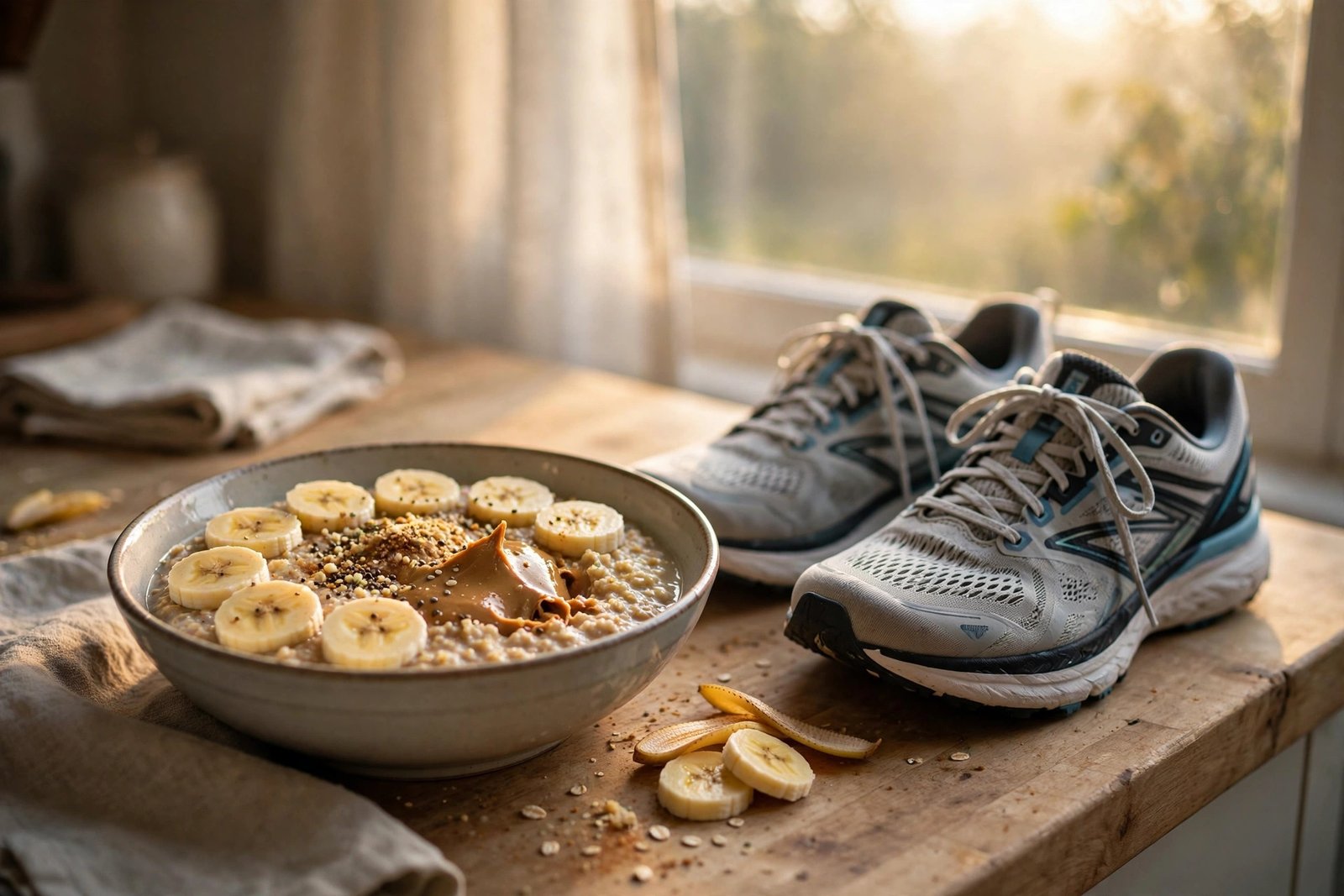
Your alarm screams at 5:30 a.m. Workout at 6:30. The eternal question: eat or don’t eat? Eat too much and you’re burping through burpees; eat nothing and you’re dizzy by mile two. Pre-workout nutrition is genuinely individual, but the science gives clear guardrails — what to eat, how much, and when, depending on your workout.
Here’s the practical, science-backed guide to fueling morning training without the guesswork — so you can stop wondering and start performing.
The Core Principle: Carbs Fuel, Protein Protects, Fat and Fiber Wait
Your muscles run primarily on glycogen (stored carbs) during exercise. A pre-workout meal should therefore be carb-forward for energy, with a little protein to limit muscle breakdown — and low in fat and fiber, which slow digestion and cause GI distress mid-workout. The classic formula: 1–4 grams of carbs per kg of body weight, eaten 1–4 hours before training, with 15–30g protein alongside. Bigger meal = earlier; smaller snack = closer to go-time.
Hydration matters as much as food: drink 16–20 oz of water in the 2–3 hours before training. Morning exercisers wake up mildly dehydrated, and even 2% dehydration measurably tanks performance. The Academy of Nutrition and Dietetics’ fueling guide is the gold-standard reference here.
If You Have 2–3 Hours: Eat a Real Meal
Early risers with time (5 a.m. alarm, 8 a.m. workout) can eat normally: oatmeal with banana and peanut butter, Greek yogurt with granola and berries, toast with eggs and fruit, rice with chicken. Aim for roughly 400–600 calories, mostly carbs with moderate protein, low fat. This fully tops off glycogen and you’ll feel strong. Avoid the all-bacon-and-eggs keto breakfast before training — fat-heavy meals sit like rocks and carbs are the superior workout fuel, full stop.
If You Have 60–90 Minutes: Eat a Medium Snack
The most common scenario: banana with a tablespoon of peanut butter, a granola bar, toast with honey, a small bowl of cereal with milk, or a smoothie (fruit + yogurt + milk). Target 200–300 calories. This is the sweet spot most morning exercisers land in — enough fuel to perform, light enough to settle. Keep a box of granola bars or bananas visible the night before; decision fatigue at 6 a.m. is real, and preparation beats willpower. Pairing this with smart budget-friendly healthy eating keeps the habit sustainable financially too.
If You Have 30 Minutes or Less: Go Small or Go Fasted
With under 30 minutes, options narrow: half a banana, a few dates, a small handful of pretzels, or 4–6 oz of sports drink — 100–150 calories of fast carbs, minimal fiber and fat. Or skip food entirely: for easy sessions under 60 minutes (easy run, light lift), fasted training is perfectly fine — your liver glycogen covers it, and many people feel better training light. Save the real breakfast for after. Don’t force food if the thought of eating makes you queasy; fasted and comfortable beats fed and nauseous.
Match the Meal to the Workout
Heavy lifting: prioritize the full meal or medium snack — strength work is glycogen-hungry and under-fueled lifts stall fast. Long cardio (75+ min): bigger carb load 2–3 hours out, plus consider intra-workout carbs (sports drink) past the hour mark. HIIT: medium snack 60–90 min out; HIIT on a full stomach is miserable, on empty is dizzy — the middle path wins. Easy/recovery sessions: fasted is fine; just hydrate. Morning competitions or races: rehearse your exact pre-race meal in training — race day is never the time to experiment. Our broader workout nutrition timing guide covers the post-workout half of the equation.
What to Avoid Before Morning Workouts
High-fat foods (bacon, cheese-heavy meals, fried anything) — slow digestion, nausea risk. High-fiber foods (big salads, bran cereal, lots of raw veg) — GI distress mid-workout is the leading cause of ruined sessions. Huge volumes of food — blood diverts to digestion, not muscles. Brand-new foods or supplements — test everything in training first. Excessive caffeine — 100–200mg (a cup or two of coffee) boosts performance, but 400mg+ on an empty stomach invites jitters and stomach upset. And alcohol from the night before — it wrecks sleep quality and hydration, the two things morning performance depends on most.
Hydration: The Forgotten Half of Fueling
Food gets all the attention, but dehydration sabotages more morning workouts than empty stomachs do. You wake up 1–2% dehydrated after 7–8 hours without water, and performance drops measurably at just 2% fluid loss — slower reaction time, higher perceived effort, earlier fatigue. The protocol: 16–20 oz of water in the 2–3 hours before training (keep a bottle by your bed and drink on waking), another 8 oz 20–30 minutes before, and 4–8 oz every 15–20 minutes during exercise. For sessions over 60 minutes or heavy sweaters, add electrolytes — sodium is the key one; sports drinks or electrolyte tablets both work, and plain water suffices for shorter efforts. Coffee counts toward fluid intake (it’s a mild diuretic, not a dehydrator, at normal doses), so your pre-workout cup isn’t working against you. Weigh yourself before and after long sessions occasionally: each pound lost is ~16 oz of fluid to replace. Nail hydration and many “nutrition problems” disappear — what felt like bonking was often just thirst.
The Post-Workout Window (Briefly)
After training: protein (20–40g) plus carbs within 2 hours — the “anabolic window” is wider than old magazines claimed, but don’t skip it entirely. Chocolate milk is famously effective (carbs + protein + fluid in one). Then eat normally the rest of the day; one meal doesn’t define your nutrition. Healthline’s pre-workout nutrition review aligns with these evidence-based timings.
Conclusion
Morning workout fueling isn’t complicated: the more time you have, the bigger you eat; carbs lead, protein supports, fat and fiber wait until after — and hydrate before you caffeinate. A banana 45 minutes out beats a feast 20 minutes out; fasted beats force-fed when time is tight. Experiment for two weeks, note what makes you feel strong versus sluggish, and lock in your personal formula. The best pre-workout meal is the one you’ll actually eat consistently at 6 a.m. — everything else is optimization.
Frequently Asked Questions
Is it bad to work out on an empty stomach in the morning?
Not for easy-to-moderate sessions under an hour — your body has enough stored glycogen. For intense or long workouts, a small carb snack measurably improves performance. Listen to your body: dizziness means eat more next time.
How long should I wait to work out after eating?
2–3 hours after a full meal, 60–90 minutes after a medium snack, 15–30 minutes after a small carb snack. Bigger and fattier meals need more time.
Is coffee before a morning workout okay?
Yes — caffeine is one of the few legal performance enhancers with strong evidence behind it. One to two cups 30–60 minutes before training is the sweet spot; just don’t overdo it on an empty stomach.
What should I eat before a 5 a.m. workout when I can’t stomach food?
Try liquid calories — half a sports drink, a few sips of juice, or a small smoothie made the night before. Liquids digest faster and feel easier. Or train fasted for easy sessions and eat a big breakfast after.