How to Practice Drums in an Apartment Without Complaints
How to practice drums in an apartment without complaints: low-volume kits, mesh heads, practice schedules, and neighbor-friendly setups that keep the peace in NYC.
Written by admin
Published November 1, 2026
Reading time 6 minutes
You just moved into a Brooklyn apartment with thin walls, a drummer’s heart, and neighbors on all sides. The acoustic kit in the corner is a noise complaint waiting to happen — but giving up drums is not an option. Good news: with the right gear, smart scheduling, and a little diplomacy, you can practice drums in an apartment every single day without a single complaint.
This is the complete playbook, from silent practice setups to neighbor relations, tuned for New York City apartment realities.
The Quietest Setup: Electronic Drums Done Right
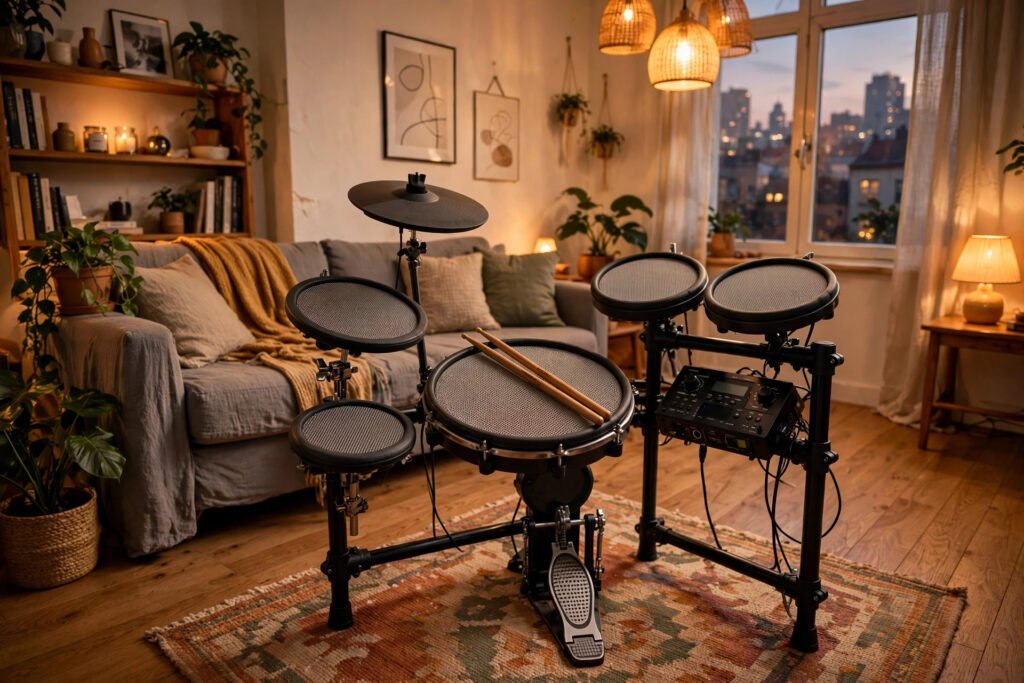
For apartment drummers, a quality electronic kit is the single best investment you will ever make. Modern e-kits from major manufacturers feel remarkably close to acoustic drums — mesh heads provide realistic rebound, and the modules offer hundreds of kit sounds. The volume of stick-on-mesh-pad is comparable to typing firmly on a keyboard: audible in the same room, essentially silent through walls.
The catch is vibration, not sound. Kick pedals and hi-hat pedals transmit thumps through floors — the classic downstairs-neighbor complaint. The fix is a drum riser: a platform of plywood layered with tennis balls, foam, or specialized isolation pads that decouples your kit from the floor. DIY risers cost $40–80 and eliminate the vast majority of transmitted vibration. Add a thick rug underneath and you are genuinely neighbor-safe.
Budget reality check: a solid beginner e-kit runs $400–700; mid-range kits with better feel run $800–1,500. That sounds steep until you price a year of rehearsal studio time. For apartment practice, it pays for itself in months.
Making an Acoustic Kit Apartment-Viable
Prefer real drums? You can quiet an acoustic kit dramatically:
Mesh heads + low-volume cymbals. Replace batter heads with mesh practice heads and swap to perforated low-volume cymbals. Volume drops 70–90% while keeping real-drum feel. The kit still looks and plays like your kit.
Mutes. Rubber pad mutes that sit on drums and cymbals cut volume substantially for a fraction of the cost — a full set runs $50–100. They change rebound feel more than mesh heads, but they are the cheapest path to quiet practice.
Hot rods and brushes. These stick alternatives cut volume roughly in half while building finesse. Many jazz and session drummers practice with them exclusively — your technique will thank you.
Even with all of this, kick drum thump remains the issue in apartments. A mesh-head kick with a soft beater on an isolation riser is the practical ceiling for apartment acoustic playing.
The Practice Pad: Your Secret Weapon
Every serious drummer, apartment or not, should own a practice pad. Ten to fifteen minutes daily of rudiments on a pad builds the hand technique that transfers directly to the kit — and it is nearly silent. Pad practice is where real progress happens; kit time is where you apply it.
Work through the essential rudiments (single strokes, double strokes, paradiddles, flams) with a metronome, starting painfully slow. Boring? Yes. Effective? Enormously. The drummers with the cleanest, fastest hands all did their time on the pad. Keep one on your desk and sneak in minutes throughout the day.
Scheduling and Neighbor Diplomacy
Gear solves the physics; diplomacy solves the humans. This part matters as much as the equipment:
Introduce yourself first. Knock on neighbors’ doors when you move in, mention you are a drummer, explain you practice quietly with an electronic/muted kit, and give them your number. People who feel respected almost never complain; people who are surprised always do.
Set consistent hours. Practice at predictable times — say, 6–7pm weekdays — and never late at night or early morning. Predictability converts drumming from “random noise” to “oh, that’s just their practice hour” in neighbors’ minds.
Ask for feedback. After your first week, check in: “Can you hear anything? Be honest.” Adjust based on what they say. This single gesture prevents 90% of disputes.
Know your rights too: NYC’s noise code sets specific standards, and nyc.gov’s noise resources explain the rules. But the goal is never needing the rules — a drummer with good gear and good manners rarely generates complaints. If you are also running a business from your apartment legally (teaching lessons, for instance), keeping noise down protects that too.
Room Treatment on a Renter’s Budget
You do not need a treated studio, but a few renter-friendly tweaks help enormously — both for your sound and your neighbors:
Rugs and soft furnishings. Bare hardwood floors are drum sound’s best friend and your worst enemy. A thick rug under the kit is mandatory; rugs or carpet in the practice room tame reflections.
Seal the gaps. Most sound leaks through gaps under doors and thin windows, not walls. A draft stopper under the door and heavy curtains over windows cut transmission noticeably.
Play away from shared walls. Position your kit against an exterior wall or a wall shared with a hallway/closet rather than a neighbor’s bedroom. In small apartments, even a few feet of repositioning matters. These are the same principles behind making a small apartment feel bigger — thoughtful layout transforms limited space.
When You Need the Real Thing
Even the best quiet setup cannot fully replace playing a real kit at volume. Budget for monthly sessions at a rehearsal studio to keep your acoustic chops honest — dynamics, rimshots, cymbal work, and playing with other musicians need real volume. Many NYC drummers follow the hybrid model: daily quiet practice at home, weekly or biweekly loud sessions at a studio. It is the best of both worlds and far cheaper than renting studio time daily.
Sweetwater’s drum guides are a solid resource for comparing quiet-practice gear, with detailed specs on mesh heads, low-volume cymbals, and e-kits at every price point.
Conclusion
Practicing drums in an apartment without complaints is a solved problem: electronic kits or muted acoustics for the sound, isolation risers for the vibration, practice pads for technique, and genuine neighbor diplomacy for the human side. The drummers who get complaints are almost never the ones with the best gear — they are the ones who never introduced themselves. Be the drummer with the quiet kit, the consistent schedule, and the neighbors who actually like you. Your chops — and your lease — will survive.
Frequently Asked Questions
Can you hear electronic drums through apartment walls?
Barely. Stick-on-pad noise is comparable to typing and rarely carries through walls. The real issue is pedal vibration through floors, which an isolation riser effectively solves.
Are mesh drum heads worth it?
Yes for apartment practice. They cut acoustic volume by 80–90% while preserving realistic rebound. Two-ply mesh heads feel best; pair with low-volume cymbals for a complete quiet kit.
What are NYC quiet hours for drumming?
NYC’s noise code designates 10pm–7am as quiet hours, but neighbor tolerance varies. Even during the day, keep volumes reasonable and stick to consistent, communicated practice times.
How much does a good apartment drum setup cost?
A quality beginner electronic kit ($400–700) plus a DIY isolation riser ($40–80) and a practice pad ($30) gets you a complete, neighbor-safe setup for under $800.
Will practicing on an e-kit hurt my acoustic technique?
Not if you use mesh heads and practice pad rudiments regularly. Supplement with monthly acoustic sessions at a rehearsal studio to maintain dynamics and cymbal technique.