Is It Too Late to Learn Violin at 30? The Honest Truth
Is it too late to learn violin at 30? No. What adult learners actually achieve, how long progress really takes, and the smartest way for busy adults to start.
Written by admin
Published November 1, 2026
Reading time 6 minutes
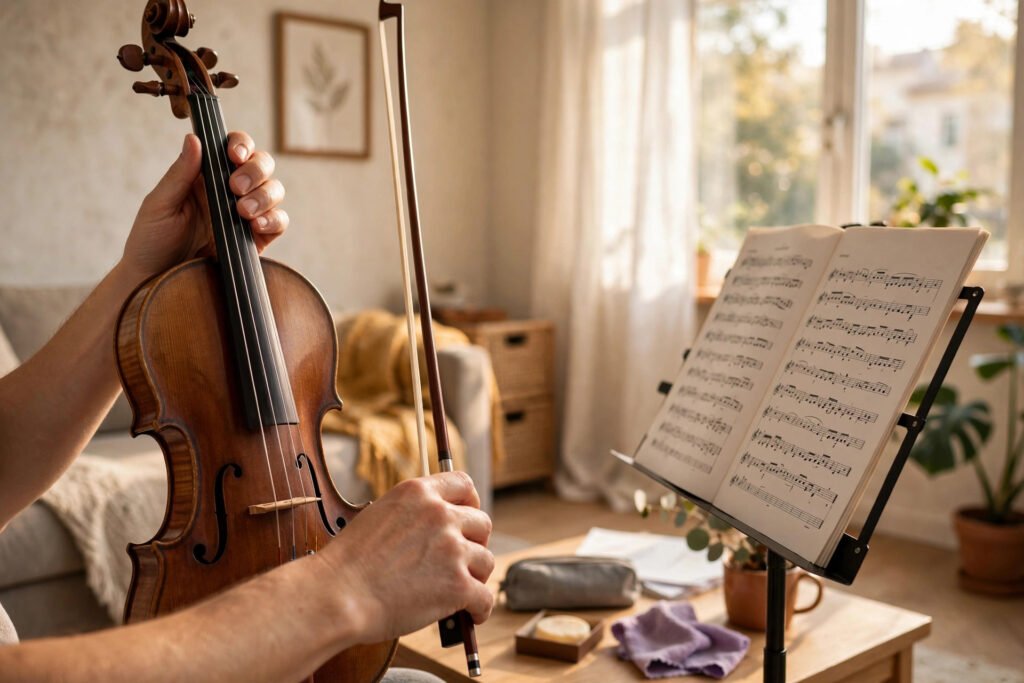
You are 30 (or 35, or 42), you have always loved the sound of the violin, and a voice in your head keeps saying you missed your chance — that violins are for children who started at five with tiger parents and private teachers. That voice is wrong. It is not too late to learn violin at 30. It is not too late at 50, either. Adult beginners learn violin every day, and many become genuinely good players. The path is different from a child’s, but it is absolutely real.
Here is the honest truth about what to expect, how long it takes, and how to start smart.
Why Adults Actually Have Advantages
Children have flexible schedules and neuroplasticity; adults have everything else. You understand delayed gratification. You can structure your own practice. You know how to break problems down, research solutions, and persist through frustration — the exact meta-skills that determine who sticks with an instrument. You also chose this yourself, which matters enormously: intrinsic motivation beats parental pressure for long-term progress.
Adults also learn music theory faster, grasp the “why” behind technique, and can afford better instruments and instruction. The NAMM Foundation’s research on music-making and the brain shows that adult music learning delivers measurable cognitive benefits — improved memory, executive function, and stress resilience. You are not just learning violin; you are giving your brain a workout with proven returns.
The Honest Timeline: What Progress Looks Like
Let us set expectations with unusual frankness, because false promises kill more adult beginners than difficulty does:
Months 1–3: The squeaky phase. You will sound bad. Scratching, squeaking, and intonation struggles are universal — the violin is famously unforgiving at first because there are no frets; your fingers must find exact positions by ear and muscle memory. This phase tests commitment, not talent. Everyone goes through it, including the prodigies.
Months 4–8: The breakthrough. Tone stabilizes, basic scales feel natural, and you can play simple melodies recognizably. This is when it starts being fun — the moment most adult learners describe as “okay, I can actually do this.”
Year 1–2: Real musician. With consistent practice, you can play intermediate pieces, join a community orchestra or chamber group, and sight-read simple parts. You sound like a violinist, not a beginner.
Year 3+: Proficiency. Dedicated adult learners reach genuinely impressive levels — advanced amateur repertoire, ensemble leadership, even semi-professional gigging for the committed.
Will you become a concert soloist starting at 30? Realistically, no — that path requires childhood immersion. But concert soloist was never the goal. The goal is making beautiful music, and that is fully available to you.
How to Start: The Practical Steps
Get a decent beginner instrument. Do not buy the $99 internet special — unplayable violins destroy motivation. A proper student violin outfit (violin, bow, case, rosin) rents for $25–40/month from reputable string shops, which is the smartest start: low commitment, properly set up instrument. When you buy, budget $400–800 for a playable student instrument. NYC has excellent string shops in Manhattan where you can try before you buy.
Take at least a few lessons. Violin is the instrument where early instruction matters most — posture, bow hold, and left-hand position are nearly impossible to self-correct from videos alone, and bad habits calcify fast. Even one lesson per month with a good teacher, supplemented by daily practice, prevents the foundational errors that stall self-taught players. Strings Magazine maintains teacher directories and beginner advice worth reading.
Practice smart, not long. Thirty focused minutes daily beats three hours on Sunday. Structure: 5 minutes of open-string bowing (tone production), 10 minutes of scales and finger patterns, 15 minutes on pieces. Use a mirror to check posture. Record yourself weekly — progress is invisible day-to-day but obvious month-to-month.
The Challenges Specific to Adult Learners
Time. Jobs, relationships, and responsibilities compete with practice. The solution is non-negotiable scheduling: same time daily, even if only 20 minutes. Treat it like exercise — which, incidentally, pairs well with building good habits to start in your 30s.
Physical adaptation. Adult fingers are less flexible, and violin posture is unnatural at first. Shoulder rests, chin rests, and proper setup matter enormously — a good shop will fit these to your body. Mild soreness is normal; sharp pain is not. Stretch, take breaks, and build up gradually.
Frustration tolerance. Competent adults hate being bad at things. The violin will make you bad at something for months. Reframe: you are not failing, you are in the documented beginner phase that every violinist in history endured. Progress compounds quietly, then visibly.
Comparison. YouTube is full of 8-year-olds playing Paganini. Ignore them. Compare yourself to yourself last month — that is the only comparison that matters, and it is the foundation of simple habits that improve daily life: small, consistent, self-referenced progress.
Finding Your Musical Community
Do not learn in isolation — community accelerates everything. NYC is ideal for this: community orchestras welcome adult beginners (many have “intermediate” ensembles specifically for returning and adult learners), chamber music workshops pair you with fellow amateurs, and group classes for adults are widely available. Playing with others forces rhythm, intonation, and listening skills to develop far faster than solo practice.
Start attending concerts too — discovering new music you will actually like includes the classical repertoire you will eventually play. Hearing live violin regularly trains your ear for the tone you are working toward, and the NIH’s research on music and brain health suggests the listening itself benefits your learning.
Conclusion
Is it too late to learn violin at 30? The evidence — from neuroscience, from teachers, and from thousands of adult learners — says clearly: no. You will not become a prodigy, but you were never trying to. You will become something better: an adult who chose a hard, beautiful thing and did it anyway. Rent a decent violin, take a few lessons, practice 30 minutes a day, join a community ensemble when you are ready, and give it a year. The squeaky phase ends. The music begins. And thirty years from now, you will not regret starting at 30 — only that you almost talked yourself out of it.
Frequently Asked Questions
How long does it take an adult to learn violin?
Expect 3–6 months to sound decent on simple pieces, 1–2 years to play intermediate repertoire confidently, and 3+ years for advanced amateur level — assuming 30 minutes of daily practice.
Is violin harder to learn as an adult?
Physically slightly harder (less flexibility), but adults learn faster conceptually and practice more deliberately. Motivated adults often progress faster than children in the first two years.
How much should I spend on my first violin?
Rent first ($25–40/month from a string shop). When buying, budget $400–800 for a playable student outfit. Avoid ultra-cheap instruments — poor setup actively prevents learning.
Can I learn violin without a teacher?
Possible but inadvisable. Violin technique (posture, bow hold, intonation) is hard to self-diagnose, and early bad habits are difficult to undo. Even monthly lessons make an enormous difference.
Will learning violin hurt my fingers or neck?
Mild fingertip soreness and muscle fatigue are normal initially. Sharp pain, numbness, or persistent neck/back pain signal a setup or posture problem — see your teacher and consider professional instrument fitting.