New York City issues roughly 10 million parking tickets a year — and a meaningful percentage of them are beatable. Wrong dates, illegible signs, broken meters, and officer errors get tickets dismissed every day at the city’s Parking Violations Bureau. But most people just pay, because the dispute process seems intimidating and the ticket says scary things about penalties. This guide walks through exactly how to dispute a parking ticket in New York City: which tickets are worth fighting, the evidence you need, and the step-by-step process.
Should you fight it? The triage test
Not every ticket is worth disputing — your time has value. Definitely fight: tickets with factual errors (wrong plate, wrong location, wrong date/time), tickets issued where signage was missing, obscured, or contradictory, meter tickets when the meter was broken (and you reported it), and tickets issued during street-cleaning suspensions or emergencies. Probably fight: tickets where you have a plausible defense and photo evidence — the hearing is online and takes 20 minutes. Just pay: tickets where you were clearly, boringly wrong (parked in a bus lane at rush hour with perfect signage) — disputing these wastes your time and risks late penalties. The math: the average NYC parking ticket is $65–$115 ($115+ for the expensive violations). If you have a real defense, 20 minutes online for a $115 ticket is a $345/hour return on your time.
Step 1: Do not pay (yet) — and watch the clock
Paying is pleading guilty. The moment you pay, you admit liability and lose the right to dispute. If you intend to fight, do not pay first. Deadlines matter enormously: you have 30 days from the issue date to respond before penalties attach — after 30 days, penalties of $10–$60+ get added, and after ~100 days the fine can double and your vehicle becomes eligible for booting/towing. Request a hearing immediately through the NYC Department of Finance website (nyc.gov/finance — search “dispute a parking ticket”). You can request an online hearing (written submission — recommended), an in-person hearing, or a mail hearing. Online hearings are the sweet spot: no travel, no waiting rooms, and you can attach all your evidence digitally.
Step 2: Gather your evidence (this wins cases)
Hearings are decided on evidence, not arguments. Collect:
Photos of the scene: the parking signs (or their absence), the curb markings, the meter (showing malfunction if applicable), your car’s position, and any obscured or contradictory signage. Take them ASAP — ideally the same day, from multiple angles. Good phone photography is a learnable skill — taking better photos with your phone covers the techniques that make evidence photos clear and timestamped.
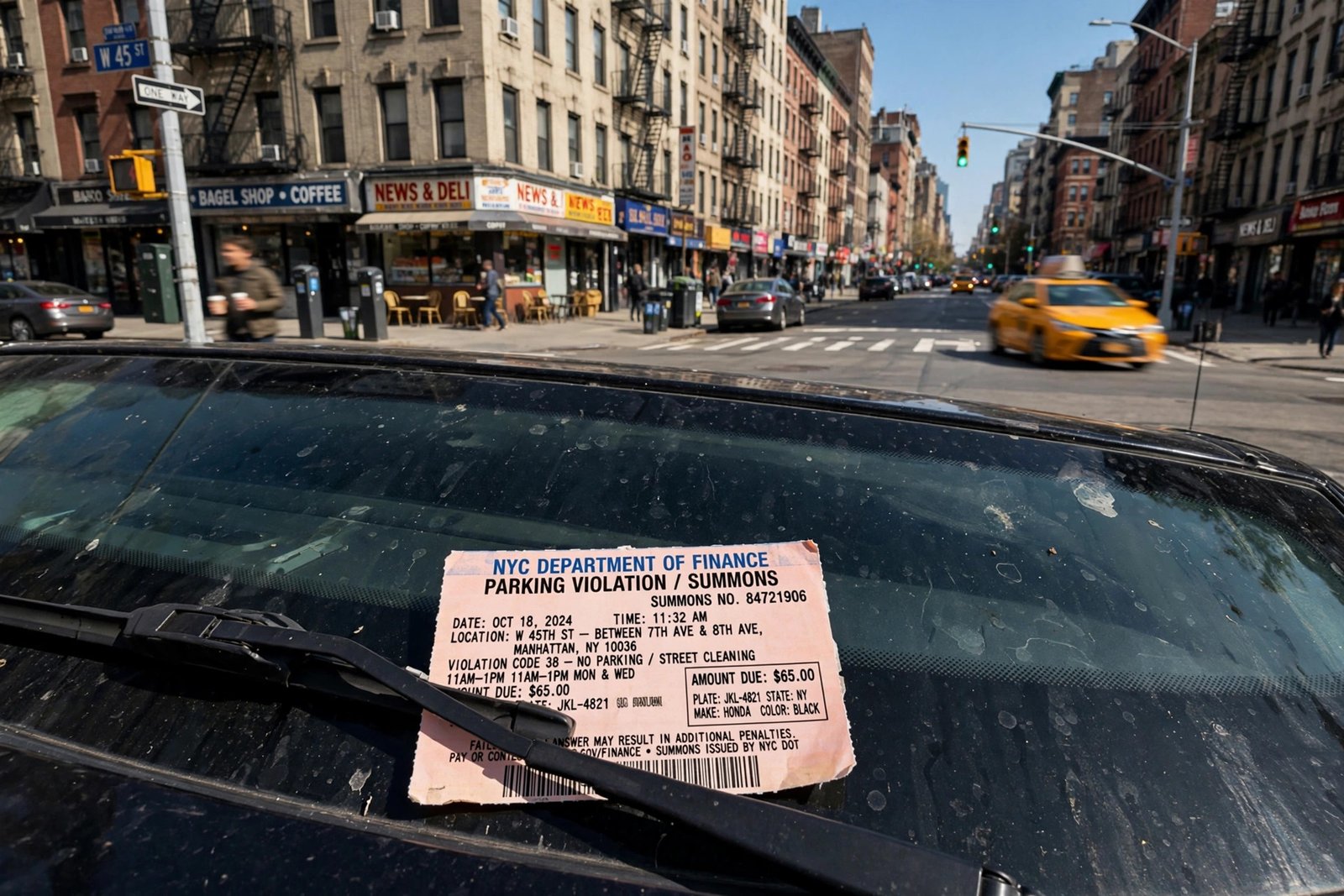
The ticket itself: photograph both sides. Check every field for errors — wrong plate number, wrong vehicle color, wrong street, impossible times. Administrative errors are among the most successful defenses.
Meter receipts and reports: if the meter was broken, your 311 complaint reference number (file it immediately — call 311 or use 311 online; the timestamped reference is key evidence) plus any receipt from an alternate meter.
Documentation of emergencies: ASP suspensions, snow emergencies, medical emergencies — screenshot official announcements and keep relevant records.
Witness statements: rarely needed, but a brief written statement from a passenger or bystander helps in close cases.
Keep every document related to the dispute — receipts, confirmation numbers, correspondence. Document organization for travel uses the same principle: the organized person wins bureaucratic fights.
Step 3: Build your defense (the arguments that work)
Signage defenses (highest success rate): missing signs, signs obscured by scaffolding/vegetation/vehicles, contradictory signs on the same block, or signs facing the wrong direction. Photograph the full block, not just your spot — context wins.
Meter defenses: broken meter (with 311 report filed promptly — the city checks), or you paid at a different meter on the same block (legal in NYC — muni-meter receipts are valid block-wide).
Factual error defenses: any material error on the ticket — wrong location, wrong time making the violation impossible, wrong vehicle description. Minor typos do not count; material errors do.
Emergency and suspension defenses: alternate-side parking suspended (check the official calendar — suspensions are frequent for holidays and emergencies), or a genuine emergency with documentation.
Necessity defenses: narrow and rarely successful — “I only parked there for two minutes” is not a defense. Do not lead with excuses; lead with evidence.
Write your defense statement clearly and factually: what happened, what the evidence shows, and why the ticket should be dismissed. Keep it under 300 words — hearing officers process hundreds of cases. If your situation involves a genuine dispute with an agency or company, the same approach as disputing a canceled flight applies: document everything, escalate in writing, and know the regulator.
Step 4: The hearing and beyond
Online hearings: submit your statement and evidence through the DOF portal. A hearing officer reviews and mails/emails the decision — typically within 2–6 weeks. In-person hearings: available at DOF business centers; bring printed evidence and arrive early. If you win: the ticket is dismissed — done. If you lose: you can appeal within 30 days ($25 appeal fee, refunded if you win the appeal). Appeals are decided on the existing record — no new evidence — so make your first hearing count. If you ignore it: penalties compound, the debt goes to collections, and your car can be booted or towed once judgments exceed $350. Never ignore a ticket — the city’s enforcement machinery is relentless and the penalties are designed to hurt.
Prevention: the habits that avoid tickets entirely
Learn the sign language: NYC parking signs are genuinely confusing — study the common configurations (the arrow directions, the day/time exceptions, the “except” clauses). When in doubt, do not park there. Use the official apps: ParkNYC for muni-meters (with receipts on your phone), and the city’s ASP calendar for suspension days. Photograph your parked car: signs, meter receipt on the dash, position — 30 seconds that has saved thousands in disputes. Know the expensive zones: Midtown, bus lanes, bike lanes, hydrants (15 feet — it is further than you think), and crosswalks are the ticket hotspots. Move for street cleaning: set a phone alarm. The $65 ticket plus the hassle is never worth the extra hour of sleep.
Conclusion
Disputing a parking ticket in NYC is a straightforward process: do not pay (paying admits guilt), request an online hearing within 30 days, gather photo evidence of signage/meter/ticket errors, write a clear factual defense, and submit. Tickets with real defenses — bad signage, broken meters, factual errors — get dismissed regularly. The system is designed to process volume, which means well-evidenced disputes stand out. Twenty minutes of effort for a $115 ticket is among the best hourly rates in personal finance. Fight the ones you can win, pay the ones you cannot, and photograph your dashboard every time.
Frequently Asked Questions
How long do I have to dispute a NYC parking ticket?
You must respond within 30 days of issue to avoid penalties. Request a hearing through nyc.gov/finance — online hearings are fastest and let you attach digital evidence.
Can I dispute a parking ticket online in NYC?
Yes — online hearings (written submission with evidence uploads) are available through the Department of Finance website and are the recommended option for most disputes.
What happens if I ignore a NYC parking ticket?
Penalties compound after 30 days, the fine can double after ~100 days, the debt goes to collections, and your vehicle becomes eligible for booting/towing once judgments exceed $350.
Does paying a parking ticket admit guilt in NYC?
Yes — payment is a guilty plea and waives your right to a hearing. If you plan to dispute, request a hearing instead of paying.
What is the most successful parking ticket defense in NYC?
Signage defenses — missing, obscured, or contradictory signs — have the highest dismissal rates, followed by broken-meter defenses (with a timely 311 report) and material factual errors on the ticket itself.