Foreclosures can be genuine bargains — homes selling 10–30% below market value — but in New York, they come wrapped in one of the country’s longest, most complex foreclosure processes. New York is a judicial foreclosure state, meaning every foreclosure goes through the courts, which creates both opportunities (more time, more inventory, more negotiating room) and risks (title issues, occupied properties, distressed conditions). This guide explains how to buy a foreclosure in New York State safely and profitably.
How foreclosure works in New York (why it matters to buyers)
New York’s judicial process takes 12–24+ months from missed payments to auction — among the longest in America. This matters because: pre-foreclosures (homeowners in default but not yet foreclosed) offer months of negotiation window; auction properties sell as-is with limited information; and REO/bank-owned properties (unsold at auction) are listed like normal homes but priced to move. The long timeline also means more distressed inventory accumulates — patient buyers benefit. Track the process through county court records and the HUD foreclosure resources page, which explains each stage.
The three ways to buy (ranked by risk)
1. REO / bank-owned (lowest risk)
After a failed auction, the bank lists the property through regular agents on the MLS — searchable on Zillow and Realtor.com with “foreclosure” or “bank-owned” filters. You get a normal purchase process: inspections, title search, mortgage financing, and negotiable terms. Discounts run 5–15% below market — smaller than auctions, but with far less risk. This is where beginners should start. Banks are motivated sellers carrying non-performing assets; reasonable offers below asking often succeed, especially on properties sitting 90+ days.
2. Pre-foreclosure / short sale (medium risk, best deals)
Contact homeowners in default (lists available through county filings and specialized services) and negotiate a purchase before the auction — often as a short sale, where the lender accepts less than the mortgage balance. Discounts of 15–30% are realistic because you are solving the owner’s problem (avoiding foreclosure’s credit devastation) and the bank’s problem (avoiding auction costs). Complexities: short sales need lender approval (60–120 days), the owner must cooperate, and junior liens can kill deals. An investor-friendly real estate attorney is essential here.
3. Foreclosure auction (highest risk, highest reward)
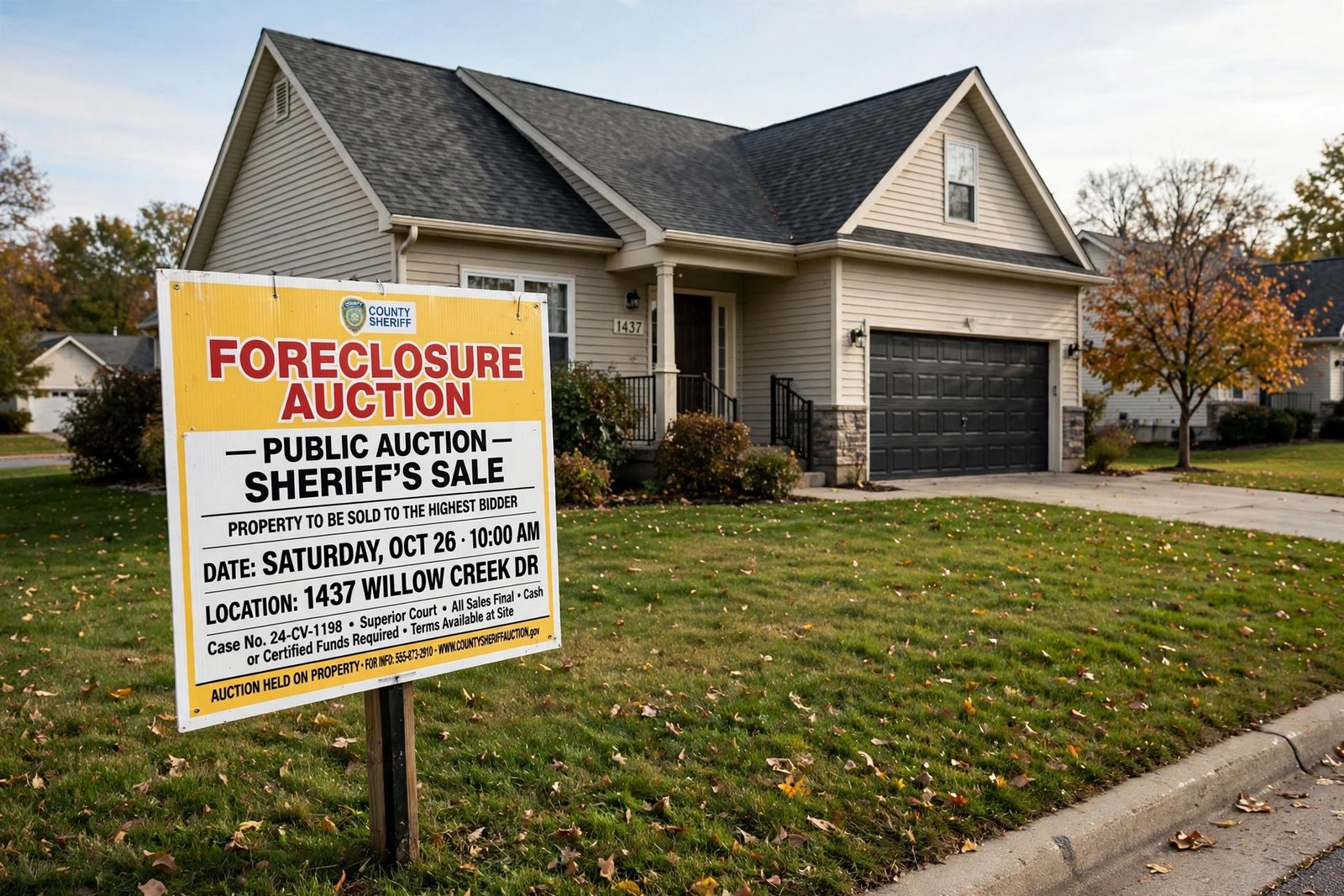
Properties auctioned at county courthouses (in NYC, typically at the county Supreme Court). Rules that surprise newcomers: all-cash or cashier’s checks required (no mortgages — you need liquid funds or hard-money loans); no interior inspection — you buy sight-unseen except the exterior; existing liens may survive — tax liens and some municipal liens transfer to you; and occupied properties may require formal eviction after purchase. Discounts of 20–40% reflect these risks. Never bid at auction without: a title search (a few hundred dollars that can save you from a six-figure lien), exterior inspection and neighborhood comps, knowledge of the upset price, and a hard maximum bid set in advance. Auction fever bankrupts more investors than bad properties do.
Financing foreclosures: what works and what does not
REO properties: conventional and FHA financing work normally — though FHA appraisals can fail on distressed properties (peeling paint, missing appliances, safety issues), killing the deal. Auctions: cash or hard-money loans only (hard money runs 8–12% interest plus points — factor it into your numbers). 203(k) renovation loans: FHA’s rehab loan bundles purchase and renovation financing — powerful for foreclosures needing work, but slow (60–90 days to close) and paperwork-heavy. Whatever the path, get pre-approved for the specific property type before you bid or offer. And keep reserves: foreclosures always need more work than expected — emergency fund discipline applies to investment properties too.
Due diligence: the checklist that prevents disasters
Title search: non-negotiable for auctions; standard (via your attorney) for REO. Look for tax liens, mechanic’s liens, HOA liens, and judgments — in New York, some survive foreclosure. Inspection: full inspection for REO/pre-foreclosure (budget $400–$700, plus specialized checks for old systems). For auctions, inspect the exterior, check the roofline, peek through windows, and talk to neighbors — they know everything. Occupancy check: is anyone living there? Evicting occupants post-purchase in New York’s tenant-friendly courts takes months and thousands in legal fees — price it in or walk away. Repair estimate: distressed properties hide expensive problems — mold, foundation issues, knob-and-tube wiring, oil tanks. Budget 20% over your contractor’s estimate, minimum. What annual home inspections cover is a good primer on the systems you are evaluating, and safely handling mold previews one common foreclosure surprise.
New York-specific wrinkles
Co-op foreclosures: in NYC, many “foreclosures” are co-op share loans (UCC foreclosures), not real-property foreclosures — the process and risks differ, and co-op boards still must approve you as a buyer. Zombie properties: New York’s long timeline creates vacant, deteriorating homes — the state maintains a vacant property registry; municipalities sometimes offer these at steep discounts to buyers who will rehabilitate them. Right of redemption: New York does not offer a post-sale redemption period for most foreclosures (unlike some states), so auction sales are generally final — know this before you bid; the NY courts’ help center documents the judicial process step by step. Tax foreclosures: separate from mortgage foreclosures, NYC sells tax liens annually — investors buy liens, not properties, with their own complex rules. Do not confuse the two.
Assemble your team before you buy
Foreclosure investing is a team sport. You need an investor-friendly real estate attorney who understands New York’s judicial process and lien survival rules, a general contractor who can estimate repairs from limited access, and — for auctions — a title company that can rush searches on deadline. Interview all three before you need them; the best professionals are found through local real estate investor associations and referrals from experienced buyers, not generic web searches. A good team costs money upfront and saves fortunes downstream.
Conclusion
Buying a foreclosure in New York State rewards the prepared: start with REO properties for the safest entry, graduate to pre-foreclosure short sales for the best discounts, and attempt auctions only with cash, a title search, and a hard bid limit. The state’s long judicial process creates inventory and negotiating time that faster states do not offer. Do ruthless due diligence — title, inspection, occupancy, repair budget plus 20% — and never let auction excitement override your numbers. The bargain is real, but only for buyers who respect the risks as much as the discount.
Frequently Asked Questions
How much below market value are foreclosures in New York?
Typically 5–15% for bank-owned (REO) properties, 15–30% for pre-foreclosure short sales, and 20–40% at auction — with discounts proportional to risk and property condition.
Can I get a mortgage on a foreclosure?
Yes for REO and pre-foreclosure purchases — conventional and FHA loans work, though distressed conditions can fail FHA appraisals. Auctions require cash or hard-money loans; traditional mortgages cannot close on auction timelines.
Can I inspect a foreclosure before buying?
For REO and pre-foreclosure: yes, full inspections are standard. At auction: no interior access — you buy based on exterior observation, records, and comps. This is the central risk of auction buying.
What happens to liens on a foreclosed property in NY?
Most junior liens are wiped out by foreclosure, but property tax liens and some municipal liens can survive and transfer to the buyer. Always run a title search before bidding at auction.
How long does foreclosure take in New York?
12–24+ months from first missed payment to auction — among the longest in the US. This creates extended pre-foreclosure negotiation windows that patient buyers can exploit.