Where to Play Free Tennis in NYC: Best Courts by Borough
Where can you play free tennis in NYC? Dozens of public courts cost nothing. Here are the best free courts by borough, when to go, and court etiquette.
Written by admin
Published October 21, 2026
Reading time 6 minutes
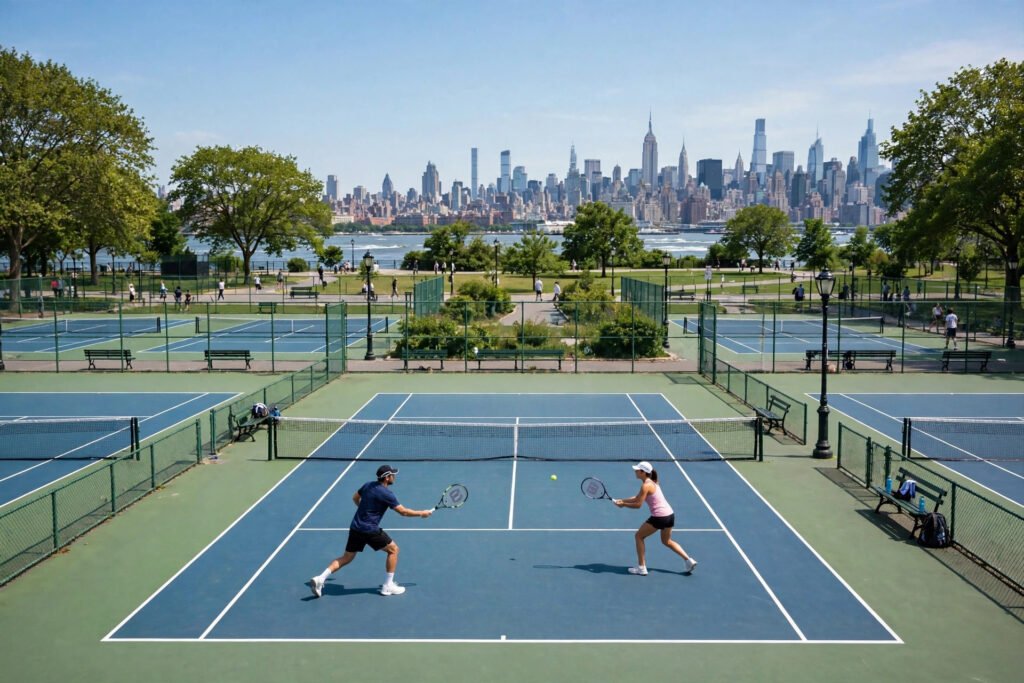
Tennis in New York City has a reputation as a rich person’s sport — private clubs in Manhattan charge thousands a year, and court time at indoor facilities can run $100+ an hour in winter. But here is the secret the city’s tennis community knows well: New York operates one of the largest free public tennis systems in the country. Dozens of outdoor courts across the five boroughs cost absolutely nothing to use. You just need to know where they are, when they are open, and the unwritten rules of public-court culture.
How NYC’s public tennis courts work
NYC Parks maintains roughly 75 tennis facilities with hundreds of courts citywide, and the vast majority are free and open to the public on a first-come, first-served basis. No reservation, no membership, no fee — you walk up with a racket and play. Courts are generally open from spring through fall (roughly April to November), dawn to dusk, with exact dates depending on weather and maintenance schedules. A handful of locations require a seasonal tennis permit for reserved play, but walk-on free play remains the norm at most sites. The official NYC Parks tennis facilities page lists every location with court counts and surface types.
The best free courts by borough
Manhattan
Central Park Tennis Center (outdoor annex): The famous indoor center charges fees in winter, but the outdoor courts nearby offer some of the most scenic free tennis in the city — playing with the skyline over the fence never gets old. Arrive early on weekends; these are among the most contested courts in Manhattan.
East River Park / John V. Lindsay East River Park: A solid bank of hard courts along the FDR with river views and a steady pickup scene. The ongoing resiliency construction has shifted some facilities around, so check current status before heading over.
Riverside Park (96th–110th St): Well-maintained courts with a Hudson River breeze. Popular with Upper West Side regulars; weekday mornings are the sweet spot.
Brooklyn
McCarren Park: Williamsburg’s tennis hub — busy, social, and surrounded by everything you want after a match. Weekend waits can stretch past an hour, so bring patience or come at 8 a.m.
Prospect Park Parade Ground: A big cluster of courts at the park’s southern edge, usually easier to get onto than the north Brooklyn spots. Great for beginners who want space without an audience.
Marine Park: Deep Brooklyn’s hidden gem — lots of courts, short waits, and a dedicated local tennis community that welcomes newcomers.
Queens
Flushing Meadows Corona Park: Home of the US Open grounds, and the surrounding public courts let you play in the shadow of Arthur Ashe Stadium for free. The symbolism alone is worth the trip.
Astoria Park: Waterfront courts with Hell Gate Bridge views, a strong after-work crowd, and some of the best-maintained public surfaces in Queens.
The Bronx & Staten Island
Van Cortlandt Park (Bronx): Multiple courts in the city’s fourth-largest park, rarely crowded on weekdays.
Silver Lake Park (Staten Island): Quiet, green, and reliably available — the easiest walk-on tennis in the five boroughs.
When to go (and when to stay home)
Court availability follows a brutal, predictable rhythm. Weekday mornings before 9 a.m.: wide open almost everywhere. Weekday evenings 5–8 p.m.: competitive, especially May through September. Weekends 9 a.m.–2 p.m.: the thunderdome — expect waits of 30–90 minutes at popular parks. If your schedule allows it, a 7 a.m. weekday session is the cheat code: empty courts, cool air, and you are done before work. Tennis is also a genuinely excellent workout — if you are building a routine around it, our guide to the best time of day to exercise can help you slot sessions where your body performs best.
The unwritten rules of public courts
Free courts run on etiquette, and violating it is the fastest way to make enemies in the local tennis community:
One hour when people are waiting. This is the iron law. If players are waiting with rackets in hand, singles play gets one hour, doubles can stretch a bit longer. Set a phone timer and honor it.
Warm up efficiently. Ten minutes of mini-tennis and groundstrokes, then play. Nobody wants to watch your 25-minute warm-up while they wait.
Call lines honestly and keep the noise down. Public courts sit cheek-by-jowl; screaming after every point and disputing every call ruins it for six neighboring courts.
Bring your own balls. A fresh can costs a few dollars and transforms the experience versus the dead balls living in your bag since 2022. Take your dead balls with you — do not leave them on the court.
Sweep and respect the surface. On clay or Har-Tru courts (rarer in the public system), sweep after play. On hard courts, pick up your trash and water bottles.
Finding playing partners
Showing up solo is completely normal — most regulars will hit with a stranger rather than let a court sit empty. Beyond that: NYC Parks runs free and low-cost tennis programming and junior clinics; the USTA’s play-tennis portal lists leagues, ladders, and programs by ZIP code once you have the basics down; local Facebook groups and Meetup.com host beginner-friendly hitting sessions in every borough; and several nonprofits offer free adult beginner clinics each spring. If you are starting from zero fitness-wise, a few weeks of base running fitness will make your first sessions dramatically more fun — tennis points are short, explosive efforts, and being gassed after ten minutes ruins the learning curve. Even walking 30 minutes a day builds the baseline stamina that makes rallies enjoyable instead of exhausting.
What to bring (the minimal kit)
You need less than you think: a racket (a $40–$80 beginner racket is perfectly fine — do not buy the $250 one until you know you will stick with it), court shoes with non-marking soles (running shoes shred on hard courts and wreck your ankles), water (at least a liter — there is no shade on most courts), sunscreen, and a hat. That is the whole list. Everything else is optional until you are hooked.
Conclusion
Free tennis in New York City is one of the great underused public resources — hundreds of courts, five boroughs, zero dollars, with some of the best urban backdrops in the sport. The system rewards early risers and etiquette-followers, and it punishes nobody for being a beginner. Grab a racket, pick a park from the list above, show up at 8 a.m. on a Saturday, and join the quiet army of New Yorkers who play world-class-view tennis for free. Your only real competition is the waitlist at McCarren on a Sunday.
Frequently Asked Questions
Are all NYC public tennis courts really free?
The vast majority are free for walk-on play during the outdoor season. A small number of facilities offer reservable time that may require a seasonal permit, but free first-come, first-served play is the norm at most NYC Parks locations.
When do outdoor tennis courts open in NYC?
Typically April through November, weather permitting. Exact opening dates vary by park and year — check the NYC Parks website for current status before making a trip early in the season.
Do I need to bring my own racket and balls?
Yes. Public courts provide the court and net only. Bring your own racket, balls, water, and court-appropriate shoes.
How long can I play if others are waiting?
The standard etiquette is one hour for singles when players are waiting. Set a timer and yield the court promptly — it keeps the whole system working.
Where can beginners take free tennis lessons in NYC?
NYC Parks and several nonprofits run free or low-cost beginner clinics each spring and summer. Check the Parks website’s tennis section and local community boards for current schedules.