
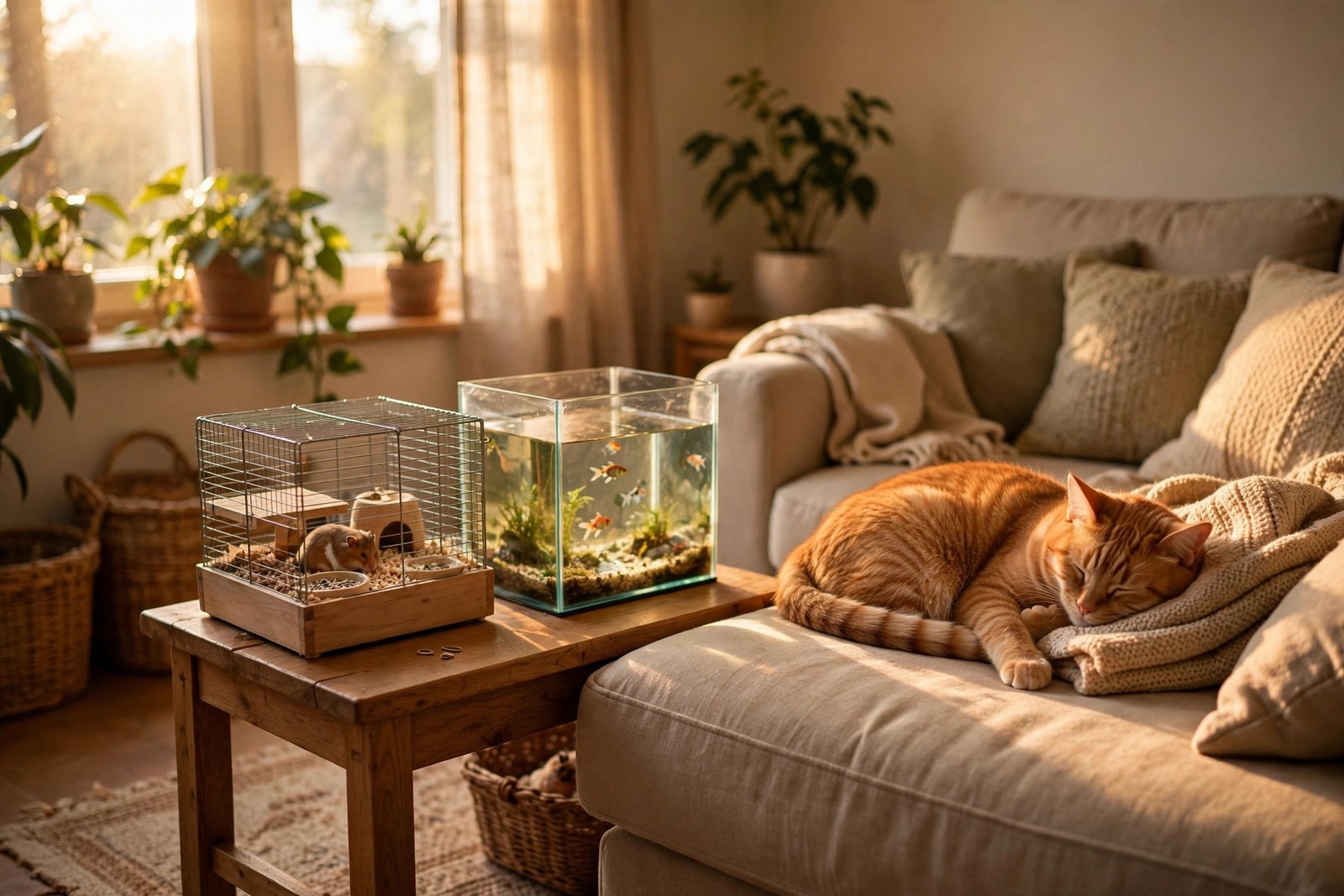
Everyone loves the idea of a pet — the companionship, the routine, the living creature happy to see you. Then reality intrudes: the 6am walks in February, the vet bills, the chewed furniture, the guilt of leaving a high-energy dog alone for ten hours. Low-maintenance pets exist on a spectrum, not a binary, and the right choice depends on an honest accounting of your time, space, budget, and tolerance for chaos. This guide ranks genuinely low-effort companions, tells you the true costs and care requirements of each, and helps you avoid the classic beginner mistake: choosing a pet for its looks instead of its lifestyle fit.
What “low maintenance” actually means
Let’s define terms, because pet marketing lies. Low-maintenance means: minimal daily time commitment (feeding and quick checks, not hours of exercise), tolerance for your absence during workdays, modest space requirements, affordable routine care, and forgiving temperaments for beginner mistakes. No pet is zero maintenance — every living creature needs food, clean habitat, and attention. The question is how much, and whether that amount fits a busy beginner’s life.
Be brutally honest about your constraints before falling in love. Work 60-hour weeks? Travel frequently? Live in a 400-square-foot studio with a no-dogs policy? These aren’t obstacles to pet ownership — they’re filters that point you toward the right species. The best pet is the one whose needs match your life, not the one with the cutest photos.
The easiest starters: fish, and why they’re underrated
A well-set-up freshwater aquarium is arguably the lowest-maintenance pet experience available. A betta fish in a proper 5+ gallon heated, filtered tank needs feeding once daily and a partial water change weekly — about 20 minutes of weekly care total. The fish itself costs little; the setup (tank, heater, filter, water conditioner) is the real investment, and skimping on it is the #1 beginner mistake. Small tanks are actually harder to maintain than medium ones, because water chemistry swings wildly in small volumes.
Beyond bettas, hardy community fish like platies, corydoras catfish, and cherry shrimp create living ecosystems that are genuinely fascinating to watch. Aquariums also deliver proven stress-reduction benefits — watching fish lowers blood pressure and anxiety in multiple studies. For apartment dwellers, they’re silent, odorless (when maintained), and lease-friendly.
Small mammals: hamsters, guinea pigs, and rabbits
Hamsters are the classic beginner pet for good reason: cheap, compact, and entertaining. But know the fine print — they’re nocturnal (expect wheel-running at 2am), solitary (most species fight if housed together), and short-lived (2–3 years, which is heartbreaking but also a manageable commitment). A proper setup needs a large enclosure (those tiny pet-store cages are inadequate), bedding, a solid-surface wheel, and daily spot-cleaning.
Guinea pigs are the friendliest of the small mammals — social, vocal, diurnal — but they need pairs (they get depressed alone), large enclosures, daily fresh vegetables, and regular cage cleaning. Rabbits are wonderful, litter-trainable, and affectionate, yet they’re among the most misunderstood: they need significant space, bunny-proofing (they chew everything), and exotic vets that cost more than cat/dog vets. For true low maintenance, hamsters and guinea pigs beat rabbits.
Reptiles: the set-and-forget champions
For the ultimate low daily effort, reptiles are unmatched. A leopard gecko eats every 2–3 days (live insects, so confront that requirement honestly), needs spot-cleaning, and is content being handled gently a few times weekly. Corn snakes eat once weekly, produce minimal waste, and live 15–20 years — a serious commitment disguised as an easy pet. Bearded dragons are the most interactive reptiles, recognizing owners and enjoying handling, but need daily salads, live insects, and UVB lighting on timers.
The reptile fine print: setup costs are significant (proper heating, lighting, and enclosure run $200–400+), they’re escape artists requiring secure lids, and finding a reptile vet takes research. But once established, a reptile habitat on timers needs perhaps 30 minutes weekly. For travelers, they’re ideal — a healthy adult snake or gecko handles a long weekend alone far better than any mammal.
Cats: the best low-maintenance mammal (with caveats)
Adult cats are the sweet spot for mammal lovers with busy lives: litter-trained, self-grooming, fine alone during workdays, and affectionate on their own terms. An adult rescue cat (skip the kitten chaos if you want low maintenance) needs daily feeding, fresh water, litter scooping, and play sessions — roughly 30 minutes daily. They’re apartment-perfect: silent to neighbors, no walks, no yard needed.
The caveats are financial and long-term: cats live 15–20 years, quality food and litter cost $50–80 monthly, and vet care — especially dental work and senior care — runs into thousands over a lifetime. Scratching is natural behavior, so provide scratching posts or accept furniture damage. And consider your floors: the best flooring for homes with pets makes cleanup dramatically easier. For renters, confirm pet policies before adopting — “no pets” clauses are common and enforced.
Pets to avoid as a beginner
Honesty requires the other list. High-energy dog breeds (border collies, huskies, Belgian Malinois) in apartments are a recipe for destroyed furniture and miserable humans — they need hours of daily exercise and mental work. Parrots live 30–80 years, scream at volumes neighbors will not forgive, and need constant social interaction; they’re a lifestyle, not a pet. Ferrets are delightful chaos agents that require ferret-proofed homes and smell distinctly. And any exotic or wild animal (foxes, monkeys, big cats) is unethical, often illegal, and never low-maintenance. The ASPCA’s pet care guides are the gold standard for researching any species before committing.
The true cost breakdown
Budget beyond the adoption fee. First-year costs (setup, initial vet visits, spay/neuter, supplies) typically run $500–1,500 for small pets and $1,000–2,000+ for cats. Annual ongoing costs: $300–600 for small mammals/reptiles/fish, $600–1,000+ for cats. Build a vet emergency fund from day one — a single emergency visit easily costs $500–2,000, and financial stress is a leading cause of pet surrender. Pet insurance exists for cats and is worth pricing; for smaller pets, a dedicated savings account usually beats insurance.
Also plan for your absences: even low-maintenance pets need care when you travel. Budget for a pet sitter or boarding — finding pet-friendly hotels for road trips helps if you’d rather bring them along. The CDC’s healthy pets guidance covers the human-health side: hygiene, allergies, and safe handling.
Conclusion
The best low-maintenance pets for beginners are the ones matched to your actual life: fish or reptiles for minimal daily effort, hamsters or guinea pigs for interactive small pets, and adult cats for mammalian companionship without the dog-level commitment. Start with honest constraints, budget the true first-year cost, set up the habitat properly before the animal arrives, and adopt from rescues and shelters where possible. Done right, a low-maintenance pet isn’t a compromise — it’s the beginning of one of life’s best relationships, sized to fit the life you actually have.
Frequently Asked Questions
What is the absolute easiest pet to take care of?
A betta fish in a proper heated, filtered 5+ gallon tank, or a leopard gecko — both need roughly 20–30 minutes of weekly care once set up correctly. The key is investing in proper setup upfront.
Are cats really low maintenance?
Adult cats are the lowest- “maintenance” common mammal: litter-trained, self-grooming, and fine alone during workdays. But they live 15–20 years and cost $600–1,000+ yearly, so they’re low daily effort, not low commitment.
What pet should I avoid as a first-time owner?
High-energy dog breeds in apartments, parrots (extreme longevity, noise, and social needs), and any exotic or wild animal. Match the species to your time, space, and experience level.
How much does a low-maintenance pet cost per year?
Roughly $300–600 annually for fish, small mammals, or reptiles (after setup), and $600–1,000+ for cats. First-year setup costs run higher — budget $500–2,000 depending on species.