
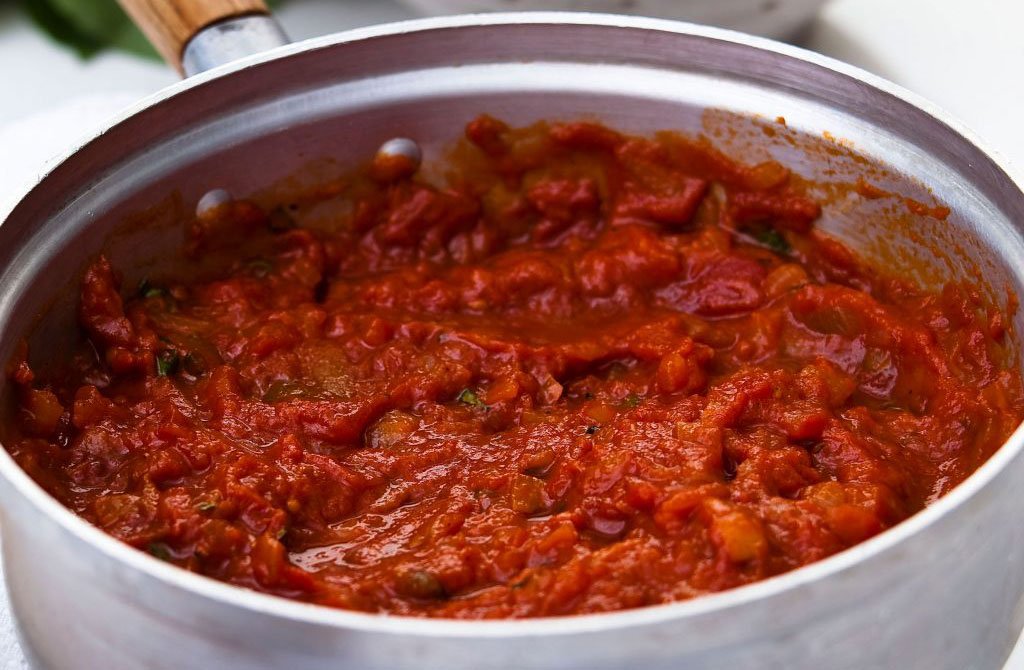
Jarred sauce is fine. But sauce from fresh tomatoes — bright, sweet, tasting unmistakably of tomato rather than citric acid and “natural flavors” — is a different food entirely. And it’s not hard. So how can I make my own pasta sauce from fresh tomatoes? Forty minutes, a handful of ingredients, one pot. Here’s the method, plus the variations that make it yours.
Picking the Right Tomatoes
Not all tomatoes sauce equally:
- Best: paste tomatoes — Roma, San Marzano, Amish Paste. Meaty, fewer seeds, less water = thicker sauce with less cooking.
- Good: any ripe summer tomato. Beefsteaks and heirlooms make delicious (thinner) sauce — just cook a bit longer to reduce.
- Avoid: underripe or mealy winter tomatoes. Fresh sauce demands ripe fruit — out of season, quality canned San Marzanos honestly beat sad fresh ones. No shame in it.
- How many: ~3 lbs fresh tomatoes = ~4 cups sauce (enough for 1 lb pasta with leftovers).
To Peel or Not to Peel?
For silky sauce: yes, peel. The easy way — score an X on the bottom, blanch 30–60 seconds in boiling water, shock in ice water, skins slip off. For rustic sauce: skip peeling; the skins soften into the sauce (or blend at the end). Seeds: remove for refined sauce (halve and squeeze), leave for rustic. There’s no wrong answer — just different textures.
How Can I Make My Own Pasta Sauce From Fresh Tomatoes? The Base Recipe
Ingredients: 3 lbs ripe tomatoes (peeled/seeded as you like, chopped), 1/4 cup olive oil, 4–5 garlic cloves (sliced), 1 small onion (diced, optional), salt, pepper, fresh basil, pinch of sugar (only if needed).
- Sweat the aromatics: olive oil over medium heat, onion until soft (5 min), garlic until fragrant (1 min — don’t brown it; bitter).
- Add tomatoes with a big pinch of salt. They’ll release a flood of liquid — that’s fine.
- Simmer 30–40 minutes, stirring occasionally, until thickened to your liking. Break up tomatoes with a spoon as they soften.
- Finish: tear in fresh basil off heat, drizzle of good olive oil, adjust salt. Taste — if acidic, a pinch of sugar or a grated carrot (cooked with the sauce) balances it; butter (a tablespoon) rounds it luxuriously.
That’s it. Forty minutes, one pot, sauce that ruins jarred sauce for you permanently. The Spruce Eats’ Italian sauce guides offer good variations once you’ve nailed the base.
Variations Worth Trying
- Marinara-plus: add red pepper flakes + oregano for kick.
- Puttanesca: olives, capers, anchovies — bold, briny, incredible.
- Vodka sauce: stir in 1/2 cup cream + splash of vodka after simmering (alcohol cooks off, leaving silky richness).
- Arrabbiata: extra garlic + serious red pepper flakes.
- Summer raw sauce: don’t cook at all — chop ripe tomatoes, toss with garlic, basil, olive oil, salt; rest 30 minutes; toss with hot pasta. The heat of the pasta warms it through. Sublime in August.
- Roasted: halve tomatoes, roast at 400°F with garlic and olive oil 40 minutes, then blend — deeper, sweeter, caramelized flavor.
The Pasta Pairing Rules
- Finish pasta IN the sauce. Drain pasta 1–2 minutes before al dente, transfer to the sauce with a splash of pasta water, and toss over heat for 1–2 minutes. The starch emulsifies sauce and pasta into one cohesive dish. This is the single biggest upgrade to any pasta night — Italians consider sauced-separately pasta undressed.
- Salt the pasta water aggressively — it should taste like the sea. This is the only chance to season the pasta itself.
- Match shapes to sauce: smooth sauces → long noodles (spaghetti, linguine); chunky sauces → shapes with pockets (rigatoni, orecchiette, shells).
- Cheese: real Parmigiano-Reggiano, grated fresh. The green can is not the same food.
Storing and Preserving
- Fridge: 4–5 days in airtight containers.
- Freezer: 3–6 months — freeze in portion-sized containers or bags laid flat. Fresh tomato sauce freezes beautifully.
- Canning: water-bath canning works but requires added acid (bottled lemon juice) for safety with low-acid tomatoes — follow USDA-tested recipes exactly, no improvising with canning safety.
Make a triple batch in peak tomato season and freeze — February you will be grateful. And the same fresh-tomato principles apply to pizza sauce (though pizza sauce stays uncooked — different beast, same tomatoes).
Tomato Varieties: Which Ones Make the Best Sauce
Not all tomatoes are sauce tomatoes. The variety matters enormously:
- San Marzano (the gold standard). Low water, few seeds, balanced sweetness — the reason Italian sauce tastes Italian. True D.O.P. San Marzanos are worth it for special batches; good domestic plum tomatoes work for everyday.
- Roma/plum tomatoes. The practical choice — meaty, widely available, affordable. The backbone of most homemade sauce.
- Cherry tomatoes. Surprisingly excellent for quick fresh sauces — roast them whole with olive oil and garlic until they burst (20 min at 400°F), then crush. Sweet, vibrant, weeknight-fast.
- Heirlooms. Great for fresh eating; for sauce, they’re watery and expensive. Use them raw, sauce the Romas.
- Canned vs. fresh reality check: out of season, good canned tomatoes (San Marzano style) beat mediocre fresh ones every time. Canned tomatoes are picked ripe and processed immediately; January “fresh” tomatoes are picked green and gassed. Don’t be a purist — be a pragmatist.
Seasoning the sauce: salt early and in layers, a pinch of sugar only if the tomatoes are acidic (taste first), and finish with fresh basil off the heat — cooking basil long kills its brightness. Dried oregano and red pepper flakes go in early with the aromatics; this is where knowing your spices separates good sauce from great. Simmer low, taste often, and remember: the best sauce ingredient is patience — 45 minutes minimum, two hours if you have it.
The Practical Takeaway
Fresh tomato pasta sauce is: ripe paste tomatoes + olive oil + garlic (+ onion) + salt, simmered 30–40 minutes, finished with basil. Peel for silky, skip for rustic. Always finish the pasta in the sauce with pasta water, salt the water like the sea, and use real Parmigiano. Make extra in summer and freeze it — future you, staring at February, will taste August. Once you’ve had the real thing, the jar on the shelf starts looking like a backup plan, which is exactly what it becomes.


