
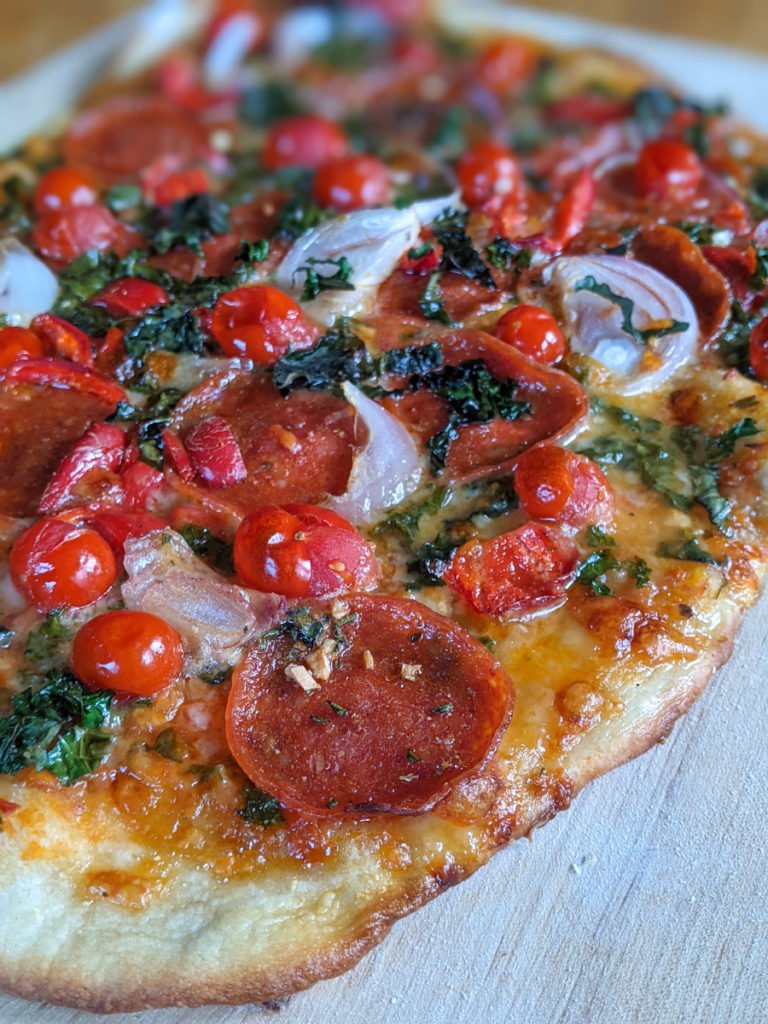
That blistered, leopard-spotted crust. The puffy rim. Cheese that’s molten but not greasy. Restaurant pizza — especially Neapolitan and New York styles — seems to require a 900°F wood oven. And while you can’t fully replicate that at home, you can get shockingly close. So how can I make restaurant-style pizza at home? The secrets are: proper dough with a long ferment, screaming-hot oven with the right surface, and restraint with toppings. Here’s the complete method.
The Dough (Where Great Pizza Begins)
Forget 1-hour “quick” doughs — flavor needs time. This is a 24–72 hour cold-ferment dough, and it’s worth planning ahead:
- Flour: bread flour (12–13% protein) for NY style; “00” flour for Neapolitan. Protein = chew and structure.
- Hydration: 60–65% water by flour weight (e.g., 500g flour + 325g water). Wetter dough = airier crumb, but harder to handle. Start at 60%.
- Salt: 2–2.5% — seasons deeply and controls fermentation.
- Yeast: tiny amount (0.5% instant yeast) — the long cold ferment does the work, developing complex flavor no quick dough can match.
- A touch of oil and sugar (NY style): oil for tenderness, sugar for browning in home ovens.
Method: mix, knead 8–10 minutes until smooth, bulk ferment 1–2 hours at room temp, then divide into 250–280g balls and refrigerate 24–72 hours. The cold ferment develops flavor and makes the dough easier to stretch. Pull balls out 2 hours before baking to warm up. Food Network’s pizza dough guides cover the basics, but the long ferment is the step most home recipes skip — and it’s the difference between good and great.
Shaping: The Part That Takes Practice
- Flour your surface and the dough ball generously.
- Press from the center outward, leaving a 1-inch rim untouched — that rim becomes the puffy cornicione.
- Stretch over your knuckles, letting gravity help. Never use a rolling pin — it crushes the air bubbles you spent 48 hours creating.
- Aim for 10–12 inches, thin center, puffy edge. Tears? Patch by pinching; small holes are fine (they’ll be covered).
- Transfer to a floured peel (or parchment paper — the beginner’s cheat that works perfectly).
How Can I Make Restaurant-Style Pizza at Home? The Heat Problem (Solved)
Home ovens max at 500–550°F; pizzerias run 700–900°F. Bridge the gap:
- Pizza steel (best investment): a 3/8″ steel plate ($80–$120) stores massive heat and transfers it fast — the closest thing to a pizza oven floor. Preheat 45–60 minutes at your oven’s max. This single purchase upgrades home pizza more than any other.
- Pizza stone (good): cheaper ($30–$50), preheat 45+ minutes. More fragile (thermal shock cracks them), less heat transfer than steel, but a big step up from a pan.
- Upside-down sheet pan (free): preheated heavy sheet pan works surprisingly well in a pinch.
- Broiler finish: after 4–5 minutes on the steel, hit the broiler for 60–90 seconds for leopard-spotted char on top. Watch it like a hawk — broilers go from perfect to burnt in seconds.
- Cast iron skillet pizzas: build the pizza in a screaming-hot skillet, finish under the broiler — deep-dish-adjacent and foolproof.
Sauce, Cheese, Toppings: Less Is More
- Sauce: uncooked crushed San Marzano-style tomatoes + salt + a drizzle of olive oil. That’s it. No cooking, no sugar, no oregano in the sauce (put dried oregano on top if you must). Cooked sauces taste like pasta night, not pizzeria.
- Cheese: low-moisture whole-milk mozzarella, shredded yourself (pre-shredded has anti-caking starch that inhibits melting). For Neapolitan, fresh mozzarella — but pat it dry or drain it first, or you’ll have pizza soup.
- Toppings: restraint. 2–3 toppings max, applied sparingly. Wet toppings (fresh mushrooms, pineapple) release water — pre-cook or go light. Pepperoni cups and chars under the broiler beautifully.
- Order: sauce → cheese → toppings. Light on all three. A 12″ pizza needs ~1/3 cup sauce and 4–6 oz cheese. Overloading is the #1 home pizza sin — it steams instead of bakes.
Bake and Finish
Launch onto the preheated steel, bake 5–7 minutes at max temp until the crust is puffed and spotted. Finish with: fresh basil, a drizzle of good olive oil, flaky salt, maybe grated Parmesan. Let it rest 1–2 minutes before cutting (the cheese sets slightly). Cut with a sharp wheel or large knife — sawing drags toppings.
Pizza Night Logistics: Dough, Toppings, and Timing
Great homemade pizza is 50% dough, 50% logistics. The system that works:
- Make dough the day before. Cold fermentation (24–72 hours in the fridge) develops flavor that same-day dough can’t match. It’s also less sticky and easier to stretch. Plan ahead once; thank yourself forever.
- Less is more on toppings. The #1 homemade pizza mistake: loading it up. Two to three toppings max — wet toppings (fresh mozzarella, vegetables) go on sparingly or the center never crisps. Sauce thin, cheese moderate, restraint everywhere.
- The oven setup. Hottest your oven goes (500–550°F), stone or steel preheated a full hour. Launch with a floured peel or parchment. The blast of stored heat is what creates leopard-spotted crust.
- Rotate once. Most home ovens have hot spots — one 180° turn halfway through evens it out.
- Rest before cutting. Two to three minutes on a rack (not a flat pan — steam makes the bottom soggy). The cheese sets, the structure firms, the slice holds.
Seasoning matters: a pinch of dried oregano and garlic powder in the sauce, flaky salt on the finished pie — and this is where a well-stocked spice rack quietly makes the difference between good and great. And plan for leftovers deliberately: make an extra pie, because reheating pizza so it stays crispy (skillet method, for the record) means Friday’s effort becomes Saturday’s lunch — arguably better than the original.
The Practical Takeaway
Restaurant-style pizza at home requires: 24–72 hour cold-fermented dough (bread flour, 60–65% hydration), hand-stretching that preserves the rim, a pizza steel preheated 45+ minutes at max oven temp, uncooked tomato sauce, low-moisture mozzarella shredded fresh, and topping restraint. The steel is the best $100 you’ll spend; the long ferment is the best free upgrade. Master these and Friday pizza night becomes the meal everyone plans around — and reheating leftovers properly keeps day-two slices worthy of day one.


