
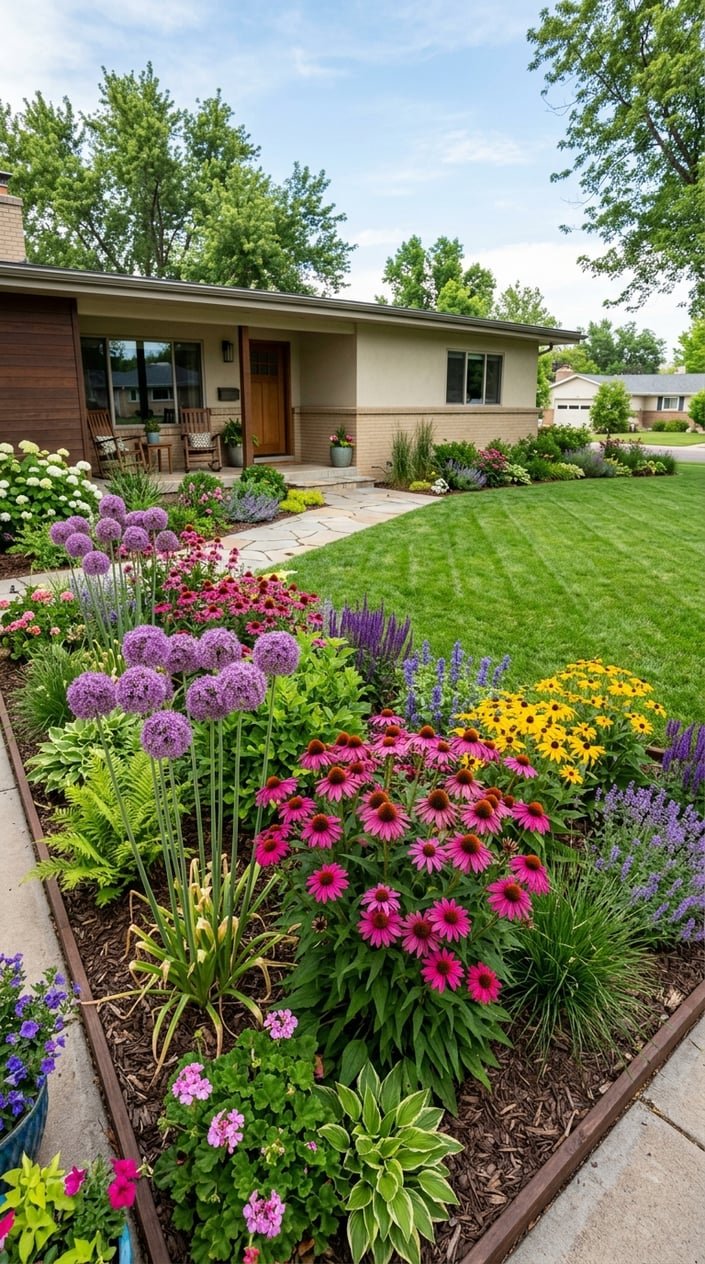
You want a yard that looks good without becoming a second job. Fair. Most landscaping advice assumes you enjoy spending Saturdays with a wheelbarrow — but what are the best low-maintenance landscaping ideas for people who’d rather be doing literally anything else? The secret isn’t laziness; it’s design: choosing plants and materials that thrive on neglect in your climate. Here are 15 ideas that actually work.
The Philosophy: Right Plant, Right Place
Every high-maintenance yard violates this rule: fussy plants in the wrong conditions need constant intervention. A hydrangea in full desert sun needs daily water; the same plant in partial shade with mulch needs nothing. Match plants to your site’s actual conditions (sun, soil, rainfall) and maintenance drops 80%. Your local extension service or native plant society knows exactly what thrives where you live — consult them before buying anything. Better Homes & Gardens also has solid region-specific plant guides worth browsing.
What Are the Best Low-Maintenance Landscaping Ideas? The Top 15
1. Go native
Native plants evolved for your exact climate — they need less water, no fertilizer, and shrug off local pests. A native plant bed, once established (1–2 seasons of watering), largely cares for itself. Bonus: pollinators love them.
2. Mulch everything
Three inches of mulch suppresses weeds, retains moisture, and looks finished. It’s the single highest-ROI landscaping task. Refresh every 1–2 years. Wood chips, bark, or pine straw depending on region.
3. Replace lawn with alternatives
Lawns are the most maintenance-intensive thing in most yards. Reduce yours: expand beds, add patios or paths, or plant no-mow alternatives like clover, creeping thyme, or native groundcovers. Every square foot of lawn eliminated is mowing, watering, and fertilizing you’ll never do again.
4. Ornamental grasses
The ultimate lazy plant: gorgeous texture and movement, one haircut per year (late winter), drought-tolerant once established. Maiden grass, blue fescue, muhly grass — pick for your zone and ignore them.
5. Evergreen shrubs as structure
Boxwood, holly, juniper — the bones of the garden that look good 365 days with one annual pruning. They give beds permanent structure so the yard never looks empty, even in winter.
6. Perennials over annuals
Annuals need replanting every year; perennials come back on their own. Daylilies, coneflowers, black-eyed Susans, hostas (shade), sedum — plant once, enjoy for years. Divide every 3–5 years (free plants!).
7. Drip irrigation on a timer
Hand-watering is the #1 landscaping time-sink. A simple drip system with a battery timer ($50–$150 in parts) waters beds automatically and uses less water than sprinklers. Set it and forget it.
8. Hardscaping
Patios, paths, and retaining walls need zero maintenance forever. A well-designed stone patio with container plantings gives you the garden look with almost no upkeep. Gravel paths between beds suppress weeds and look intentional.
9. Large beds, fewer edges
Lots of small beds = lots of edging to maintain. Fewer, larger beds with clean curved edges are easier to mow around and mulch. Simplify the geometry.
10. Slow-growing trees
Fast growers mean constant pruning and cleanup. Choose moderate growers suited to your space — and plant them far enough from the house (a $200 tree planted 5 feet from the foundation becomes a $2,000 problem).
11. Container gardens
Pots on the patio: controlled soil, no weeds, easy to rearrange, and you only maintain what you can see. Self-watering planters stretch watering to weekly. Perfect for renters and small spaces too.
12. Wildflower meadow patch
Convert a sunny back corner to a native wildflower mix: scatter seed, water until established, mow once a year. Stunning, ecological, and nearly zero work. Check local ordinances on “weed” height first — some HOAs are humorless about meadows.
13. Groundcover instead of mulch in shade
Where grass won’t grow (under trees, north sides), plant shade groundcovers — pachysandra, vinca, creeping Jenny. They fill in, suppress weeds permanently, and need nothing after establishment.
14. Rock gardens and xeriscaping
In dry climates, embrace it: decorative rock, drought-tolerant succulents, and sculptural agaves create striking landscapes that need essentially no water. Xeriscaping isn’t zero-scaping — done well, it’s beautiful.
15. Automate the lawn you keep
Keeping some lawn? A robot mower ($500–$1,500) handles it silently while you sleep. Mulching blades return nutrients so you fertilize less. Set the mower high (3.5–4″) — taller grass shades out weeds naturally.
What to Avoid
- Roses, unless you’re a rose person (they’re a hobby, not landscaping).
- Invasive species — check your state’s invasive list; they’re “low maintenance” because nothing stops them, including your neighbor’s yard.
- Water features without autofill — topping off evaporating ponds gets old fast.
- Tiny lawn strips and awkward corners — the hardest areas to maintain; convert them to beds or hardscape.
The Low-Maintenance Seasonal Calendar
“Low maintenance” doesn’t mean “no maintenance” — it means the right small tasks at the right time. The annual rhythm:
- Spring: cut back ornamental grasses (the one annual haircut), refresh mulch where thin, divide perennials that outgrew their space (free plants!), check drip irrigation for winter damage, and plant any new additions. One solid weekend.
- Summer: almost nothing — that’s the point. Deep-water new plantings during heat waves, deadhead spent flowers if you feel like it (optional), and enjoy. The drip timer handles the rest.
- Fall: plant spring bulbs (30 minutes, future joy), cut back dead perennial foliage (or leave it for winter interest and wildlife — the truly lazy option), drain and store hoses, shut off the drip system before freezes. Rake leaves into beds as free mulch rather than bagging them.
- Winter: nothing. Plan next year’s additions from the couch with seed catalogs. This is the reward for designing well.
Total annual effort: 3–4 weekends, mostly spring and fall. Compare that to weekly mowing, edging, fertilizing, and watering of a conventional lawn — the low-maintenance garden asks for maybe 10% of the time while looking intentional year-round.
Fold garden winterizing into your whole-home winterization routine so it happens automatically: drain the drip lines, store the rain barrel, mulch tender perennials. And if growing food appeals, a simple raised bed slots perfectly into the low-maintenance philosophy — defined space, controlled soil, drip-irrigated, and it produces dinner. The lowest-maintenance garden of all is one where every plant earns its place and every task happens on schedule, not in crisis.
The Practical Takeaway
Low-maintenance landscaping is a design decision, not a plant decision: go native, mulch deeply, shrink the lawn, choose perennials and ornamental grasses over fussy specimens, and automate watering. The first year takes effort (planting, establishing); every year after takes a fraction of a conventional yard’s work. Start with mulch + natives + drip irrigation — that trio alone transforms most yards. And if you’re also working on curb appeal on a budget, these ideas pull double duty: a clean, intentional landscape is the foundation everything else builds on.


