
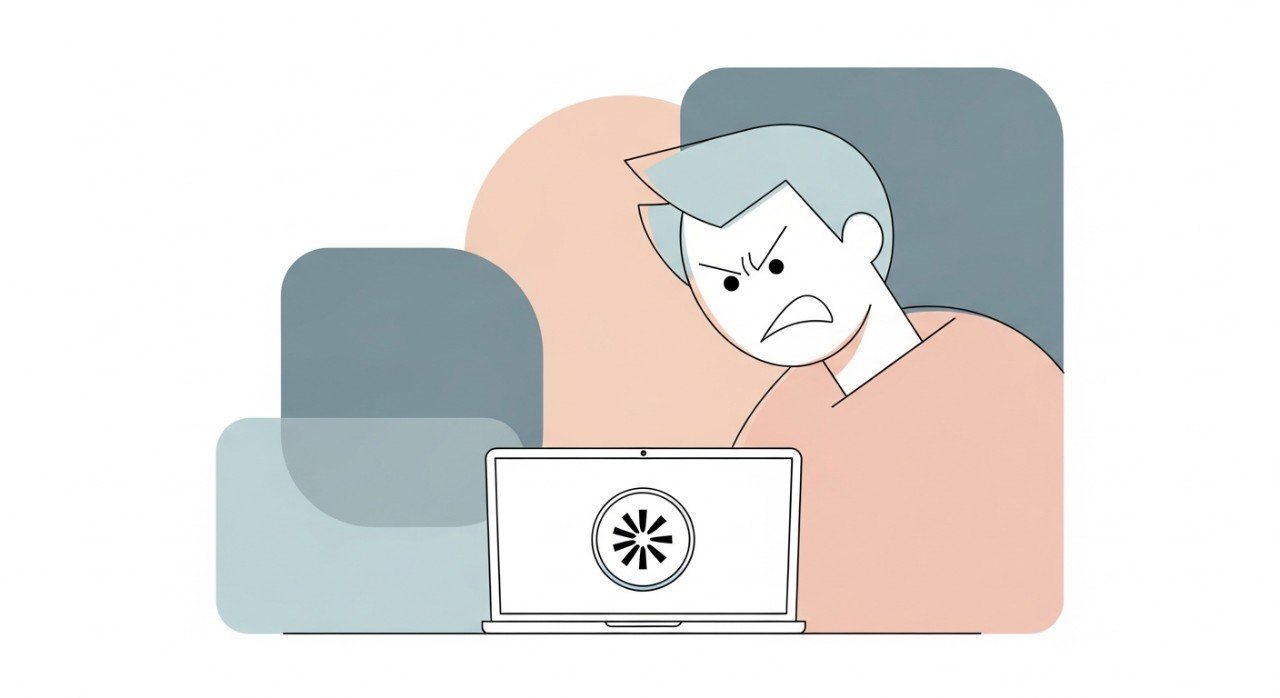
We've all been there: you open your laptop, click Chrome, and have time to make coffee before anything loads. If you're wondering why is my laptop so slow and how can I speed it up, the good news is that most slowdowns have fixable causes.
So, why is my laptop so slow and how can I speed it up? Between my own experience and what I've gathered from folks who do this every day, here's the full picture.
Here’s the Deal
The most common culprits are a full hard drive, too many startup programs, an old spinning HDD instead of an SSD, and not enough RAM. The single biggest speed boost for most older laptops is swapping the HDD for an SSD — it can make a 5-year-old machine feel brand new for under $60. Free fixes like disabling startup apps and cleaning up storage help too.
Simple enough on the surface. But once you look closer, there are a few things that can trip you up if you're not careful.
Worth a read next: What internet speed do I need for streaming 4K video.
For the official word, check Microsoft's official guide to improving Windows performance, which lays out the details straight from the source.
Why Is My Laptop So Slow and How Can I Speed It Up? Start Here
- Check what's launching at startup — on Windows use Task Manager's Startup tab; on Mac check Login Items. Disable everything non-essential.
- Free up disk space: a drive that's 90%+ full slows everything down. Aim to keep at least 15–20% free.
- An SSD upgrade is the king of fixes: a $40–$60 SATA SSD can cut boot times from minutes to seconds.
- The part nobody mentions: 8GB of RAM is the realistic minimum in 2026; 4GB machines will struggle no matter what else you do.
- Worth knowing: Run a malware scan — cryptominers and adware silently eat CPU in the background on infected machines.
A Concrete Example
A friend's 2019 laptop took four minutes to boot. We cloned its old hard drive to a $45 SSD and disabled a dozen startup programs — boot time dropped to 25 seconds, and she canceled the $800 replacement she'd been about to buy.
Free Fixes Before You Spend a Dime
Timing matters more than most people realize. Tech prices follow rhythms — new models drop in predictable seasons, and the previous generation gets discounted right after. If you can wait six to eight weeks, you can often get last season’s flagship for the price of this season’s mid-range option, which is almost always the better deal. Refurbished and open-box items follow a similar pattern, flooding the market right after big launches.
The other timing trap is buying right before you actually need something. Gadgets sitting in a drawer lose value and warranty coverage simultaneously. Buy when you’re ready to use it, not when the deal looks shiny. And if a salesperson is pushing hard, that’s information too — it usually means the margin is good for them, not the value for you. Sleep on any tech purchase over a couple hundred bucks. You’ll thank yourself.
One thing I’ve learned after years of dealing with gadgets: the sticker price is never the whole story. There’s always a second layer — the accessories you didn’t know you needed, the subscription that seemed optional until it wasn’t, the “free” service that costs you in data. When you’re sizing up any tech decision, add about 15–20% to whatever number you’re looking at for the stuff around the edges. Cables, cases, adapters, cloud storage, the apps you’ll inevitably pay for — it adds up fast. People who budget for the extras never feel blindsided. People who don’t end up annoyed at a purchase they otherwise liked.
And here’s the part that actually matters more than specs: how long will this thing realistically serve you? A cheaper option that needs replacing in eighteen months is more expensive than the pricier one that lasts four years. I always ask myself what my future self, two years from now, will wish I’d bought. That one question has saved me from more bad tech purchases than any review site ever has.
If that piqued your interest, you’ll like Which is better for college students: a Chromebook or a Windows laptop too.
Advice That Saves You Headaches
- It's not glamorous, but it works: restart your laptop at least weekly — months of uptime lets memory leaks pile up.
- Here's one that saves people real money: uninstall programs you don't recognize; bloatware from the manufacturer is a silent resource hog.
- Here's one that saves people real money: switch to a lighter browser or limit open tabs — Chrome with 30 tabs can eat 4GB of RAM alone.
- Here's one that saves people real money: keep your OS updated; performance patches are real, not just security theater.
Don’t Learn These the Hard Way
- A lot of folks buying 'PC optimizer' software — most are useless, and some are outright malware. — and honestly, it's an easy trap to fall into.
- Here's one I see constantly: assuming you need a new laptop when a $50 SSD would solve it. Don't let it happen to you.
- This trips up beginners all the time: ignoring overheating; a clogged fan makes the CPU throttle, which feels exactly like general slowness.
A Few More Questions Answered
Is the cheapest option ever the right call?
Sometimes, but rarely for things you depend on daily. The cheapest option usually cuts something — quality, support, longevity, or all three. The sweet spot is almost always the mid-range: proven, reasonably priced, with real support behind it. Buy cheap twice and you've spent more than buying right once.
Can I do this myself, or should I get help?
It depends on your comfort level and what's at stake. Low-risk tasks with good tutorials are great DIY candidates. But if messing up would cost you the device, your data, or your warranty, that's the moment to call in someone experienced. There's no shame in it — pros exist for a reason, and their mistakes are their problem, not yours.
How long does this usually take?
Honestly, it varies more than most guides admit. A straightforward case might take under an hour, while anything involving shipping, appointments, or waiting on parts can stretch to several days. My advice: ask for a realistic timeline up front, then add a buffer. If someone promises it'll be instant, get the details — 'instant' usually means 'the easy part is instant.'
My Take
Start with the free fixes — startup cleanup, storage space, updates — then consider the SSD upgrade. Nine times out of ten, that's all it takes to fall back in love with your laptop.
You don't need to become an expert here — you just need enough to make a smart call and move on.
For more on this, see our guide to How much does it cost to replace a laptop battery.
One more useful resource: the FTC's advice on avoiding tech support scams — worth bookmarking before you make any final decisions.


