
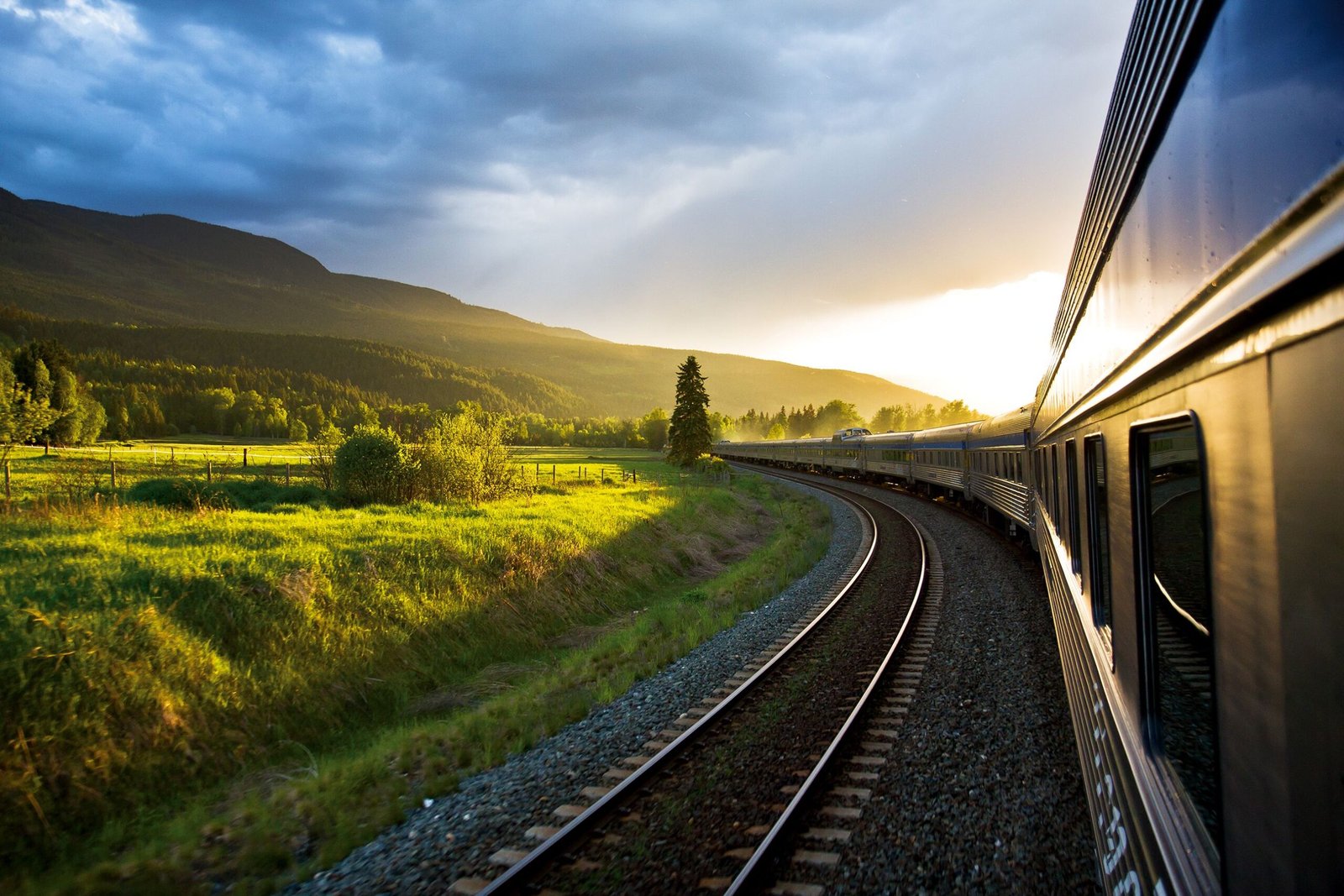
There’s something about train travel that flying can never match — the slow reveal of a landscape, the rhythm of the rails, the dining car coffee at sunrise over mountains you couldn’t name. So what is the most scenic train ride in the US? Ask ten rail fans and you’ll get ten answers, but a clear consensus emerges: Amtrak’s California Zephyr, running Chicago to San Francisco through the Rockies and Sierra Nevada, is the one most people name. That said, “most scenic” depends on what kind of scenery moves you. Here’s the honest ranking.
What Is the Most Scenic Train Ride in the US? The Top Contenders
1. California Zephyr (Chicago → Emeryville/San Francisco)
The king. 51 hours, 2,438 miles, and the stretch through Colorado’s Rockies — the Moffat Tunnel, Glenwood Canyon, the climb over the Continental Divide — is the finest daytime rail scenery in America. Then the Sierra Nevada, Donner Pass, and a dawn arrival into California. Book a roomette if you can; coach for two nights is survivable but the sleeper experience (meals included, big windows, a bed) transforms the trip. Westbound is slightly better for scenery timing. Check schedules and book at Amtrak’s official site — sleeper fares rise as departure nears, so book early.
2. Coast Starlight (Seattle → Los Angeles)
The West Coast’s greatest hits: Puget Sound, the Cascade Range, Mount Shasta, and then the legendary stretch along the Pacific between San Luis Obispo and Santa Barbara, where the tracks run right above the ocean. If you want mountains and coastline in one trip, this is it. The Parlour Car is gone, but the Sightseer Lounge ( panoramic windows) remains the best seat on any American train.
3. Southwest Chief (Chicago → Los Angeles)
Less famous than the Zephyr but beloved by those who know: the high desert of New Mexico, red rock country, Raton Pass. It’s drier, emptier, more cinematic — think classic Western landscapes. Sunset over the desert from the lounge car is unforgettable.
4. Empire Builder (Chicago → Seattle/Portland)
Glacier National Park is the headline — the train skirts the park’s southern edge, and in summer the views of the Northern Rockies are staggering. The plains crossing is long (bring a book), but the payoff in Montana is worth it. Splits at Spokane for Seattle and Portland; pick based on your plans.
5. Alaska Railroad (Anchorage → Fairbanks, or the Coastal Classic)
Technically not Amtrak, and it might be the actual answer for pure drama: Denali views (on clear days), Hurricane Gulch’s 296-foot bridge, and wilderness that looks untouched since the ice age. Summer only for the full experience. Expensive, but people describe it in reverent tones.
6. Adirondack (New York → Montreal)
The best Eastern option: up the Hudson Valley (gorgeous in fall), along Lake Champlain, into the Adirondacks. Autumn foliage season sells out — book months ahead. A reminder that scenic rail isn’t just a Western thing.
7. Grand Canyon Railway (Williams, AZ → Grand Canyon)
A shorter excursion (2.5 hours each way) rather than a long-distance journey, but it ends at one of the great sights on Earth, with cowboy entertainment and vintage cars. Perfect as part of a Southwest trip.
Sleeper vs. Coach: The Real Talk
Coach on Amtrak long-distance is honestly fine — the seats are huge (bigger than first-class airline seats), they recline deeply, and there’s a footrest. For one night, coach is totally doable and keeps the trip affordable. For two nights (Zephyr, Empire Builder), a roomette is worth serious consideration: you get a private space, a bed, all meals included (the dining car food is better than you’d expect), and lounge access. Roomettes for two people often cost less per person than you’d think. Book the moment fares are released for the best prices.
Tips for the Best Experience
- Sit in the Sightseer Lounge. The panoramic-window car is first-come, first-served. Claim a seat early on scenic stretches.
- Bring layers and snacks. Café car food is fine; your own snacks are better. Temperatures swing wildly through mountains and deserts.
- Charge everything. Outlets exist but are fought over in coach. A power strip makes you everyone’s best friend.
- Download entertainment. Cell service dies for hours in the mountains and desert. Download books, podcasts, and shows beforehand.
- Talk to people. Long-distance trains attract interesting travelers. The dining car’s communal seating (when offered) has started more than a few friendships.
- Expect delays. Freight railroads own most tracks and Amtrak gets bumped. Build buffer time at the end — never schedule a tight connection after a long-distance train.
When to Go
Summer gives you the longest daylight for scenery (critical — you can’t see the Rockies in the dark), but also the highest fares and fullest trains. Late spring and early fall are the sweet spot: good daylight, fewer crowds, lower prices. Winter runs are dramatically cheaper and the snow-covered mountains are stunning, but short days mean you’ll sleep through some of the best scenery. For fall foliage specifically, the Adirondack in late September to mid-October is the play.
Booking Sleeper Fares: How to Pay Less
Sleeper fares are the biggest variable in train trip cost — the same roomette can cost $400 or $1,200 depending on when you book. Here’s how the pricing works and how to beat it:
- Book early — like, really early. Amtrak releases sleeper inventory about 11 months out, and fares rise as rooms sell. The cheapest “saver” roomettes go first. Booking 3–6 months ahead typically saves 30–50% versus last-minute.
- Understand fare buckets. Amtrak uses airline-style dynamic pricing: a handful of rooms at each price tier, rising as they sell. There’s no Tuesday-at-midnight trick — earlier is simply cheaper.
- Travel midweek. Tuesday–Thursday departures are consistently cheaper than weekends, sometimes dramatically.
- Check both directions. Eastbound vs. westbound pricing differs by demand — occasionally one direction is half the price.
- Look at roomette vs. bedroom. Roomettes sleep two (upper and lower berth) and include all meals — the value sweet spot. Bedrooms add a private toilet/shower and much more space at roughly double the price. For most couples, the roomette is plenty.
- Coach + hotel math. Price the roomette against coach fare + the hotel nights you’d otherwise need. On a two-night route, the roomette often compares favorably once you count two hotel nights and all included meals.
- Points. Amtrak Guest Rewards points can book sleepers at reasonable redemption rates — worth accumulating if you ride even occasionally.
One more tip: if sleeper prices are painful, remember that the scenery is identical from coach — the Sightseer Lounge doesn’t care what fare you paid. And the journey itself makes a wonderful surprise trip — imagine their face when the “weekend getaway” turns out to be a sleeper car through the Rockies. Bring a camera and review phone photography basics beforehand; you’ll want to do those mountain sunrises justice.
The Practical Takeaway
The most scenic train ride in the US is the California Zephyr for overall majesty, the Coast Starlight for variety, and the Alaska Railroad for raw drama — you can’t go wrong with any of them. Book sleepers early, ride the Sightseer Lounge during daylight scenic stretches, expect delays with good humor, and treat the journey as the destination. In a country built for cars and planes, the train is the last way to actually see America go by. Pair it with a multi-city trip plan and you’ve got the bones of an unforgettable journey.


