
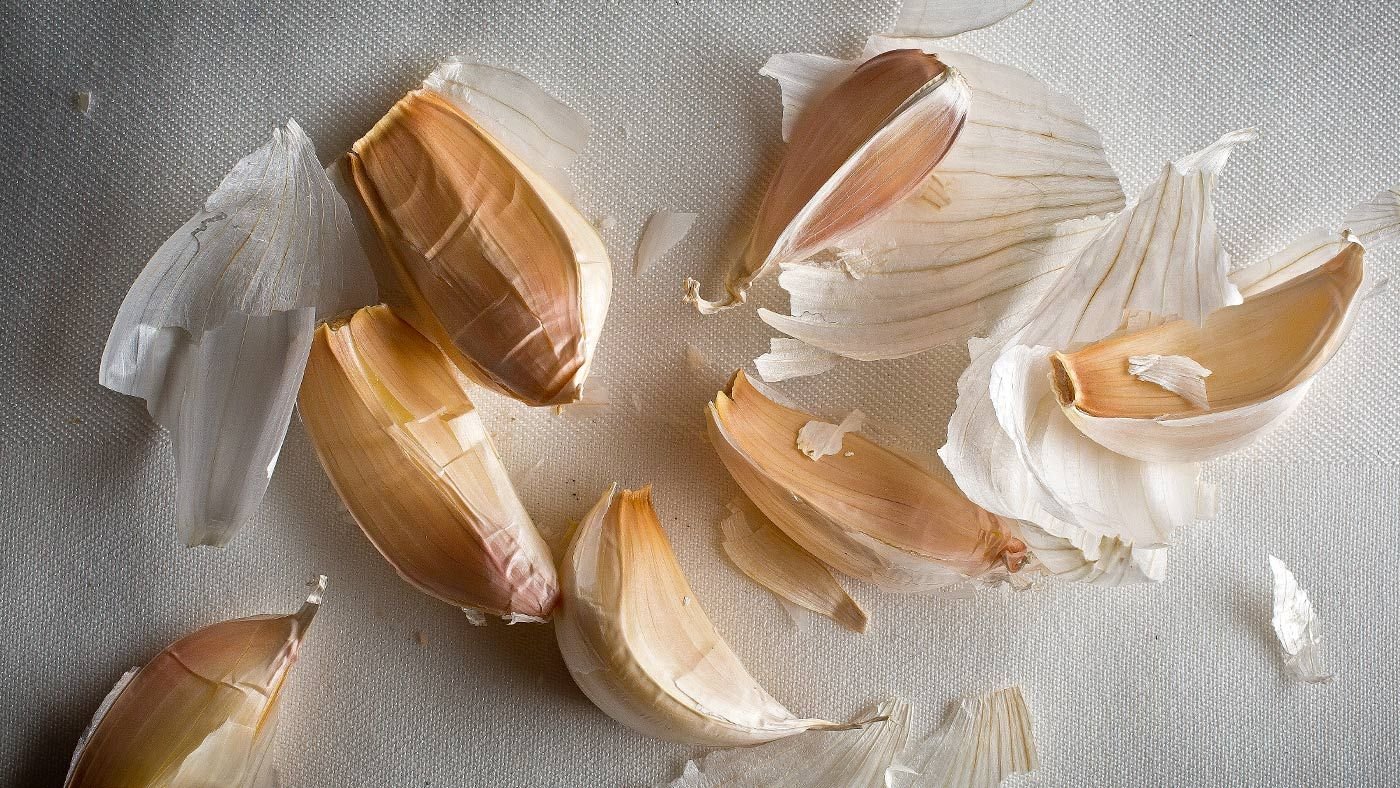
Peeling garlic clove by clove with a paring knife is one of cooking’s great time sinks. Your fingers get sticky, the papery skins cling like they’re glued on, and by the fourth clove you’re questioning every recipe that calls for “6 cloves, minced.” But the easiest way to peel garlic quickly isn’t a single trick — it’s knowing which method fits the situation, because peeling one clove and peeling a whole head are very different problems.
Let’s rank the methods from everyday-fast to bulk-blitz, so you always have the right tool for the job.
What Is the Easiest Way to Peel Garlic Quickly? The Methods, Ranked
1. The smash method (1–5 cloves — the everyday winner)
Lay the flat side of a chef’s knife over the clove and give it a firm whack with your palm. The skin splits and practically falls off. Ten seconds per clove, no special equipment, and as a bonus the smashed clove releases more flavor compounds (the crushing ruptures cell walls, creating more allicin — the stuff that makes garlic taste like garlic). This is what professional cooks do 90% of the time, and it’s the fastest method for normal quantities. Downside: it crushes the clove, so skip it when you need picture-perfect whole cloves.
2. The shake method (a whole head — the party trick)
Separate the head into cloves, put them in a metal bowl, cover with a second bowl (or use a lidded jar/container), and shake vigorously for 20–30 seconds. The cloves batter against each other and the skins slough off. It looks like magic the first time you see it. Keys to success: the container must be hard (metal or hard plastic — not a soft bowl), and you must shake hard. Tentative shaking doesn’t work. This peels an entire head in under a minute.
3. The microwave method (a whole head — the lazy genius)
Put the separated cloves (or the whole head with the top trimmed) in the microwave for 15–20 seconds. The heat creates steam between the clove and the skin, loosening it so the skins slip right off. It works shockingly well. Caveat: don’t overdo it or you’ll start cooking the garlic. 20 seconds max, and let them cool a moment before handling.
4. The hot water soak (bulk peeling)
Drop separated cloves in hot (not boiling) water for 2–3 minutes. The skins soften and slide off easily. Best when you need a lot of pristine whole cloves — say, for roasting or confit. Slower than shaking but gentler on the cloves.
5. The silicone peeler tube (the gadget)
Those ribbed silicone tubes: put a clove inside, roll it on the counter with your palm, and the skin comes off inside the tube. They work fine and cost a few dollars. Honestly though, the knife smash is faster and you already own a knife. Buy one only if you peel garlic daily and hate the sticky fingers.
6. Buy pre-peeled (no shame)
The bags of pre-peeled cloves in the produce section exist for a reason. They’re slightly less pungent than fresh-peeled (flavor degrades once peeled), but for cooked dishes where garlic isn’t the star, the time savings are real. Store them refrigerated and use within a week. The jarred minced garlic in oil? Fine for weeknight cooking, though the flavor is noticeably milder — and note that garlic in oil must be refrigerated due to botulism risk, per CDC food safety guidance.
After Peeling: Getting the Most From Your Garlic
How you cut garlic changes how it tastes — this is real food science, not chef mystique. Sliced or whole cloves = mellow, sweet (fewer ruptured cells, less allicin). Minced = punchy and assertive. Crushed to a paste (with salt, using the knife blade) = maximum intensity. Added early to hot oil = mellow and nutty. Added late or raw = sharp and fiery. Match the cut to the dish: paste for vinaigrettes and marinades, slices for gentle infusions, minced for the base of marinades and sauces.
And the golden rule of cooking garlic: don’t burn it. Burnt garlic is bitter and acrid and ruins everything it touches. It goes from golden to burnt in under 30 seconds, so add it after onions have softened, keep the heat moderate, and when in doubt, add it later. If it browns too far, start over — there’s no fixing burnt garlic.
Storing Garlic Right
Whole heads: cool, dark, ventilated — a countertop basket or paper bag, not the fridge (cold + humidity triggers sprouting). They keep for weeks. Peeled cloves: airtight container in the fridge, use within a week. For long-term: freeze peeled cloves whole (they grate beautifully from frozen) or freeze minced garlic in olive oil in ice cube trays — instant flavor bombs for weeknight cooking. My freezing guide covers the technique.
Roasted Garlic: The Upgrade
Once you’ve mastered quick peeling, try this: cut the top off a whole head, drizzle with olive oil, wrap in foil, roast at 400°F for 35–40 minutes. The cloves turn soft, sweet, and spreadable — a completely different ingredient from raw garlic. Squeeze them onto bread, mash into mashed potatoes, or blend into soup. It’s the kind of simple luxury that makes people think you’re a much fancier cook than you are.
The Practical Takeaway
Peeling garlic quickly = smash with a knife for a few cloves, shake between bowls for a whole head, microwave 20 seconds when you’re feeling lazy. Match your cut to the dish, never burn it, and store whole heads on the counter — not the fridge.
Try the bowl-shake method tonight. The first time a whole head of garlic peels itself in 30 seconds, you’ll feel like you’ve been let in on a secret.
How Much Garlic Is Too Much? (Measuring Guide)
Recipes are maddeningly vague about garlic quantities, so here’s a practical conversion chart. One medium clove = roughly 1 teaspoon minced = about ½ teaspoon crushed to paste. A whole head typically yields 8–12 cloves, or about 3–4 tablespoons minced. When a recipe says “4 cloves,” it means medium cloves — if yours are tiny, use more; if they’re elephant-garlic huge, use fewer. And here’s the cook’s truth: garlic measurements are suggestions, not laws. Love garlic? Double it. The recipe won’t break. The only real caution is with raw applications (dressings, aiolis), where doubling can genuinely overpower — in cooked dishes, extra garlic just means extra delicious. Trust your taste over the printed number.


